

Completed


Bald Eagle
Haliaeetus leucocephalus
Silhouette: Ron Holmes/U. S. Fish and Wildlife Service (source photo), T. Michael Keesey (vectorization) · PhyloPic
- KingdomAnimalia (Animals)
- PhylumChordata (Chordates)
- ClassAves (Birds)
- OrderAccipitriformes (Hawks, Eagles, Kites, and Allies)
- FamilyAccipitridae (Hawks, Eagles, and Kites)
- GenusHaliaeetus (Northern Sea-Eagles and Fish-Eagles)
- SpeciesHaliaeetus leucocephalus (Bald Eagle)
In 3 days ~40% in a week ~70%
1,726 Verified sightings at Everglades National Park From 2019 to 2026
39,216 In all 36 parks
November Best month
☀️ Diurnal When it's spotted
About the Bald Eagle
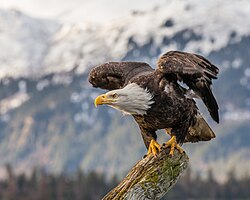
The bald eagle (Haliaeetus leucocephalus) is a bird of prey found in North America. A sea eagle, it has two known subspecies and forms a species pair with the white-tailed eagle (Haliaeetus albicilla), which occupies the same niche as the bald eagle in the Palearctic. Its range includes most of Canada and Alaska, all of the contiguous United States, and northern Mexico. It is found near large bodies of open water with an abundant food supply and old-growth trees for nesting.
The bald eagle is an opportunistic feeder that subsists mainly on fish, upon which it swoops down and snatches from the water with its talons. It builds the largest nest of any North American bird and the largest tree nests ever recorded for any animal species, up to 4 m (13 ft) deep, 2.5 m (8.2 ft) wide, and 1 metric ton (1.1 short tons) in weight. Sexual maturity is attained at the age of four to five years.
Bald eagles are not bald in the literal sense; the name derives from an older meaning of the word, "white-headed". The adult is mainly brown with a white head and tail. The sexes are identical in plumage, but females are about 25% larger than males. The yellow beak is large and hooked. The plumage of the immature is brown.
The bald eagle is the national bird and national symbol of the United States and appears on its seal. In the late 20th century it was on the brink of extirpation in the contiguous United States, but measures such as banning the practice of hunting bald eagles and banning the use of the harmful pesticide DDT slowed the decline of their population. Populations have since recovered, and the species' status was upgraded from "endangered" to "threatened" in 1995 and removed from the list altogether in 2007. Wikipedia →
Recent sightings of Bald Eagle in Everglades National Park
LIVEiNaturalistGlobal Distribution
Parks Where Found
Cities Where Found
| # | City | Country | Daily sighting probability |
|---|---|---|---|
| 1 | Vancouver | 🇨🇦 Canada | |
| 2 | Seattle | 🇺🇸 United States | |
| 3 | Anchorage | 🇺🇸 United States | |
| 4 | Calgary | 🇨🇦 Canada | |
| 5 | Minneapolis [Saint Paul] | 🇺🇸 United States | |
| 6 | Portland | 🇺🇸 United States | |
| 7 | Baltimore | 🇺🇸 United States | |
| 8 | Washington | 🇺🇸 United States | |
| 9 | Philadelphia | 🇺🇸 United States | |
| 10 | Denver | 🇺🇸 United States |
Zoos & Centres Where Found
Closest Relatives at Everglades National Park





Before you go
What are the chances of seeing a Bald Eagle in Everglades National Park?
Possible
About 20% of wildlife watchers report a Bald Eagle sighting in Everglades National Park on a given day, based on 1,726 verified sightings from GBIF citizen-science data from 2019 to 2026. It is the 56th most-seen of the 273 birds we can rate there. Over three days the chance rises to about 40%, and over a week to about 70%, if each day is a fresh chance.
When is the best time to see a Bald Eagle in Everglades National Park?
October to April
In those months about 20% of wildlife watchers report a Bald Eagle in Everglades National Park on a given day, against about 10% in May to September, the lowest months.
What time of day is best to see a Bald Eagle?
Between 9 am and noon
Across all the parks we cover, that three-hour window holds the most Bald Eagle sightings with a recorded time, and about 8 in 10 of them come between 6 am and 6 pm: it is a daytime animal.
Is Everglades National Park the best place to see a Bald Eagle?
19th of 36
Of the 36 parks where we can rate Bald Eagle sightings, Everglades National Park ranks 19th at about 20%. The best odds are in Great Bear Rainforest (Canada, about 80%), Katmai National Park (United States, about 70%) and Pacific Rim National Park Reserve (Canada, about 70%). All parks ranked.
Which relatives of the Bald Eagle live in Everglades National Park?
Same family: Accipitridae
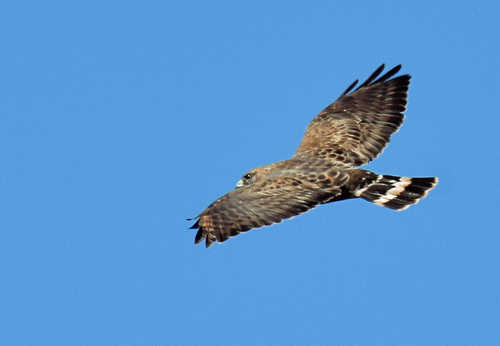
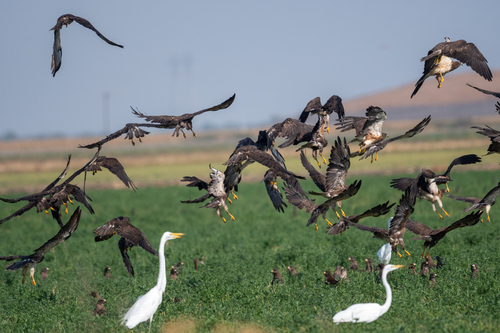
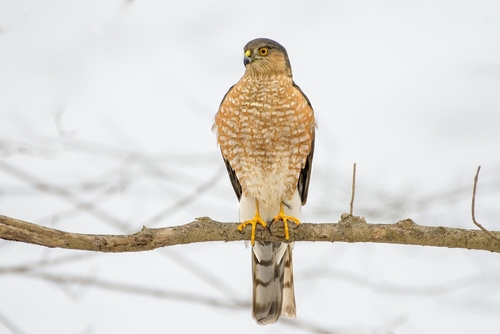
The closest relatives of the Bald Eagle that you can see in Everglades National Park (family Accipitridae, Hawks, Eagles, and Kites) are Red-shouldered Hawk (about 60%), American Swallow-tailed Kite (about 20%) and Hen Harrier (about 20%), with each one's daily chance of a sighting.
Where does the Bald Eagle sighting chance come from?
GBIF citizen-science records
It is estimated from how often the Bald Eagle is recorded against all the birds logged in Everglades National Park (1,726 verified sightings from 2019 to 2026), calibrated against known sighting rates. Figures are rounded to the nearest 10% because citizen-science data supports honest approximations, not decimals, and months with records from fewer than five people show "—". How it works.
