
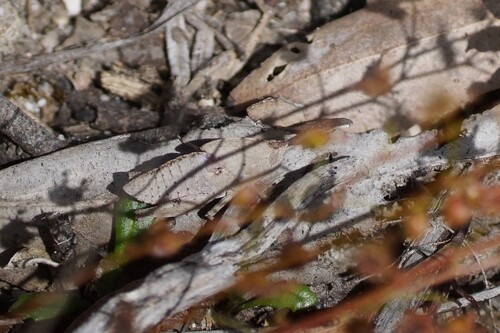
Banded Sugar Ant

Banded Sugar Ant

Camponotus consobrinus

Endemic
Daily sighting probability ~20% · Possible
at Freycinet National Park

In 3 days ~60% in a week ~90%

17 Verified sightings at Freycinet National Park From 2019 to 2026
228 In all 7 parks
September Best month
☀️🌙 Day & Night When it's spotted

About the Banded Sugar Ant

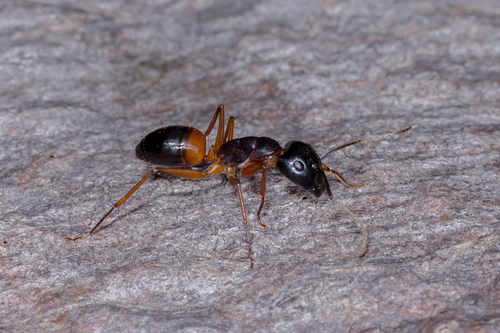
The banded sugar ant (Camponotus consobrinus), also known as the sugar ant, is a species of ant native to Australia. A member of the genus Camponotus in the subfamily Formicinae, it was described by German entomologist Wilhelm Ferdinand Erichson in 1842. Its common name refers to the ant's liking for sugar and sweet food, as well as the distinctive orange-brown band that wraps around its gaster.

The ant is polymorphic and relatively large, with two different castes of workers: major workers (also known as soldiers), and minor workers. These two group of workers measure around 5 to 15 millimetres (0.2 to 0.6 in) in length, while the queen ants are even larger. Mainly nocturnal, banded sugar ants prefer a mesic habitat, and are commonly found in forests and woodlands. They also occur in urban areas, where they are considered a household pest. The ant's diet includes sweet secretions that are retrieved from aphids and other insects that it tends. This species is a competitor of the meat ant (Iridomyrmex purpureus); food robbery and nest-plugging are known to occur between these two ants. Workers prey on insects, killing them with a spray of formic acid. Banded sugar ants are preyed upon by other ants, echidnas, and birds. The eggs of this species were consumed by Indigenous Australians. Wikipedia →

Global Distribution

Parks Where Found

# Park Country Daily sighting probability
1 Grampians National Park 🇦🇺 Australia
~40%
2 Maria Island National Park 🇦🇺 Australia
~30%
3 Freycinet National Park 🇦🇺 Australia
~20%
4 Flinders Ranges National Park 🇦🇺 Australia
~20%
5 Blue Mountains National Park 🇦🇺 Australia
~10%
6 Great Otway National Park 🇦🇺 Australia
~10%
7 Royal National Park 🇦🇺 Australia
~10%

Cities Where Found

# City Country Daily sighting probability
1 Melbourne 🇦🇺 Australia
~20%
2 Hobart 🇦🇺 Australia
~10%
3 Sydney 🇦🇺 Australia
~10%
4 Brisbane 🇦🇺 Australia
~10%

Before you go

What are the chances of seeing a Banded Sugar Ant in Freycinet National Park?

Possible

About 20% of wildlife watchers report a Banded Sugar Ant sighting in Freycinet National Park on a given day, based on 17 verified sightings from GBIF citizen-science data from 2019 to 2026. It is the 3rd most-seen of the 14 insects we can rate there. Over three days the chance rises to about 60%, and over a week to about 90%, if each day is a fresh chance.

When is the best time to see a Banded Sugar Ant in Freycinet National Park?

September

In that month about 40% of wildlife watchers report a Banded Sugar Ant in Freycinet National Park on a given day, against under 5% in May–August and October, the lowest months.

What time of day is best to see a Banded Sugar Ant?

Between 3 and 6 pm

Across all the parks we cover, that three-hour window holds the most Banded Sugar Ant sightings with a recorded time, and about 6 in 10 of them come between 6 am and 6 pm: it is seen both by day and at night.

Is Freycinet National Park the best place to see a Banded Sugar Ant?

3rd of 7

Of the 7 parks where we can rate Banded Sugar Ant sightings, Freycinet National Park ranks 3rd at about 20%. The best odds are in Grampians National Park (Australia, about 40%) and Maria Island National Park (Australia, about 30%).

Which relatives of the Banded Sugar Ant live in Freycinet National Park?

Same family: Formicidae

The closest relatives of the Banded Sugar Ant that you can see in Freycinet National Park (family Formicidae, Ants) are Inchman Ant (about 30%) and Jack Jumper Ant (about 20%), with each one's daily chance of a sighting.

Where does the Banded Sugar Ant sighting chance come from?

GBIF citizen-science records

It is estimated from how often the Banded Sugar Ant is recorded against all the insects logged in Freycinet National Park (17 verified sightings from 2019 to 2026), calibrated against known sighting rates. Figures are rounded to the nearest 10% because citizen-science data supports honest approximations, not decimals, and months with records from fewer than five people show "—". How it works.

← Back to Freycinet National Park