Munk's Pygmy Devil Ray

Munk's Pygmy Devil Ray

Mobula munkiana

Silhouette: Steven Traver · PhyloPic

Daily sighting probability ~10% · With luck
at Galápagos Islands

In 3 days ~30% in a week ~60%

13 Verified sightings at Galápagos Islands From 2019 to 2026
19 In all 2 parks
January Best month
☀️ Diurnal When it's spotted

About the Munk's Pygmy Devil Ray

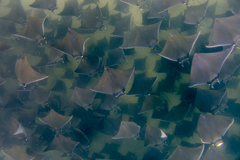
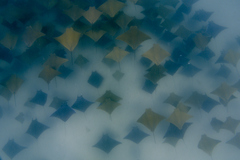
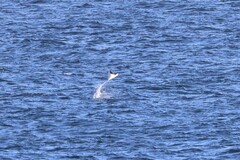
Mobula munkiana, commonly known as the manta de monk, Munk's devil ray, pygmy devil ray, smoothtail mobula, or Munk's pygmy devil ray, is a species of ray in the family Mobulidae. They are commonly mistaken for their close relatives, M. thurstoni (bentfin devil ray) and M. mobular (giant devil ray). Although they are the smallest of the species in genus Mobula, they make up for their size with their incredible speed and agility. These characteristics are a likely explanation for their lack of natural predators, although they have been known to be hunted by orcas and are often fished by humans. One of the defining characteristics of this group are their acrobatic performances that are conducted while jumping in the air in schools of thousands. It is thought that these spectacles are a functional part of their lifestyle, including kickstarting mating rituals. The species was first described in 1987 after the Italian ecologist Giuseppe Notarbartolo di Sciara observed one of these acrobatic spectacles and decided to name them after his scientific mentor, Walter Munk.

Part of the elasmobranch division Batomorphi, pygmy devil rays are large fish with horizontally flattened... Wikipedia →

Global Distribution

Parks Where Found

# Park Country Daily sighting probability
1 Bahía de Loreto National Park 🇲🇽 Mexico
~30%
2 Galápagos Islands 🇪🇨 Ecuador
~10%

Before you go

What are the chances of seeing a Munk's Pygmy Devil Ray in Galápagos Islands?

With luck

About 10% of wildlife watchers report a Munk's Pygmy Devil Ray sighting in Galápagos Islands on a given day, based on 13 verified sightings from GBIF citizen-science data from 2019 to 2026. It is the 12th most-seen of the 16 sharks and rays we can rate there. Over three days the chance rises to about 30%, and over a week to about 60%, if each day is a fresh chance.

When is the best time to see a Munk's Pygmy Devil Ray in Galápagos Islands?

December and January

In those months about 30% of wildlife watchers report a Munk's Pygmy Devil Ray in Galápagos Islands on a given day, against under 5% in April–July and October, the lowest months.

What time of day is best to see a Munk's Pygmy Devil Ray?

Between 7 and 10 am

Across all the parks we cover, that three-hour window holds the most Munk's Pygmy Devil Ray sightings with a recorded time, and about 8 in 10 of them come between 6 am and 6 pm: it is a daytime animal.

Is Galápagos Islands the best place to see a Munk's Pygmy Devil Ray?

2nd of 2

Of the 2 parks where we can rate Munk's Pygmy Devil Ray sightings, Galápagos Islands ranks 2nd at about 10%. The best odds are in Bahía de Loreto National Park (Mexico, about 30%).

Which relatives of the Munk's Pygmy Devil Ray live in Galápagos Islands?

Same genus: Mobula

The closest relatives of the Munk's Pygmy Devil Ray that you can see in Galápagos Islands (genus Mobula, Devil Rays) are Oceanic Manta Ray (about 30%) and Lesser Devil Ray (about 20%), with each one's daily chance of a sighting.

Where does the Munk's Pygmy Devil Ray sighting chance come from?

GBIF citizen-science records

It is estimated from how often the Munk's Pygmy Devil Ray is recorded against all the sharks and rays logged in Galápagos Islands (13 verified sightings from 2019 to 2026), calibrated against known sighting rates. Figures are rounded to the nearest 10% because citizen-science data supports honest approximations, not decimals, and months with records from fewer than five people show "—". How it works.

← Back to Galápagos Islands