Common Brimstone

Common Brimstone

Gonepteryx rhamni

Daily sighting probability ~20% · Possible
at Gauja National Park

In 3 days ~50% in a week ~80%

5 Verified sightings at Gauja National Park From 2019 to 2026
796 In all 19 parks
December Best month
☀️ Diurnal When it's spotted

About the Common Brimstone

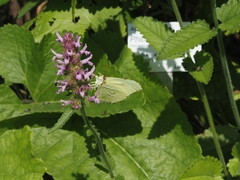
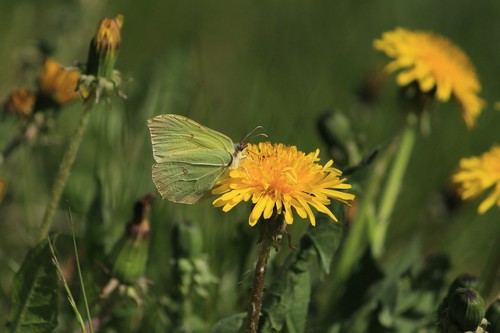
Gonepteryx rhamni, commonly named the Common Brimstone, is a butterfly of the family Pieridae. It lives throughout the Palearctic zone and is commonly found across Europe, Asia, and North Africa. Across much of its range, it is the only species of its genus, and is therefore simply known locally as the Brimstone. Its wing span size is 60–74 mm (2.4–2.9 in). It should not be confused with the Brimstone moth Opisthograptis luteolata.

The brimstone relies on two species of buckthorn plants as host plants for its larvae; this influences its geographic range and distribution, as these plants are commonly found in wetlands. The adult brimstone travels to woodland areas to spend seven months overwintering. In spring when their host plants have developed, they return to the wetlands to breed and lay eggs. Both the larval and adult forms of the common brimstone have protective coloration and behaviour that decreases their chances of being recognised and subsequently preyed upon.

The adult common brimstone has sexual dimorphism in its wing coloration: males have yellow wings and iridescence while females have greenish-white wings and are not iridescent. This iridescence is affected by environmental factors.

The name "butterfly" is believed to have originated from this species, which was called the "butter-coloured fly" by early British naturalists. Wikipedia →
Global Distribution

Parks Where Found

# Park Country Daily sighting probability
1 Biebrza National Park 🇵🇱 Poland
~40%
2 Triglav National Park 🇸🇮 Slovenia
~30%
3 Bavarian Forest National Park 🇩🇪 Germany
~30%
4 Tatra National Park 🇸🇰 Slovakia
~30%
5 Białowieża National Park 🇵🇱 Poland
~30%
6 Aigüestortes National Park 🇪🇸 Spain
~20%
7 Plitvice Lakes National Park 🇭🇷 Croatia
~20%
8 Gauja National Park 🇱🇻 Latvia
~20%
9 Sierra de Guadarrama National Park 🇪🇸 Spain
~20%
10 Picos de Europa National Park 🇪🇸 Spain
~20%
11 Mercantour National Park 🇫🇷 France
~20%
12 Ordesa y Monte Perdido National Park 🇪🇸 Spain
~20%
13 Pyrénées National Park 🇫🇷 France
~20%
14 Cévennes National Park 🇫🇷 France
~10%
15 Ecrins National Park 🇫🇷 France
~10%
16 Snowdonia National Park 🇬🇧 United Kingdom
~10%
17 Vanoise National Park 🇫🇷 France
~10%
18 Fertő-Hanság National Park 🇭🇺 Hungary
~10%
19 Wadden Sea National Park 🇩🇪 Germany
~10%

Cities Where Found

# City Country Daily sighting probability
1 Helsinki 🇫🇮 Finland
~20%
2 Warsaw 🇵🇱 Poland
~20%
3 London 🇬🇧 United Kingdom
~10%
4 Liverpool 🇬🇧 United Kingdom
~10%
5 Berlin 🇩🇪 Germany
~10%
6 Nizhny Novgorod 🇷🇺 Russia
~10%
7 Rotterdam [The Hague] 🇳🇱 Netherlands
~10%
8 Hamburg 🇩🇪 Germany
~10%
9 Almaty 🇰🇿 Kazakhstan
~10%
10 Kyiv 🇺🇦 Ukraine
~10%

Before you go

What are the chances of seeing a Common Brimstone in Gauja National Park?

Possible

About 20% of wildlife watchers report a Common Brimstone sighting in Gauja National Park on a given day, based on 5 verified sightings from GBIF citizen-science data from 2019 to 2026. It is the 17th most-seen of the 29 insects we can rate there. Over three days the chance rises to about 50%, and over a week to about 80%, if each day is a fresh chance.

When is the best time to see a Common Brimstone in Gauja National Park?

December

In that month about 50% of wildlife watchers report a Common Brimstone in Gauja National Park on a given day, against under 5% in April, June and August–September, the lowest months. January and February have too few records to rate.

What time of day is best to see a Common Brimstone?

Between noon and 3 pm

Across all the parks we cover, that three-hour window holds the most Common Brimstone sightings with a recorded time, and nearly all of them come between 6 am and 6 pm: it is a daytime animal.

Which relatives of the Common Brimstone live in Gauja National Park?

Same order: Lepidoptera

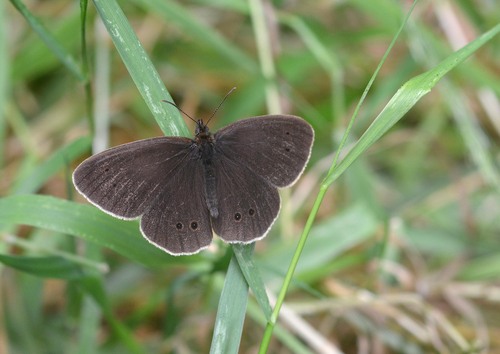
The closest relatives of the Common Brimstone that you can see in Gauja National Park (order Lepidoptera, Butterflies and Moths) are Ringlet (about 30%), European Comma (about 30%) and European Peacock Butterfly (about 30%), with each one's daily chance of a sighting.

Where does the Common Brimstone sighting chance come from?

GBIF citizen-science records

It is estimated from how often the Common Brimstone is recorded against all the insects logged in Gauja National Park (5 verified sightings from 2019 to 2026), calibrated against known sighting rates. Figures are rounded to the nearest 10% because citizen-science data supports honest approximations, not decimals, and months with records from fewer than five people show "—". How it works.

← Back to Gauja National Park