Collared Owlet

Collared Owlet

Glaucidium brodiei

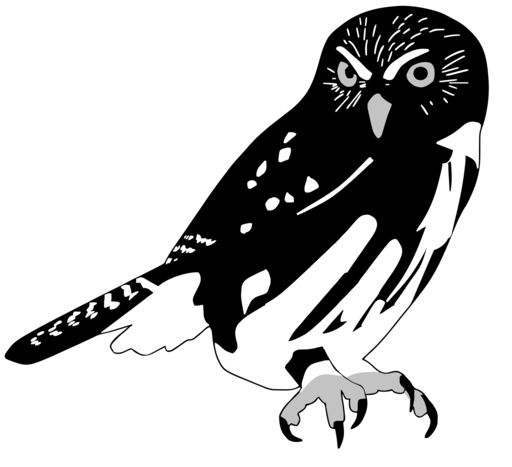
Silhouette: Edwin Price · PhyloPic

LCLeast ConcernNTVUENCR
Daily sighting probability ~20% · Possible
at Kerinci Seblat National Park

In 3 days ~50% in a week ~80%

127 Verified sightings at Kerinci Seblat National Park From 2019 to 2026
2,345 In all 11 parks
May Best month
🌅 Crepuscular When it's spotted

About the Collared Owlet

The collared owlet (Taenioptynx brodiei), also known as the collared pygmy owl, is a species of owl in the family Strigidae. Its natural habitat is submontane and montane forests with open spaces and is distributed throughout oriental Asia. It is the smallest owl in Asia, at 15 cm (5.9 in) and 60 g (2.1 oz).

The collared owlet was first described in 1836 as Noctua brodiei by the English zoologist Edward Burton. It was moved to the genus Glaucidium based on a comparison of mitochondrial DNA sequences and proved to be closely related to the jungle owlet (G. radiatum) and the Asian barred owlet (G. cuculoides).

Two subspecies are recognised: The Sunda owlet (T. sylvaticum) was formerly treated as a subspecies of the collared owlet. It was promoted to species status based on the results of a vocalisation study published in 2019.

The collared owlet, being Asia's smallest owl species, measures between 15 and 17 cm. Females are generally larger than the males, weighing approximately 63 g, whereas males weigh in... Wikipedia →

Sounds

Recording0:18

Thailand · 2025

© Paula Goldberg · iNaturalist · CC BY-NC 4.0

Recording0:08

China · 2025

© 哈基人 · iNaturalist · CC BY-NC 4.0

Recording0:12

Taiwan · 2025

© Amaël Borzée · iNaturalist · CC BY-NC 4.0

Global Distribution

Parks Where Found

# Park Country Daily sighting probability
1 Khao Yai National Park 🇹🇭 Thailand
~30%
2 Kerinci Seblat National Park 🇮🇩 Indonesia
~20%
3 Royal Manas National Park 🇧🇹 Bhutan
~20%
4 Kinabalu Park 🇲🇾 Malaysia
~10%
5 Taroko National Park 🇹🇼 Taiwan
~10%
6 Namdapha National Park 🇮🇳 India
~10%
7 Kaeng Krachan National Park 🇹🇭 Thailand
~10%
8 Langtang National Park 🇳🇵 Nepal
~10%
9 Doi Inthanon National Park 🇹🇭 Thailand
~10%
10 Cuc Phuong National Park 🇻🇳 Vietnam
<5%
11 Manas National Park 🇮🇳 India
<5%

Cities Where Found

# City Country Daily sighting probability
1 Kathmandu 🇳🇵 Nepal
<5%
2 Guwahati 🇮🇳 India
<5%

Zoos & Centres Where Found

# Zoo / Centre Country
1 Fonghuanggu Bird and Ecology Park 🇹🇼 Taiwan In captivity

Before you go

What are the chances of seeing a Collared Owlet in Kerinci Seblat National Park?

Possible

About 20% of wildlife watchers report a Collared Owlet sighting in Kerinci Seblat National Park on a given day, based on 127 verified sightings from GBIF citizen-science data from 2019 to 2026. It is the 57th most-seen of the 203 birds we can rate there. Over three days the chance rises to about 50%, and over a week to about 80%, if each day is a fresh chance.

When is the best time to see a Collared Owlet in Kerinci Seblat National Park?

March and May

In those months about 30% of wildlife watchers report a Collared Owlet in Kerinci Seblat National Park on a given day, against about 10% in February, April, June and October, the lowest months. January has too few records to rate.

What time of day is best to see a Collared Owlet?

Between 2 and 5 am

Across all the parks we cover, that three-hour window holds the most Collared Owlet sightings with a recorded time, and about half of them come between 6 am and 6 pm: it is most active around dawn and dusk.

Is Kerinci Seblat National Park the best place to see a Collared Owlet?

2nd of 11

Of the 11 parks where we can rate Collared Owlet sightings, Kerinci Seblat National Park ranks 2nd at about 20%. The best odds are in Khao Yai National Park (Thailand, about 30%).

Which relatives of the Collared Owlet live in Kerinci Seblat National Park?

Same family: Strigidae

The closest relatives of the Collared Owlet that you can see in Kerinci Seblat National Park (family Strigidae, Typical Owls) are Rajah Scops Owl (about 10%) and Mountain Scops-Owl (about 10%), with each one's daily chance of a sighting.

Where does the Collared Owlet sighting chance come from?

GBIF citizen-science records

It is estimated from how often the Collared Owlet is recorded against all the birds logged in Kerinci Seblat National Park (127 verified sightings from 2019 to 2026), calibrated against known sighting rates. Figures are rounded to the nearest 10% because citizen-science data supports honest approximations, not decimals, and months with records from fewer than five people show "—". How it works.

← Back to Kerinci Seblat National Park