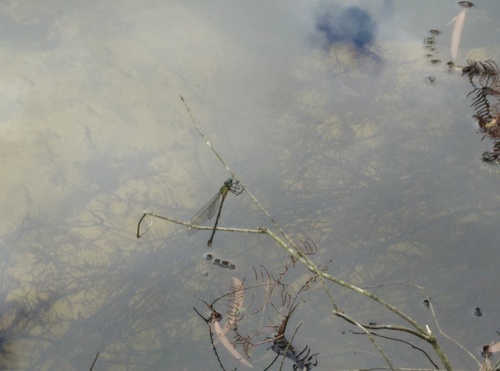
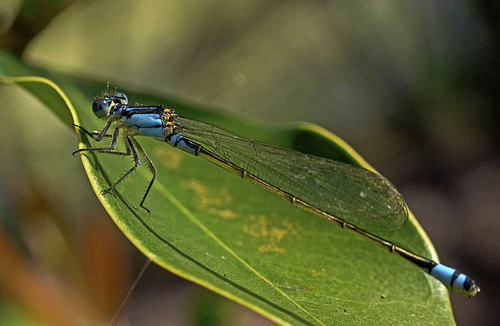
Tau Emerald

Tau Emerald

Hemicordulia tau

Daily sighting probability ~10% · With luck
at Kosciuszko National Park

In 3 days ~30% in a week ~60%

8 Verified sightings at Kosciuszko National Park From 2019 to 2026
213 In all 9 parks
September Best month
☀️ Diurnal When it's spotted

About the Tau Emerald

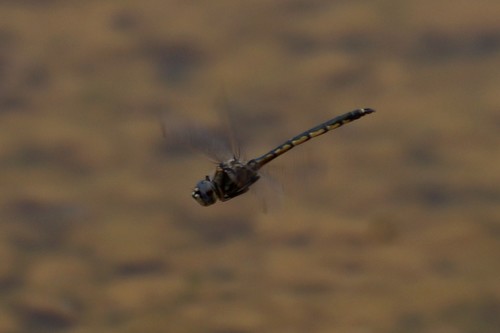
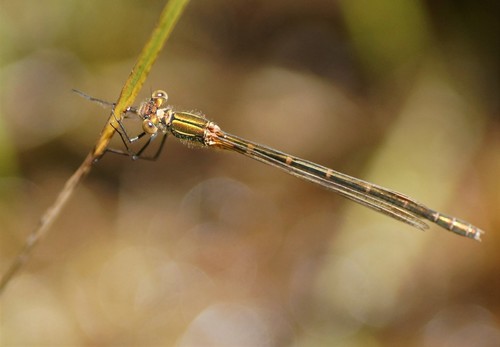
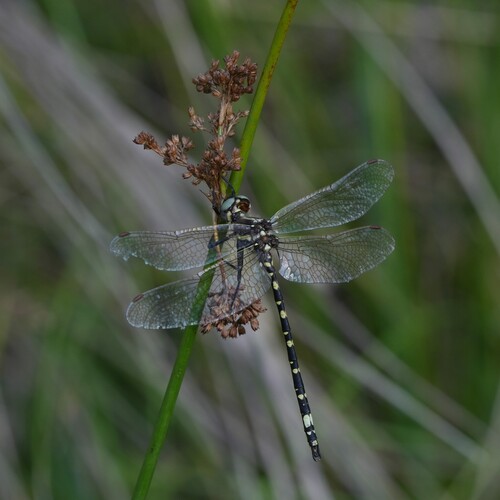
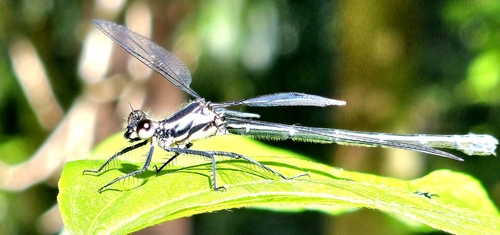
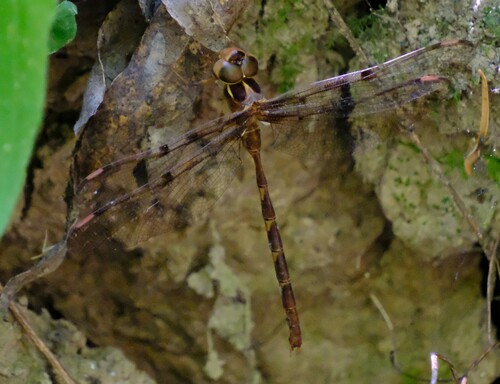
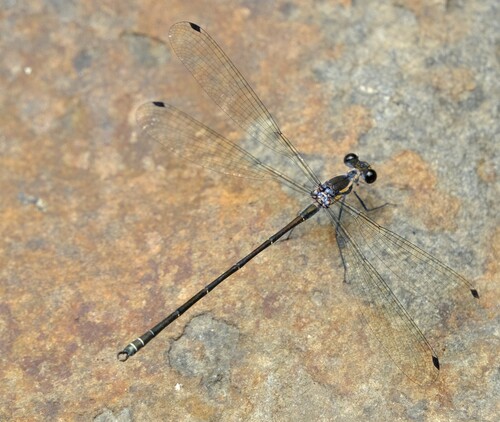
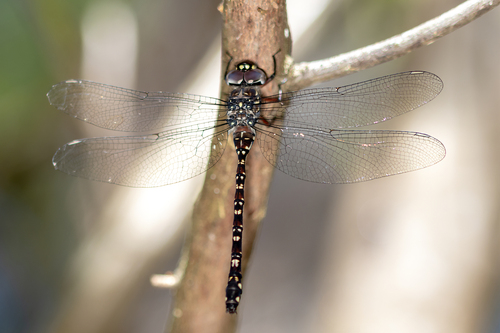
The tau emerald (Hemicordulia tau) is a species of dragonfly in the family Corduliidae. The species was first described by Edmond de Sélys Longchamps in 1871. The tau emerald is a medium-sized, black and yellow dragonfly with long legs,

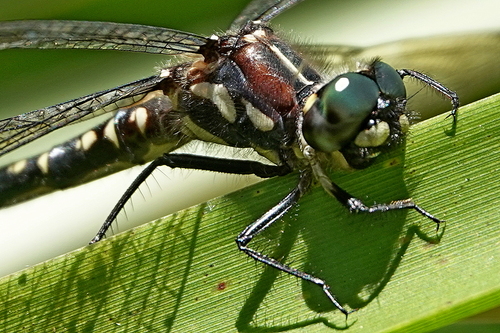
reaching a body length of about 50 mm. As is unique to dragonfly and mayfly species, H. tau has flight muscles attached directly to the wings, and in both the males and females the inboard edge of the hindwing is rounded. The 7th abdominal tergum is extensively black above and yellowish at the sides. The top of the frons are yellow with a dark T-mark. The species exhibits a linear relationship between head width and body length.

Nearly all of the dragonfly's head is eye, allowing incredible vision that encompasses almost every angle except right behind them. H. tau has a particularly large and well developed compound eye with two principal regions, the dorsal eye and the ventral eye. The dorsal eye is principally sensitive to short wavelength light, while the ventral eye has 3 or more spectral types of photoreceptors.

The length of time each larval stage of H. tau requires can decrease as the temperature... Wikipedia →

Global Distribution

Parks Where Found

# Park Country Daily sighting probability
1 Grampians National Park 🇦🇺 Australia
~30%
2 Hattah-Kulkyne National Park 🇦🇺 Australia
~30%
3 Great Otway National Park 🇦🇺 Australia
~20%
4 Flinders Ranges National Park 🇦🇺 Australia
~20%
5 Booderee National Park 🇦🇺 Australia
~10%
6 Kosciuszko National Park 🇦🇺 Australia
~10%
7 Wilsons Promontory National Park 🇦🇺 Australia
~10%
8 Blue Mountains National Park 🇦🇺 Australia
~10%
9 Royal National Park 🇦🇺 Australia
~10%

Cities Where Found

# City Country Daily sighting probability
1 Melbourne 🇦🇺 Australia
~20%
2 Perth 🇦🇺 Australia
~10%
3 Sydney 🇦🇺 Australia
~10%
4 Brisbane 🇦🇺 Australia
<5%

Before you go

What are the chances of seeing a Tau Emerald in Kosciuszko National Park?

With luck

About 10% of wildlife watchers report a Tau Emerald sighting in Kosciuszko National Park on a given day, based on 8 verified sightings from GBIF citizen-science data from 2019 to 2026. It is the 59th most-seen of the 105 insects we can rate there. Over three days the chance rises to about 30%, and over a week to about 60%, if each day is a fresh chance.

When is the best time to see a Tau Emerald in Kosciuszko National Park?

March, September and December

In those months about 20% of wildlife watchers report a Tau Emerald in Kosciuszko National Park on a given day, against under 5% in February, May–August and October–November, the lowest months.

What time of day is best to see a Tau Emerald?

Between noon and 3 pm

Across all the parks we cover, that three-hour window holds the most Tau Emerald sightings with a recorded time, and about 9 in 10 of them come between 6 am and 6 pm: it is a daytime animal.

Which relatives of the Tau Emerald live in Kosciuszko National Park?

Same order: Odonata

The closest relatives of the Tau Emerald that you can see in Kosciuszko National Park (order Odonata, Dragonflies and Damselflies) are Metallic Ringtail (about 30%), Swamp Tigertail (about 30%) and Southern Tigertail (about 20%), with each one's daily chance of a sighting.

Where does the Tau Emerald sighting chance come from?

GBIF citizen-science records

It is estimated from how often the Tau Emerald is recorded against all the insects logged in Kosciuszko National Park (8 verified sightings from 2019 to 2026), calibrated against known sighting rates. Figures are rounded to the nearest 10% because citizen-science data supports honest approximations, not decimals, and months with records from fewer than five people show "—". How it works.

← Back to Kosciuszko National Park