Orange Mapwing

Orange Mapwing

Hypanartia lethe

Daily sighting probability ~10% · With luck
at Los Quetzales National Park

In 3 days ~30% in a week ~50%

9 Verified sightings at Los Quetzales National Park From 2019 to 2026
632 In all 9 parks
August Best month
☀️ Diurnal When it's spotted

About the Orange Mapwing

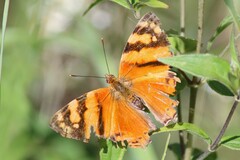
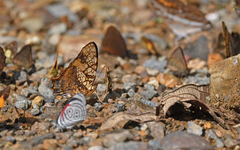
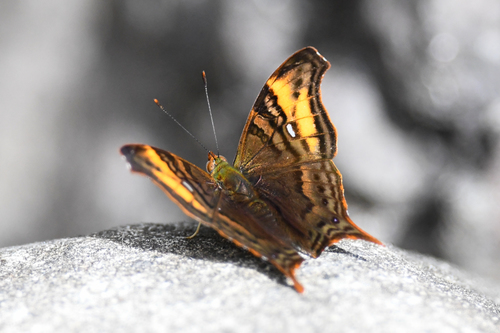
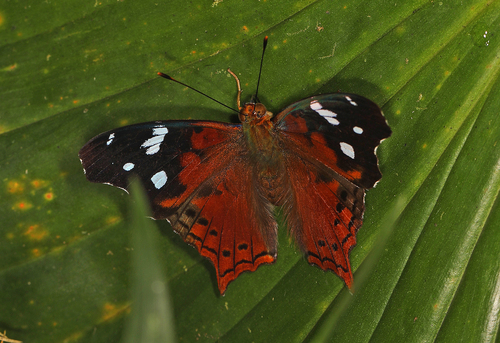
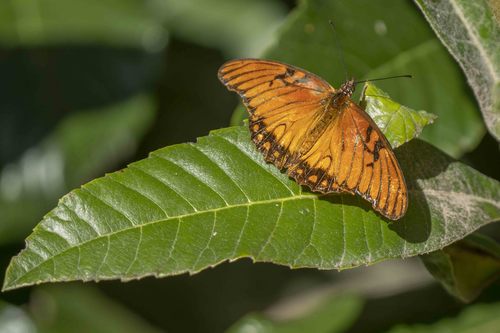
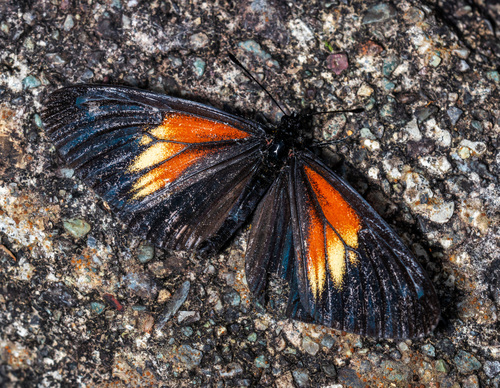
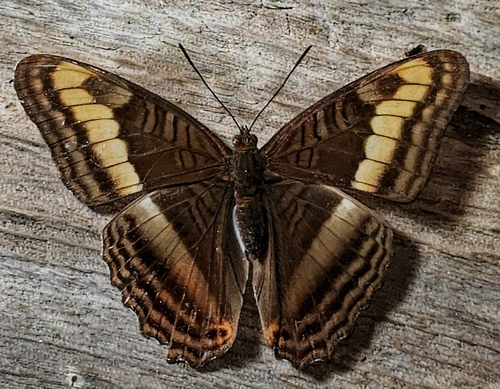
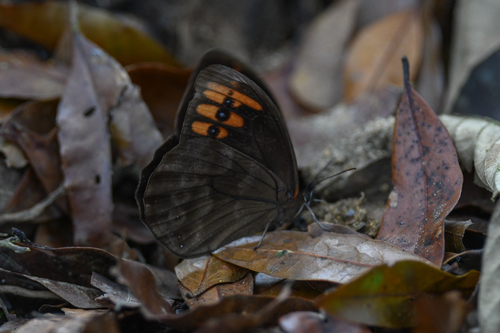
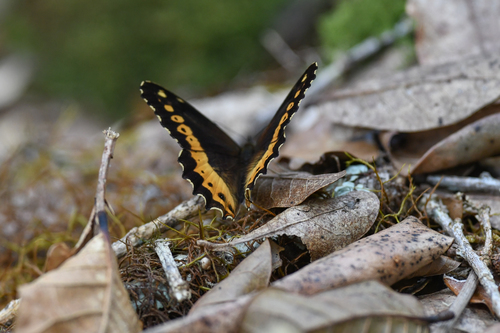
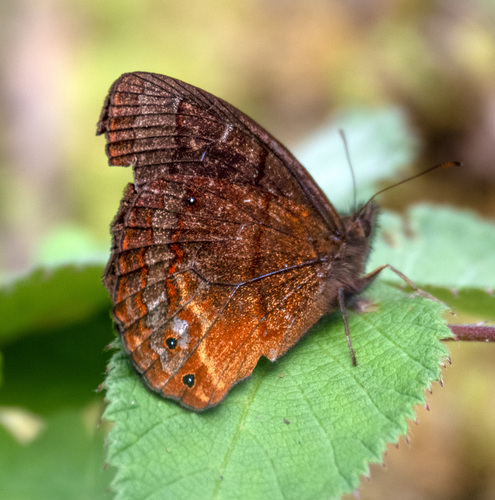
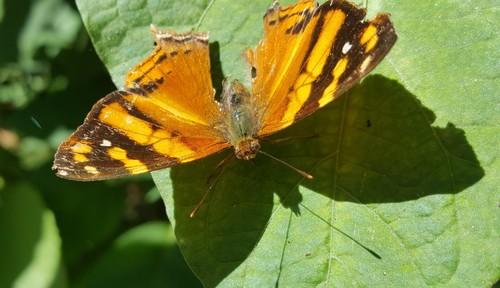
Hypanartia lethe, the orange admiral or orange mapwing, is a butterfly of the family Nymphalidae. Hypanartia lethe has a wingspan of about 40–50 millimetres (1.6–2.0 in). Forewings are black with orange-brown spots and an orange-brown fascia composed by a few blotches. Hindwings are orange brown, with a row of black spots in the marginal area and a black narrow strip in the submarginal area near the apex. The underside of the wings shows an ornate pattern and a pale brown coloration resembling the contour lines of a topographic map (hence the common name orange mapwing). Adults have two hindwing tails of variable length.

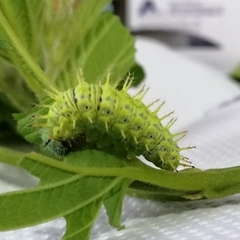
Larvae feed on Phenax, Boehmeria, Celtis, Sponia and Trema micrantha. This common and widespread species can be found in Texas, Mexico - Peru, Trinidad, Venezuela, Argentina, Paraguay, Uruguay and Brazil. These butterflies have a mountain range and prefers forest habitats at an elevation of 300–1,700 metres (980–5,580 ft) above sea level.

Butterflies of America Wikipedia →
Global Distribution

Parks Where Found

# Park Country Daily sighting probability
1 Iguazú National Park 🇦🇷 Argentina
~50%
2 Iguaçu National Park 🇧🇷 Brazil
~40%
3 Lago de Yojoa 🇭🇳 Honduras
~20%
4 Podocarpus National Park 🇪🇨 Ecuador
~20%
5 Volcán Barú National Park 🇵🇦 Panama
~20%
6 Los Quetzales National Park 🇨🇷 Costa Rica
~10%
7 La Amistad International Park (Panama) 🇵🇦 Panama
~10%
8 Tapantí-Macizo de la Muerte National Park 🇨🇷 Costa Rica
~10%
9 Monteverde Cloud Forest Reserve 🇨🇷 Costa Rica
<5%

Cities Where Found

# City Country Daily sighting probability
1 Porto Alegre 🇧🇷 Brazil
~10%
2 Curitiba 🇧🇷 Brazil
~10%
3 Quito 🇪🇨 Ecuador
~10%
4 São Paulo 🇧🇷 Brazil
~10%
5 Medellín 🇨🇴 Colombia
~10%

Before you go

What are the chances of seeing an Orange Mapwing in Los Quetzales National Park?

With luck

About 10% of wildlife watchers report an Orange Mapwing sighting in Los Quetzales National Park on a given day, based on 9 verified sightings from GBIF citizen-science data from 2019 to 2026. It is the 29th most-seen of the 56 insects we can rate there. Over three days the chance rises to about 30%, and over a week to about 50%, if each day is a fresh chance.

When is the best time to see an Orange Mapwing in Los Quetzales National Park?

August

In that month about 20% of wildlife watchers report an Orange Mapwing in Los Quetzales National Park on a given day, against under 5% in May–July and September–December, the lowest months.

What time of day is best to see an Orange Mapwing?

Between 10 am and 1 pm

Across all the parks we cover, that three-hour window holds the most Orange Mapwing sightings with a recorded time, and nearly all of them come between 6 am and 6 pm: it is a daytime animal.

Is Los Quetzales National Park the best place to see an Orange Mapwing?

6th of 9

Of the 9 parks where we can rate Orange Mapwing sightings, Los Quetzales National Park ranks 6th at about 10%. The best odds are in Iguazú National Park (Argentina, about 50%), Iguaçu National Park (Brazil, about 40%) and Lago de Yojoa (Honduras, about 20%). All parks ranked.

Which relatives of the Orange Mapwing live in Los Quetzales National Park?

Same genus: Hypanartia

The closest relatives of the Orange Mapwing that you can see in Los Quetzales National Park (genus Hypanartia, Mapwings) are Banded Mapwing (about 20%) and Reddish Mapwing (about 10%), with each one's daily chance of a sighting.

Where does the Orange Mapwing sighting chance come from?

GBIF citizen-science records

It is estimated from how often the Orange Mapwing is recorded against all the insects logged in Los Quetzales National Park (9 verified sightings from 2019 to 2026), calibrated against known sighting rates. Figures are rounded to the nearest 10% because citizen-science data supports honest approximations, not decimals, and months with records from fewer than five people show "—". How it works.

← Back to Los Quetzales National Park