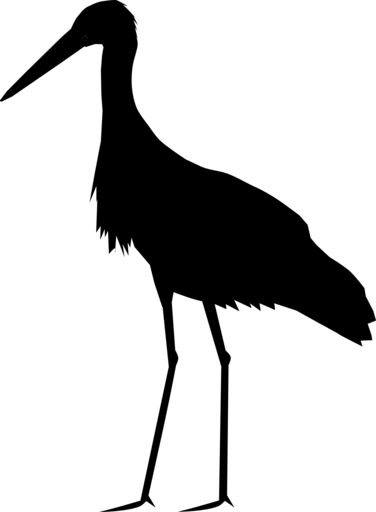
African Woolly-necked Stork

African Woolly-necked Stork

Ciconia microscelis

Silhouette: L. Shyamal · PhyloPic

Daily sighting probability ~10% · With luck
at Mana Pools National Park

In 3 days ~20% in a week ~40%

28 Verified sightings at Mana Pools National Park From 2019 to 2026
4,439 In all 34 parks
April Best month
☀️ Diurnal When it's spotted

About the African Woolly-necked Stork

The African woolly-necked stork or African woollyneck (Ciconia microscelis) is a species of large wading bird in the stork family Ciconiidae. It breeds singly, or in small loose colonies. It is distributed in a wide variety of habitats including marshes in forests, agricultural areas, and freshwater wetlands across Africa.

It was formerly considered a subspecies of the Asian woolly-necked stork (C. episcopus), and called the woolly-necked stork, but was split as a distinct species by the International Ornithological Congress in 2023 on the basis of its allopatric range and significant plumage and morphological differences.

The African woolly-necked stork is a medium-sized stork at 75–92 cm tall. The iris is deep crimson or wine-red. The stork is glistening black overall with a black "skull cap", a downy white neck which gives it its name. The lower belly and under-tail coverts are white, standing out from the rest of the dark coloured plumage. Feathers on the fore-neck are iridescent with a coppery-purple tinge. These feathers are elongated and can be erected during displays. The tail is deeply forked and is white, usually covered by the black long under... Wikipedia →

Global Distribution

Parks Where Found

# Park Country Daily sighting probability
1 Hluhluwe-Imfolozi Park 🇿🇦 South Africa
~30%
2 uMkhuze Game Reserve 🇿🇦 South Africa
~20%
3 Odzala-Kokoua National Park 🇨🇬 Republic of the Congo
~20%
4 Tsavo East National Park 🇰🇪 Kenya
~20%
5 Gonarezhou National Park 🇿🇼 Zimbabwe
~20%
6 iSimangaliso Wetland Park 🇿🇦 South Africa
~20%
7 Kruger National Park 🇿🇦 South Africa
~20%
8 Mkomazi National Park 🇹🇿 Tanzania
~20%
9 Gorongosa National Park 🇲🇿 Mozambique
~20%
10 Masai Mara National Reserve 🇰🇪 Kenya
~20%
11 Hwange National Park 🇿🇼 Zimbabwe
~10%
12 Niokolo-Koba National Park 🇸🇳 Senegal
~10%
13 Liwonde National Park 🇲🇼 Malawi
~10%
14 Tsavo West National Park 🇰🇪 Kenya
~10%
15 South Luangwa National Park 🇿🇲 Zambia
~10%
16 Murchison Falls National Park 🇺🇬 Uganda
~10%
17 Lower Zambezi National Park 🇿🇲 Zambia
~10%
18 Meru National Park 🇰🇪 Kenya
~10%
19 Lake Mburo National Park 🇺🇬 Uganda
~10%
20 Mana Pools National Park 🇿🇼 Zimbabwe
~10%
21 Semuliki National Park 🇺🇬 Uganda
~10%
22 Mikumi National Park 🇹🇿 Tanzania
~10%
23 Bwindi Impenetrable National Park 🇺🇬 Uganda
~10%
24 Queen Elizabeth National Park 🇺🇬 Uganda
<5%
25 Moremi Game Reserve 🇧🇼 Botswana
<5%
26 Lake Nakuru National Park 🇰🇪 Kenya
<5%
27 Serengeti National Park 🇹🇿 Tanzania
<5%
28 Kafue National Park 🇿🇲 Zambia
<5%
29 Samburu National Reserve 🇰🇪 Kenya
<5%
30 Virunga National Park 🇨🇩 Democratic Republic of the Congo
<5%
31 Kibale National Park 🇺🇬 Uganda
<5%
32 Chobe National Park 🇧🇼 Botswana
<5%
33 Amboseli National Park 🇰🇪 Kenya
<5%
34 Ngorongoro Conservation Area 🇹🇿 Tanzania
<5%

Cities Where Found

# City Country Daily sighting probability
1 Mombasa 🇰🇪 Kenya
~40%
2 Durban 🇿🇦 South Africa
~20%
3 Dar es-Salaam 🇹🇿 Tanzania
<5%
4 Addis Ababa 🇪🇹 Ethiopia
<5%

Zoos & Centres Where Found

# Zoo / Centre Country
1 National Zoological Garden of South Africa 🇿🇦 South Africa In captivity

Before you go

What are the chances of seeing an African Woolly-necked Stork in Mana Pools National Park?

With luck

About 10% of wildlife watchers report an African Woolly-necked Stork sighting in Mana Pools National Park on a given day, based on 28 verified sightings from GBIF citizen-science data from 2019 to 2026. It is the 190th most-seen of the 275 birds we can rate there. Over three days the chance rises to about 20%, and over a week to about 40%, if each day is a fresh chance.

When is the best time to see an African Woolly-necked Stork in Mana Pools National Park?

April and May

In those months about 20% of wildlife watchers report an African Woolly-necked Stork in Mana Pools National Park on a given day, against under 5% in January and June–October, the lowest months. Those are among Mana Pools National Park's driest months, with about 15 mm of rain a month against 290 mm in January. March has too few records to rate.

What time of day is best to see an African Woolly-necked Stork?

Between 9 am and noon

Across all the parks we cover, that three-hour window holds the most African Woolly-necked Stork sightings with a recorded time, and about 9 in 10 of them come between 6 am and 6 pm: it is a daytime animal.

Is Mana Pools National Park the best place to see an African Woolly-necked Stork?

20th of 34

Of the 34 parks where we can rate African Woolly-necked Stork sightings, Mana Pools National Park ranks 20th at about 10%. The best odds are in Hluhluwe-Imfolozi Park (South Africa, about 30%), uMkhuze Game Reserve (South Africa, about 20%) and Odzala-Kokoua National Park (Republic of the Congo, about 20%).

Where does the African Woolly-necked Stork sighting chance come from?

GBIF citizen-science records

It is estimated from how often the African Woolly-necked Stork is recorded against all the birds logged in Mana Pools National Park (28 verified sightings from 2019 to 2026), calibrated against known sighting rates. Figures are rounded to the nearest 10% because citizen-science data supports honest approximations, not decimals, and months with records from fewer than five people show "—". How it works.

← Back to Mana Pools National Park