



Completed


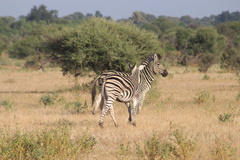


Plains Zebra
Equus quagga
Silhouette: Mercedes Yrayzoz (vectorized by T. Michael Keesey) · PhyloPic
- KingdomAnimalia (Animals)
- PhylumChordata (Chordates)
- ClassMammalia (Mammals)
- OrderPerissodactyla (Odd-toed Ungulates)
- FamilyEquidae (Equines)
- GenusEquus (Equines)
- SpeciesEquus quagga (Plains Zebra)
In 3 days ~80% in a week >90%
225 Verified sightings at Nairobi National Park From 2019 to 2026
7,662 In all 40 parks
March Best month
☀️ Diurnal When it's spotted



Completed


Completed




Completed


Completed
About the Plains Zebra
The plains zebra (Equus quagga, formerly Equus burchellii) is the most common and geographically widespread species of zebra. Its range is fragmented, but spans much of southern and eastern Africa south of the Sahara. Six or seven subspecies have been recognised, including the quagga which was thought to be a separate species. More recent research supports variations in zebra populations being clines rather than subspecies.
Plains zebras are intermediate in size between the larger Grévy's zebra and the smaller mountain zebra and tend to have broader stripes than both. Great variation in coat patterns exists between clines and individuals. The plains zebra's habitat is generally, but not exclusively, treeless grasslands and savanna woodlands, both tropical and temperate. They generally avoid desert, dense rainforest and permanent wetlands. Zebras are preyed upon by lions and spotted hyenas, Nile crocodiles and, to a lesser extent, leopards, cheetahs and African wild dogs.
Plains zebras are a highly social species, forming harems with a single stallion, several mares and their recent offspring; bachelor groups also form. Groups may come together to form herds. The animals keep watch for predators; they bark or snort when they see a predator and the harem stallion attacks predators to defend his harem.
The plains zebra remains common in game reserves, but is threatened by human activities, such as hunting for its meat and hide, as well as competition with livestock and encroachment by farming on much of its habitat. The loss of open grasslands due to woody plant encroachment increases predation risk and therewith habitat. Plains zebra are listed as near threatened by the IUCN as of 2016. The species population is stable and not endangered, though populations in most countries have declined sharply. Wikipedia →
Sounds
Recording0:06
Tanzania · 2018
© Bernard BOUSQUET · XC1059103 · CC BY-NC-SA 4.0
Alarm call0:27
South Africa · 2023
© Marc Anderson · XC979567 · CC BY-NC-ND 4.0
Recording0:22
Botswana · 2020
© Dewald du Plessis · iNaturalist · CC BY-NC 4.0
Recent sightings of Plains Zebra in Nairobi National Park
LIVEiNaturalistGlobal Distribution
Parks Where Found
Zoos & Centres Where Found
Closest Relatives at Nairobi National Park





Before you go
What are the chances of seeing a Plains Zebra in Nairobi National Park?
Likely
About 40% of wildlife watchers report a Plains Zebra sighting in Nairobi National Park on a given day, based on 225 verified sightings from GBIF citizen-science data from 2019 to 2026. It is the 10th most-seen of the 30 mammals we can rate there. Over three days the chance rises to about 80%, and over a week to over 90%, if each day is a fresh chance.
When is the best time to see a Plains Zebra in Nairobi National Park?
March
In that month about 60% of wildlife watchers report a Plains Zebra in Nairobi National Park on a given day, against about 20% in January and May, the lowest months.
What time of day is best to see a Plains Zebra?
Between 2 and 5 pm
Across all the parks we cover, that three-hour window holds the most Plains Zebra sightings with a recorded time, and about 9 in 10 of them come between 6 am and 6 pm: it is a daytime animal.
Is Nairobi National Park the best place to see a Plains Zebra?
27th of 40
Of the 40 parks where we can rate Plains Zebra sightings, Nairobi National Park ranks 27th at about 40%. The best odds are in Akagera National Park (Rwanda, about 80%), Kidepo Valley National Park (Uganda, about 80%) and Etosha National Park (Namibia, about 80%). All parks ranked.
Which relatives of the Plains Zebra live in Nairobi National Park?
Same order: Perissodactyla
The closest relatives of the Plains Zebra that you can see in Nairobi National Park (order Perissodactyla, Odd-toed Ungulates) are White Rhinoceros (about 60%) and Black Rhinoceros (about 40%), with each one's daily chance of a sighting.
Where does the Plains Zebra sighting chance come from?
GBIF citizen-science records
It is estimated from how often the Plains Zebra is recorded against all the mammals logged in Nairobi National Park (225 verified sightings from 2019 to 2026), calibrated against known sighting rates. Figures are rounded to the nearest 10% because citizen-science data supports honest approximations, not decimals, and months with records from fewer than five people show "—". How it works.
