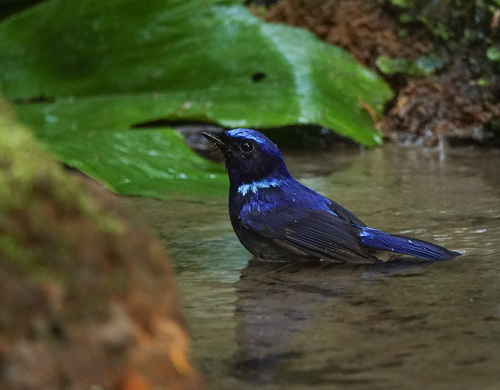
Little Pied Flycatcher

Little Pied Flycatcher

Ficedula westermanni

Silhouette: Rachael Joakim · PhyloPic

LCLeast ConcernNTVUENCR
Daily sighting probability <5% · Rare
at Namdapha National Park

In 3 days ~10% in a week ~20%

50 Verified sightings at Namdapha National Park From 2019 to 2026
2,500 In all 9 parks
November Best month
🌅 Crepuscular When it's spotted

About the Little Pied Flycatcher

The little pied flycatcher (Ficedula westermanni) is a species of bird in the family Muscicapidae. It is native to the Himalayas and Southeast Asia. The species was given the binomial Muscicapula westermanni by R.B. Sharpe in 1888 based on a specimen collected by Leonard Ray in Malaysia and named after Gerardus Frederik Westerman.

Its natural habitats are subtropical or tropical moist lowland forest and subtropical or tropical moist montane forest. Wikipedia →

Sounds

Call1:06

India · 2019

© Peter Boesman · XC472715 · CC BY-NC-ND 4.0

Song0:17

Philippines · 2026

© Kelle Moreau · XC1162467 · CC BY-NC-SA 4.0

Alarm call0:09

India · 2020

© Dhyey Shah · XC536449 · CC BY-NC-SA 4.0

Global Distribution

Parks Where Found

# Park Country Daily sighting probability
1 Kinabalu Park 🇲🇾 Malaysia
~40%
2 Doi Inthanon National Park 🇹🇭 Thailand
~30%
3 Manas National Park 🇮🇳 India
~10%
4 Royal Manas National Park 🇧🇹 Bhutan
~10%
5 Kerinci Seblat National Park 🇮🇩 Indonesia
~10%
6 Kaziranga National Park 🇮🇳 India
~10%
7 Namdapha National Park 🇮🇳 India
<5%
8 Jim Corbett National Park 🇮🇳 India
<5%
9 Chitwan National Park 🇳🇵 Nepal
<5%

Cities Where Found

# City Country Daily sighting probability
1 Guwahati 🇮🇳 India
<5%
2 Kathmandu 🇳🇵 Nepal
<5%

Before you go

What are the chances of seeing a Little Pied Flycatcher in Namdapha National Park?

Rare

Under 5% of wildlife watchers report a Little Pied Flycatcher sighting in Namdapha National Park on a given day, based on 50 verified sightings from GBIF citizen-science data from 2019 to 2026. It is the 185th most-seen of the 298 birds we can rate there. Over three days the chance rises to about 10%, and over a week to about 20%, if each day is a fresh chance.

When is the best time to see a Little Pied Flycatcher in Namdapha National Park?

March and November

In those months about 10% of wildlife watchers report a Little Pied Flycatcher in Namdapha National Park on a given day, against under 5% in April–May, October and December–February, the lowest months. Those are among Namdapha National Park's driest months, with about 75 mm of rain a month against 660 mm in July. June to September have too few records to rate.

What time of day is best to see a Little Pied Flycatcher?

Between 3 and 6 am

Across all the parks we cover, that three-hour window holds the most Little Pied Flycatcher sightings with a recorded time, and about 6 in 10 of them come between 6 pm and 6 am: it is most active around dawn and dusk.

Is Namdapha National Park the best place to see a Little Pied Flycatcher?

7th of 9

Of the 9 parks where we can rate Little Pied Flycatcher sightings, Namdapha National Park ranks 7th at under 5%. The best odds are in Kinabalu Park (Malaysia, about 40%), Doi Inthanon National Park (Thailand, about 30%) and Manas National Park (India, about 10%).

Which relatives of the Little Pied Flycatcher live in Namdapha National Park?

Same genus: Ficedula

The closest relatives of the Little Pied Flycatcher that you can see in Namdapha National Park (genus Ficedula, Ficedula Flycatchers) are Snowy-browed Flycatcher (about 20%), Pygmy Blue-Flycatcher (about 20%) and Sapphire Flycatcher (about 10%), with each one's daily chance of a sighting.

Where does the Little Pied Flycatcher sighting chance come from?

GBIF citizen-science records

It is estimated from how often the Little Pied Flycatcher is recorded against all the birds logged in Namdapha National Park (50 verified sightings from 2019 to 2026), calibrated against known sighting rates. Figures are rounded to the nearest 10% because citizen-science data supports honest approximations, not decimals, and months with records from fewer than five people show "—". How it works.

← Back to Namdapha National Park