African Wattled Lapwing

African Wattled Lapwing

Vanellus senegallus

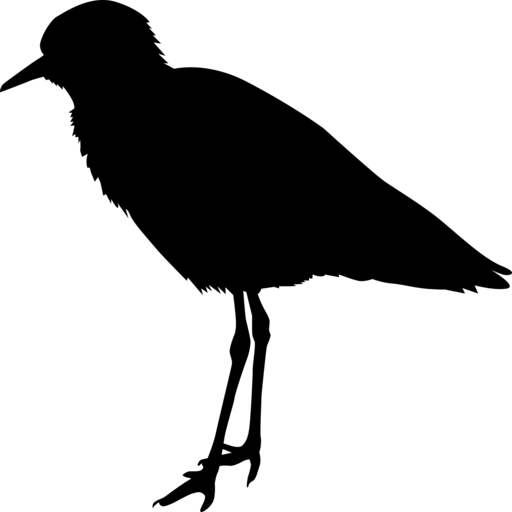
Silhouette: Rebecca Groom · PhyloPic

LCLeast ConcernNTVUENCR
Daily sighting probability ~60% · Likely
at Niokolo-Koba National Park

In 3 days ~90% in a week >90%

280 Verified sightings at Niokolo-Koba National Park From 2019 to 2026
7,524 In all 28 parks
February Best month
☀️ Diurnal When it's spotted

About the African Wattled Lapwing

The African wattled lapwing (Vanellus senegallus), also known as the Senegal wattled plover or simply wattled lapwing, is a large lapwing, a group of largish waders in the family Charadriidae. It is a resident breeder in most of sub-Saharan Africa outside the rainforests, although it has seasonal movements.

These are conspicuous and unmistakable birds. They are large brown waders with a black crown, white forehead and large yellow facial wattles. The tail is white, tipped black, and the long legs are yellow. In flight, the upperwings have black flight feathers and brown coverts separated by a white bar. The underwings are white with black flight feathers. The African wattled lapwing has a loud peep-peep call.

This species is a common breeder in wet lowland habitats, especially damp grassland. It often feeds in drier habitats, such as golf courses, picking insects and other invertebrates from the ground. It lays three or four eggs on a ground scrape.

The African wattled lapwing is one of the species to which the Agreement on the Conservation of African-Eurasian Migratory Waterbirds (AEWA) applies. Wattled plover - Species text in The... Wikipedia →

Sounds

Recording0:53

South Africa · 2026

© Marna Buys · XC1136362 · CC BY-NC-SA 4.0

Call0:15

Uganda · 2025

© Bernard BOUSQUET · XC1061793 · CC BY-NC-SA 4.0

Flight call0:10

Zambia · 2025

© Rory Nefdt · XC1027550 · CC BY-NC-SA 4.0

Global Distribution

Parks Where Found

# Park Country Daily sighting probability
1 Akagera National Park 🇷🇼 Rwanda
~60%
2 Niokolo-Koba National Park 🇸🇳 Senegal
~60%
3 Kafue National Park 🇿🇲 Zambia
~50%
4 Lake Mburo National Park 🇺🇬 Uganda
~50%
5 Liwonde National Park 🇲🇼 Malawi
~50%
6 Queen Elizabeth National Park 🇺🇬 Uganda
~50%
7 Murchison Falls National Park 🇺🇬 Uganda
~40%
8 Masai Mara National Reserve 🇰🇪 Kenya
~40%
9 Kidepo Valley National Park 🇺🇬 Uganda
~40%
10 Pilanesberg National Park 🇿🇦 South Africa
~30%
11 Hluhluwe-Imfolozi Park 🇿🇦 South Africa
~20%
12 iSimangaliso Wetland Park 🇿🇦 South Africa
~20%
13 South Luangwa National Park 🇿🇲 Zambia
~20%
14 Virunga National Park 🇨🇩 Democratic Republic of the Congo
~10%
15 Gorongosa National Park 🇲🇿 Mozambique
~10%
16 Kruger National Park 🇿🇦 South Africa
~10%
17 Chobe National Park 🇧🇼 Botswana
~10%
18 Serengeti National Park 🇹🇿 Tanzania
~10%
19 uMkhuze Game Reserve 🇿🇦 South Africa
~10%
20 Gonarezhou National Park 🇿🇼 Zimbabwe
~10%
21 Hwange National Park 🇿🇼 Zimbabwe
~10%
22 Mana Pools National Park 🇿🇼 Zimbabwe
<5%
23 Lower Zambezi National Park 🇿🇲 Zambia
<5%
24 Ruaha National Park 🇹🇿 Tanzania
<5%
25 Moremi Game Reserve 🇧🇼 Botswana
<5%
26 Ngorongoro Conservation Area 🇹🇿 Tanzania
<5%
27 Etosha National Park 🇳🇦 Namibia
<5%
28 Kibale National Park 🇺🇬 Uganda
<5%

Cities Where Found

# City Country Daily sighting probability
1 Accra 🇬🇭 Ghana
~30%
2 Serrekunda 🇬🇲 Gambia
~30%
3 Abuja 🇳🇬 Nigeria
~30%
4 Maputo 🇲🇿 Mozambique
~20%
5 Johannesburg 🇿🇦 South Africa
~20%
6 Kigali 🇷🇼 Rwanda
~10%
7 Harare 🇿🇼 Zimbabwe
~10%
8 Pretoria 🇿🇦 South Africa
~10%
9 Kampala 🇺🇬 Uganda
<5%

Zoos & Centres Where Found

# Zoo / Centre Country
1 Fort Worth Zoo 🇺🇸 United States In captivity
2 Parc Zoologique et Botanique de Mulhouse 🇫🇷 France In captivity
3 Valencia Bioparc 🇪🇸 Spain In captivity
4 National Aviary 🇺🇸 United States In captivity

Before you go

What are the chances of seeing an African Wattled Lapwing in Niokolo-Koba National Park?

Likely

About 60% of wildlife watchers report an African Wattled Lapwing sighting in Niokolo-Koba National Park on a given day, based on 280 verified sightings from GBIF citizen-science data from 2019 to 2026. It is the 25th most-seen of the 215 birds we can rate there. Over three days the chance rises to about 90%, and over a week to over 90%, if each day is a fresh chance.

When is the best time to see an African Wattled Lapwing in Niokolo-Koba National Park?

February to April

In those months about 70% of wildlife watchers report an African Wattled Lapwing in Niokolo-Koba National Park on a given day, against about 40% in August–September and November, the lowest months. Those are among Niokolo-Koba National Park's driest months, with almost no rain against 300 mm in August. May–July and October have too few records to rate.

What time of day is best to see an African Wattled Lapwing?

Between 9 am and noon

Across all the parks we cover, that three-hour window holds the most African Wattled Lapwing sightings with a recorded time, and about 9 in 10 of them come between 6 am and 6 pm: it is a daytime animal.

Is Niokolo-Koba National Park the best place to see an African Wattled Lapwing?

Among the best

Of the 28 parks where we can rate African Wattled Lapwing sightings, Niokolo-Koba National Park ranks 2nd at about 60%, level with the leaders once rounded. The best odds are in Akagera National Park (Rwanda, about 60%). All parks ranked.

Which relatives of the African Wattled Lapwing live in Niokolo-Koba National Park?

Same genus: Vanellus

The closest relatives of the African Wattled Lapwing that you can see in Niokolo-Koba National Park (genus Vanellus, Lapwings) are Spur-winged Lapwing (about 60%), White-headed Lapwing (about 40%) and Black-headed Lapwing (about 10%), with each one's daily chance of a sighting.

Where does the African Wattled Lapwing sighting chance come from?

GBIF citizen-science records

It is estimated from how often the African Wattled Lapwing is recorded against all the birds logged in Niokolo-Koba National Park (280 verified sightings from 2019 to 2026), calibrated against known sighting rates. Figures are rounded to the nearest 10% because citizen-science data supports honest approximations, not decimals, and months with records from fewer than five people show "—". How it works.

← Back to Niokolo-Koba National Park