Large Yellow Underwing

Large Yellow Underwing

Noctua pronuba

Daily sighting probability ~10% · With luck
at Olympic National Park

In 3 days ~20% in a week ~30%

32 Verified sightings at Olympic National Park From 2019 to 2026
1,140 In all 19 parks
September Best month
🌅 Crepuscular When it's spotted

About the Large Yellow Underwing

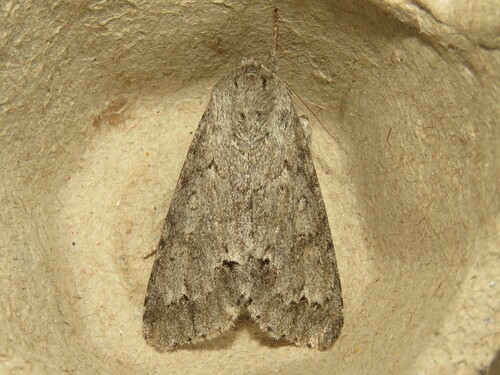
The large yellow underwing (Noctua pronuba) is a moth, the type species for the family Noctuidae. It is an abundant species throughout the palearctic, one of the most common and most familiar moths of the region. In some years the species is highly migratory with large numbers appearing suddenly in marginal parts of the range.

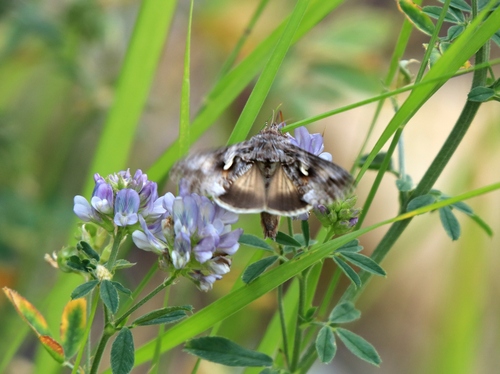
Adults have a wingspan of around 45-55 mm. The patterns and colours on the forewings vary widely by specimen, though the yellow-orange underwings with a black stripe at the base remain consistent. As with other Noctua species (and numerous other insects), this contrast of bland-on-land and bright-in-flight is used to confuse potential predators. It will visit flowers such as Buddleia, ragwort, and red valerian.

This adult flies at night from mid to late summer and is attracted to light, sometimes in huge numbers. The larvae, of the cutworm type, can be found from late summer to early spring, feeding at night and hiding underground at day, they are green or brown with two rows of black dashes along the back.

Antennae in male ciliated. Forewings ochreous-brown to dark fuscous, sometimes... Wikipedia →

Global Distribution

Parks Where Found

# Park Country Daily sighting probability
1 Snowdonia National Park 🇬🇧 United Kingdom
~30%
2 Wadden Sea National Park 🇩🇪 Germany
~20%
3 Cairngorms National Park 🇬🇧 United Kingdom
~20%
4 Mercantour National Park 🇫🇷 France
~20%
5 Great Bear Rainforest 🇨🇦 Canada
~20%
6 Bavarian Forest National Park 🇩🇪 Germany
~10%
7 Białowieża National Park 🇵🇱 Poland
~10%
8 Cévennes National Park 🇫🇷 France
~10%
9 Pacific Rim National Park Reserve 🇨🇦 Canada
~10%
10 Sierra Nevada National Park 🇪🇸 Spain
~10%
11 Pyrénées National Park 🇫🇷 France
~10%
12 Acadia National Park 🇺🇸 United States
~10%
13 Point Pelee National Park 🇨🇦 Canada
~10%
14 Triglav National Park 🇸🇮 Slovenia
~10%
15 Camargue 🇫🇷 France
~10%
16 Sierra de Guadarrama National Park 🇪🇸 Spain
~10%
17 Olympic National Park 🇺🇸 United States
~10%
18 Shenandoah National Park 🇺🇸 United States
~10%
19 Yosemite National Park 🇺🇸 United States
<5%

Cities Where Found

# City Country Daily sighting probability
1 Liverpool 🇬🇧 United Kingdom
~50%
2 Manchester 🇬🇧 United Kingdom
~30%
3 London 🇬🇧 United Kingdom
~30%
4 Birmingham 🇬🇧 United Kingdom
~20%
5 Amsterdam 🇳🇱 Netherlands
~20%
6 Portland 🇺🇸 United States
~20%
7 Ankara 🇹🇷 Turkey
~20%
8 Copenhagen 🇩🇰 Denmark
~20%
9 Leeds 🇬🇧 United Kingdom
~20%
10 Sofia 🇧🇬 Bulgaria
~20%

Before you go

What are the chances of seeing a Large Yellow Underwing in Olympic National Park?

With luck

About 10% of wildlife watchers report a Large Yellow Underwing sighting in Olympic National Park on a given day, based on 32 verified sightings from GBIF citizen-science data from 2019 to 2026. It is the 98th most-seen of the 207 insects we can rate there. Over three days the chance rises to about 20%, and over a week to about 30%, if each day is a fresh chance.

When is the best time to see a Large Yellow Underwing in Olympic National Park?

July to October

In those months about 10% of wildlife watchers report a Large Yellow Underwing in Olympic National Park on a given day, against under 5% in November to June, the lowest months. Those are among Olympic National Park's driest months, with about 110 mm of rain a month against 370 mm in November.

What time of day is best to see a Large Yellow Underwing?

Between 6 and 9 am

Across all the parks we cover, that three-hour window holds the most Large Yellow Underwing sightings with a recorded time, and about 6 in 10 of them come between 6 am and 6 pm: it is most active around dawn and dusk.

Is Olympic National Park the best place to see a Large Yellow Underwing?

17th of 19

Of the 19 parks where we can rate Large Yellow Underwing sightings, Olympic National Park ranks 17th at about 10%. The best odds are in Snowdonia National Park (United Kingdom, about 30%), Wadden Sea National Park (Germany, about 20%) and Cairngorms National Park (United Kingdom, about 20%).

Which relatives of the Large Yellow Underwing live in Olympic National Park?

Same family: Noctuidae

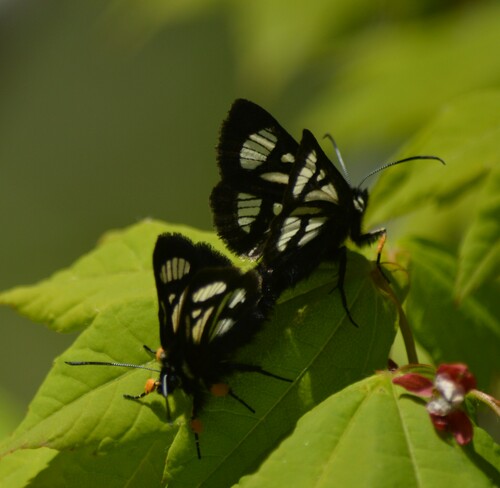
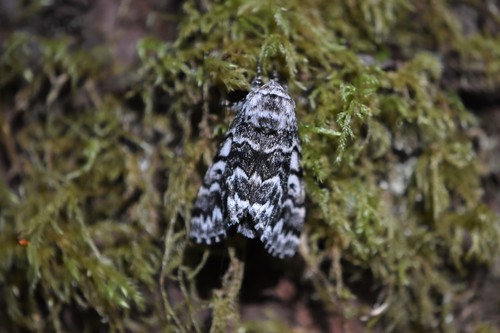
The closest relatives of the Large Yellow Underwing that you can see in Olympic National Park (family Noctuidae, Cutworm Moths and Allies) are Large Gray Dagger (about 10%) and MacCulloch's Forester Moth (about 10%), with each one's daily chance of a sighting.

Where does the Large Yellow Underwing sighting chance come from?

GBIF citizen-science records

It is estimated from how often the Large Yellow Underwing is recorded against all the insects logged in Olympic National Park (32 verified sightings from 2019 to 2026), calibrated against known sighting rates. Figures are rounded to the nearest 10% because citizen-science data supports honest approximations, not decimals, and months with records from fewer than five people show "—". How it works.

← Back to Olympic National Park