Zizina labradus
Daily sighting probability ~10% · With luck
at Royal National Park

In 3 days ~30% in a week ~50%

14 Verified sightings at Royal National Park From 2019 to 2026
265 In all 11 parks
November Best month
☀️ Diurnal When it's spotted

About the Zizina labradus

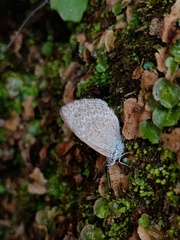
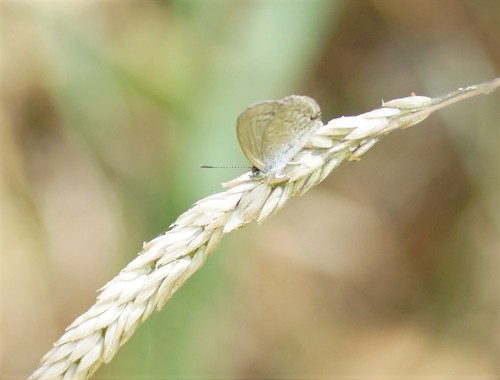
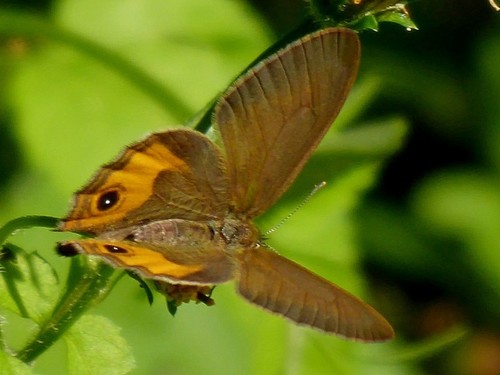
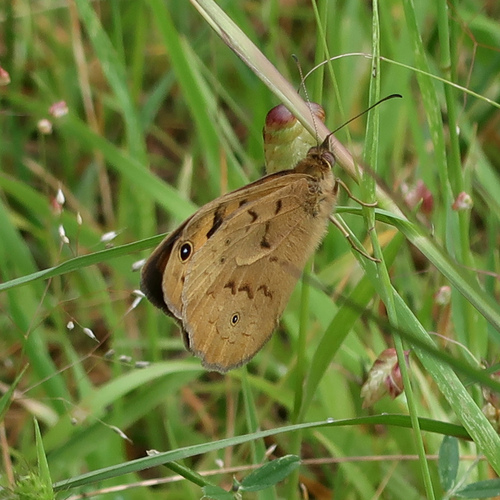
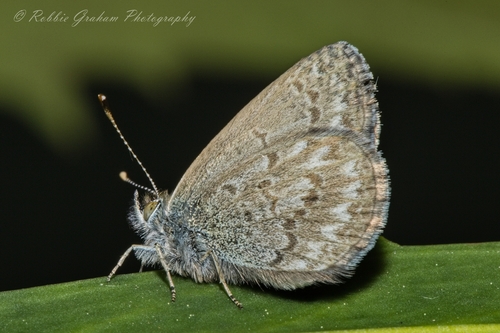
Zizina labradus, the common grass blue, grass blue, or clover blue, is a small Australian butterfly of the family Lycaenidae. Adults are purplish blue on the upper wing surface with a black body and black or brown wing margins. These margins are larger on the female than the male. The lower wing surface is brown to pale brownish grey with a pattern of fawn bands and spots, with the body covered in white or grey hairs. The wingspans of females are slightly larger than males, females having a wingspan of 23 mm and males 20 mm. Common grass blues have a weak, fluttering flight and so usually fly near ground level close to a food source.

Eggs are white or pale blue and have a mandarin shape with a pitted surface. Caterpillars reach about 7 mm in length, and their appearance is primarily green with a yellow stripe at the sides and a darker green stripe on the back, and brown or black head usually obscured under the thorax. In captivity, fed on an artificial diet, larvae come in highly variable colours, ranging from white through red to dark purple. Pupa are 10 mm long with erect hairs. Colouration varies, ranging from pink, greyish or greenish cream and contains mottled... Wikipedia →
Global Distribution

Parks Where Found

# Park Country Daily sighting probability
1 Hattah-Kulkyne National Park 🇦🇺 Australia
~20%
2 Grampians National Park 🇦🇺 Australia
~20%
3 Great Otway National Park 🇦🇺 Australia
~20%
4 Kosciuszko National Park 🇦🇺 Australia
~20%
5 Lamington National Park 🇦🇺 Australia
~10%
6 Blue Mountains National Park 🇦🇺 Australia
~10%
7 Springbrook National Park 🇦🇺 Australia
~10%
8 Wilsons Promontory National Park 🇦🇺 Australia
~10%
9 Royal National Park 🇦🇺 Australia
~10%
10 Egmont National Park 🇳🇿 New Zealand
~10%
11 Abel Tasman National Park 🇳🇿 New Zealand
~10%

Cities Where Found

# City Country Daily sighting probability
1 Melbourne 🇦🇺 Australia
~10%
2 Auckland 🇳🇿 New Zealand
~10%
3 Brisbane 🇦🇺 Australia
~10%
4 Sydney 🇦🇺 Australia
~10%
5 Perth 🇦🇺 Australia
~10%

Before you go

What are the chances of seeing a Zizina labradus in Royal National Park?

With luck

About 10% of wildlife watchers report a Zizina labradus sighting in Royal National Park on a given day, based on 14 verified sightings from GBIF citizen-science data from 2019 to 2026. It is the 73rd most-seen of the 175 insects we can rate there. Over three days the chance rises to about 30%, and over a week to about 50%, if each day is a fresh chance.

When is the best time to see a Zizina labradus in Royal National Park?

November

In that month about 30% of wildlife watchers report a Zizina labradus in Royal National Park on a given day, against under 5% in February–May, July–September and December, the lowest months.

What time of day is best to see a Zizina labradus?

Between noon and 3 pm

Across all the parks we cover, that three-hour window holds the most Zizina labradus sightings with a recorded time, and about 9 in 10 of them come between 6 am and 6 pm: it is a daytime animal.

Where does the Zizina labradus sighting chance come from?

GBIF citizen-science records

It is estimated from how often the Zizina labradus is recorded against all the insects logged in Royal National Park (14 verified sightings from 2019 to 2026), calibrated against known sighting rates. Figures are rounded to the nearest 10% because citizen-science data supports honest approximations, not decimals, and months with records from fewer than five people show "—". How it works.

← Back to Royal National Park