Fiery-necked Nightjar

Fiery-necked Nightjar

Caprimulgus pectoralis

Silhouette: Ferran Sayol · PhyloPic

LCLeast ConcernNTVUENCR
Daily sighting probability <5% · Rare
at South Luangwa National Park

In 3 days ~10% in a week ~20%

20 Verified sightings at South Luangwa National Park From 2019 to 2026
1,828 In all 29 parks
April Best month
🌅 Crepuscular When it's spotted

About the Fiery-necked Nightjar

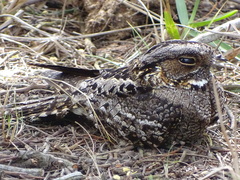
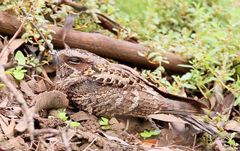
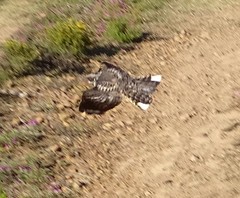
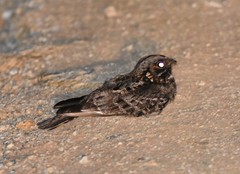
The fiery-necked nightjar (Caprimulgus pectoralis) is a species of nightjar in the family Caprimulgidae, which is found mostly in Africa south of the equator, though it has been spotted in a few countries north of the equator. It is most often found in woodland savannas or other deciduous woodlands. It is usually distinguished by its tawny coloured collar which gives the species its common name. It has a distinctive call that many have rendered as 'good-lord-deliver-us'. The fiery-necked nightjar is an insectivorous species that mostly eats butterflies, moths and other insects. The fiery-necked nightjar breeds after the dry season and typically produce two clutches with two eggs per clutch.

The fiery-necked nightjar belongs to the family Caprimulgidae which includes roughly 90 species of nightjars, nighthawks and their relatives. These birds are all insectivorous and most active at dawn, dusk and over night. In addition, a distinguishing feature of this family is the pectinate claw, which these birds use for preening. The fiery-necked nightjar is part of the Caprimulgus genus which contains the majority of the nightjar species. The fiery-necked nightjar is most closely... Wikipedia →

Sounds

Song0:38

Kenya · 2024

© Peter Boesman · XC948007 · CC BY-NC-ND 4.0

Call0:54

Zambia · 2023

© Marc Anderson · XC881534 · CC BY-NC-ND 4.0

Uncertain1:20

Botswana · 1964

© Nature sounds by Simply Birding · XC651567 · CC BY-NC-ND 4.0

Global Distribution

Parks Where Found

# Park Country Daily sighting probability
1 Kafue National Park 🇿🇲 Zambia
~20%
2 uMkhuze Game Reserve 🇿🇦 South Africa
~10%
3 Hluhluwe-Imfolozi Park 🇿🇦 South Africa
~10%
4 Lake Mburo National Park 🇺🇬 Uganda
~10%
5 Ruaha National Park 🇹🇿 Tanzania
~10%
6 Moremi Game Reserve 🇧🇼 Botswana
~10%
7 Gonarezhou National Park 🇿🇼 Zimbabwe
~10%
8 Mikumi National Park 🇹🇿 Tanzania
~10%
9 Mana Pools National Park 🇿🇼 Zimbabwe
~10%
10 Liwonde National Park 🇲🇼 Malawi
~10%
11 Addo Elephant National Park 🇿🇦 South Africa
~10%
12 Pilanesberg National Park 🇿🇦 South Africa
~10%
13 Kruger National Park 🇿🇦 South Africa
~10%
14 Hwange National Park 🇿🇼 Zimbabwe
~10%
15 Virunga National Park 🇨🇩 Democratic Republic of the Congo
~10%
16 Garden Route National Park 🇿🇦 South Africa
~10%
17 De Hoop Nature Reserve 🇿🇦 South Africa
~10%
18 iSimangaliso Wetland Park 🇿🇦 South Africa
<5%
19 Queen Elizabeth National Park 🇺🇬 Uganda
<5%
20 Lower Zambezi National Park 🇿🇲 Zambia
<5%
21 Gorongosa National Park 🇲🇿 Mozambique
<5%
22 South Luangwa National Park 🇿🇲 Zambia
<5%
23 Akagera National Park 🇷🇼 Rwanda
<5%
24 West Coast National Park 🇿🇦 South Africa
<5%
25 Kibale National Park 🇺🇬 Uganda
<5%
26 Chobe National Park 🇧🇼 Botswana
<5%
27 Etosha National Park 🇳🇦 Namibia
<5%
28 Murchison Falls National Park 🇺🇬 Uganda
<5%
29 Table Mountain National Park 🇿🇦 South Africa
<5%

Cities Where Found

# City Country Daily sighting probability
1 Harare 🇿🇼 Zimbabwe
~10%
2 Pretoria 🇿🇦 South Africa
<5%
3 Cape Town 🇿🇦 South Africa
<5%
4 Johannesburg 🇿🇦 South Africa
<5%

Before you go

What are the chances of seeing a Fiery-necked Nightjar in South Luangwa National Park?

Rare

Under 5% of wildlife watchers report a Fiery-necked Nightjar sighting in South Luangwa National Park on a given day, based on 20 verified sightings from GBIF citizen-science data from 2019 to 2026. It is the 198th most-seen of the 257 birds we can rate there. Over three days the chance rises to about 10%, and over a week to about 20%, if each day is a fresh chance.

When is the best time to see a Fiery-necked Nightjar in South Luangwa National Park?

April

In that month about 10% of wildlife watchers report a Fiery-necked Nightjar in South Luangwa National Park on a given day, against under 5% in May to March, the lowest months. That is one of South Luangwa National Park's driest months, with about 50 mm of rain against 310 mm in January.

What time of day is best to see a Fiery-necked Nightjar?

Between 6 and 9 pm

Across all the parks we cover, that three-hour window holds the most Fiery-necked Nightjar sightings with a recorded time, and about 6 in 10 of them come between 6 pm and 6 am: it is most active around dawn and dusk.

Is South Luangwa National Park the best place to see a Fiery-necked Nightjar?

22nd of 29

Of the 29 parks where we can rate Fiery-necked Nightjar sightings, South Luangwa National Park ranks 22nd at under 5%. The best odds are in Kafue National Park (Zambia, about 20%), uMkhuze Game Reserve (South Africa, about 10%) and Hluhluwe-Imfolozi Park (South Africa, about 10%).

Where does the Fiery-necked Nightjar sighting chance come from?

GBIF citizen-science records

It is estimated from how often the Fiery-necked Nightjar is recorded against all the birds logged in South Luangwa National Park (20 verified sightings from 2019 to 2026), calibrated against known sighting rates. Figures are rounded to the nearest 10% because citizen-science data supports honest approximations, not decimals, and months with records from fewer than five people show "—". How it works.

← Back to South Luangwa National Park