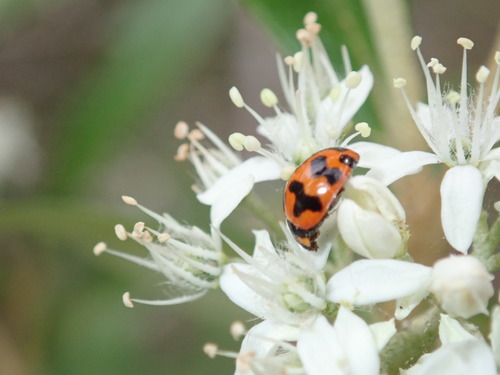
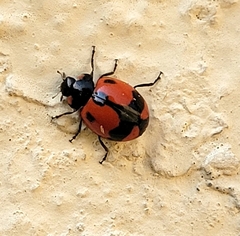
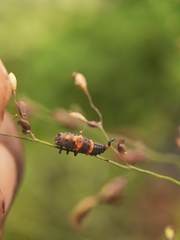
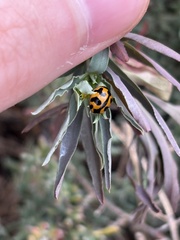
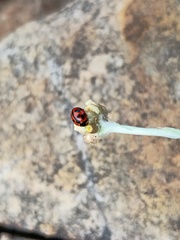
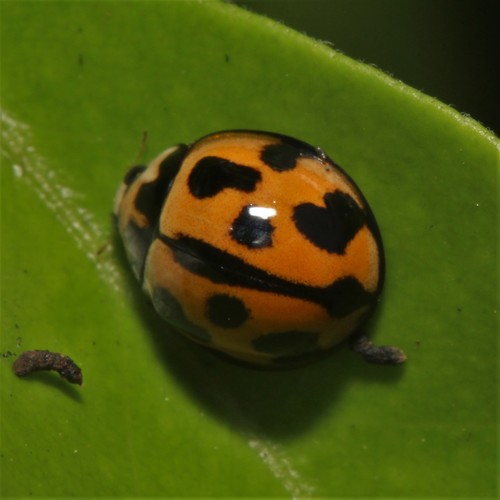
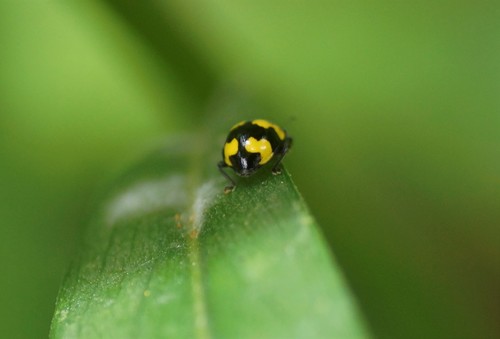
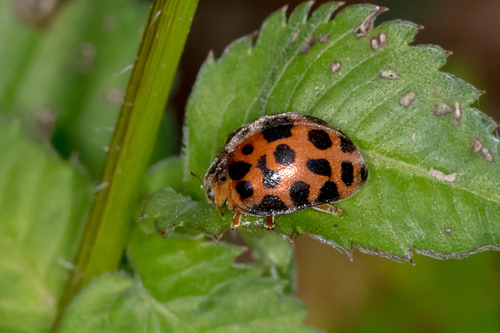
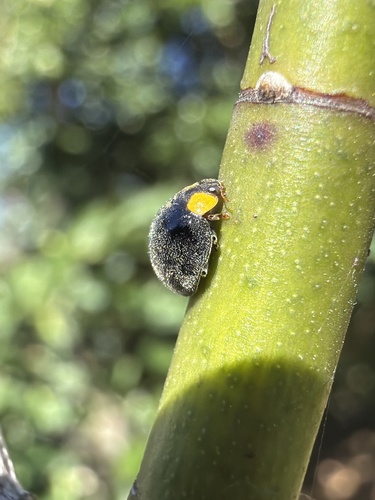
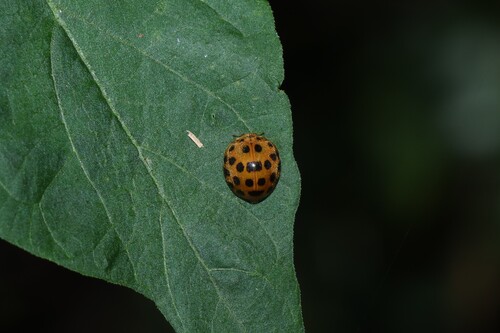
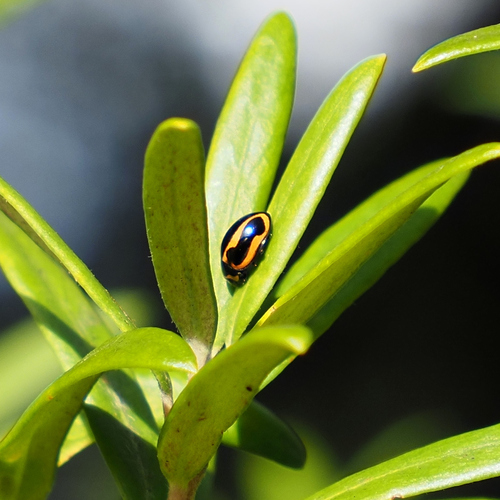
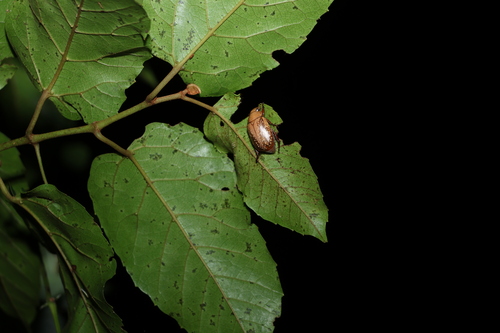
Small Transverse Ladybird Beetle

Small Transverse Ladybird Beetle

Coccinella transversalis

Daily sighting probability ~10% · With luck
at Springbrook National Park

In 3 days ~20% in a week ~40%

7 Verified sightings at Springbrook National Park From 2019 to 2026
313 In all 12 parks
July Best month
☀️ Diurnal When it's spotted

About the Small Transverse Ladybird Beetle

Coccinella transversalis, commonly known as the transverse ladybird or transverse lady beetle, is a species of ladybird beetle found from India across southern and southeastern Asia to Malesia and Australia. It is not to be confused with Coccinella transversoguttata, a widespread species in Europe and North America also known as the transverse ladybird. The alternative vernacular of small transverse ladybird may be used for C. transversalis in instances where these two species are discussed together.

The transverse ladybird was first described by Danish zoologist Johan Christian Fabricius in 1781 as Coccinella transversalis and still bears its original name. Fabricius' description predated Carl Peter Thunberg's naming of this species as C. repanda by several months.

Measuring 3.8 to 6.7 millimetres (0.15 to 0.26 in) long and 3.3 to 5.45 millimetres (0.130 to 0.215 in) wide, the transverse ladybird shows little variation across its wide range. It has a black head with predominantly bright red or orange elytra boldly marked with a black band down the midline and two lateral three-lobed markings.

Like many species of ladybirds, the transverse ladybird plays... Wikipedia →

Global Distribution

Parks Where Found

# Park Country Daily sighting probability
1 Flinders Ranges National Park 🇦🇺 Australia
~30%
2 Hattah-Kulkyne National Park 🇦🇺 Australia
~30%
3 Grampians National Park 🇦🇺 Australia
~30%
4 Kosciuszko National Park 🇦🇺 Australia
~20%
5 Blue Mountains National Park 🇦🇺 Australia
~20%
6 Uluru-Kata Tjuta National Park 🇦🇺 Australia
~10%
7 Great Otway National Park 🇦🇺 Australia
~10%
8 Royal National Park 🇦🇺 Australia
~10%
9 Lamington National Park 🇦🇺 Australia
~10%
10 Khao Yai National Park 🇹🇭 Thailand
~10%
11 Springbrook National Park 🇦🇺 Australia
~10%
12 Kaeng Krachan National Park 🇹🇭 Thailand
~10%

Cities Where Found

# City Country Daily sighting probability
1 Jammu 🇮🇳 India
~30%
2 Prayagraj 🇮🇳 India
~30%
3 Tasikmalaya 🇮🇩 Indonesia
~30%
4 Guwahati 🇮🇳 India
~30%
5 Yogyakarta 🇮🇩 Indonesia
~30%
6 Davao City 🇵🇭 Philippines
~30%
7 Dhaka 🇧🇩 Bangladesh
~20%
8 Vadodara 🇮🇳 India
~20%
9 Chennai 🇮🇳 India
~20%
10 Jabalpur 🇮🇳 India
~20%

Before you go

What are the chances of seeing a Small Transverse Ladybird Beetle in Springbrook National Park?

With luck

About 10% of wildlife watchers report a Small Transverse Ladybird Beetle sighting in Springbrook National Park on a given day, based on 7 verified sightings from GBIF citizen-science data from 2019 to 2026. It is the 262nd most-seen of the 429 insects we can rate there. Over three days the chance rises to about 20%, and over a week to about 40%, if each day is a fresh chance.

When is the best time to see a Small Transverse Ladybird Beetle in Springbrook National Park?

July

In that month about 20% of wildlife watchers report a Small Transverse Ladybird Beetle in Springbrook National Park on a given day, against under 5% in January–May and August–September, the lowest months. That is one of Springbrook National Park's driest months, with about 50 mm of rain against 210 mm in February.

What time of day is best to see a Small Transverse Ladybird Beetle?

Between noon and 3 pm

Across all the parks we cover, that three-hour window holds the most Small Transverse Ladybird Beetle sightings with a recorded time, and about 9 in 10 of them come between 6 am and 6 pm: it is a daytime animal.

Is Springbrook National Park the best place to see a Small Transverse Ladybird Beetle?

11th of 12

Of the 12 parks where we can rate Small Transverse Ladybird Beetle sightings, Springbrook National Park ranks 11th at about 10%. The best odds are in Flinders Ranges National Park (Australia, about 30%), Hattah-Kulkyne National Park (Australia, about 30%) and Grampians National Park (Australia, about 30%).

Where does the Small Transverse Ladybird Beetle sighting chance come from?

GBIF citizen-science records

It is estimated from how often the Small Transverse Ladybird Beetle is recorded against all the insects logged in Springbrook National Park (7 verified sightings from 2019 to 2026), calibrated against known sighting rates. Figures are rounded to the nearest 10% because citizen-science data supports honest approximations, not decimals, and months with records from fewer than five people show "—". How it works.

← Back to Springbrook National Park