Great Golden Digger Wasp

Great Golden Digger Wasp

Sphex ichneumoneus

Daily sighting probability ~10% · With luck
at Yosemite National Park

In 3 days ~20% in a week ~30%

10 Verified sightings at Yosemite National Park From 2019 to 2026
86 In all 7 parks
July Best month
☀️ Diurnal When it's spotted

About the Great Golden Digger Wasp

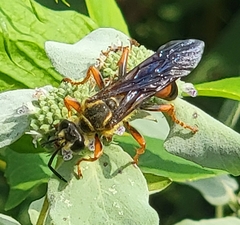
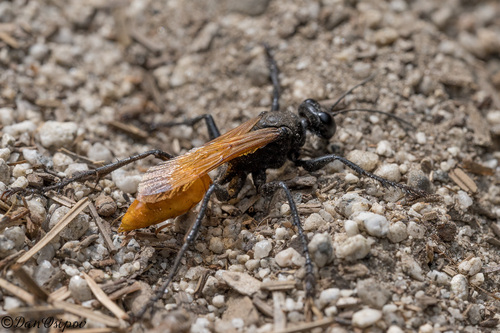
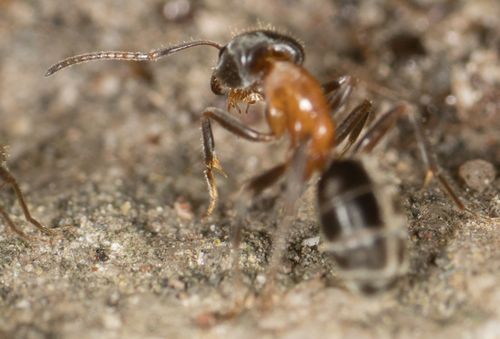
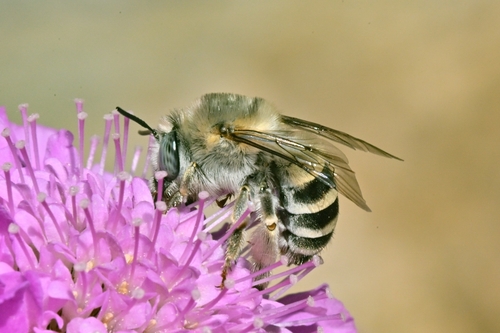
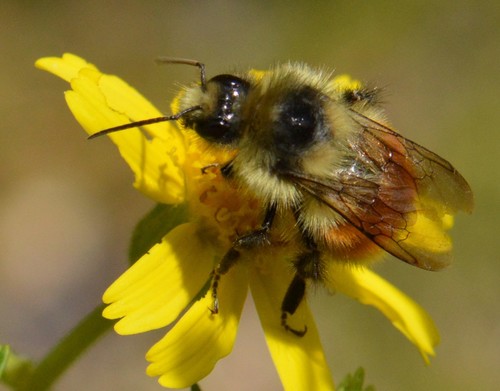
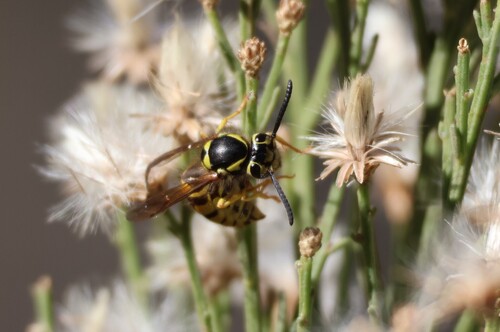
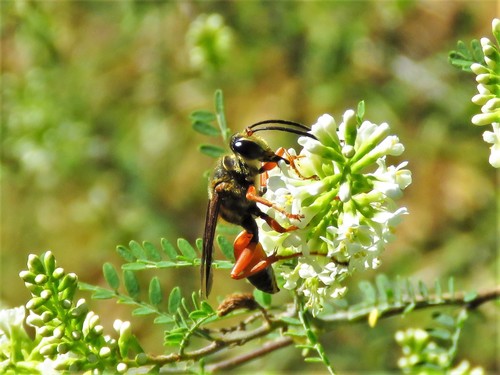
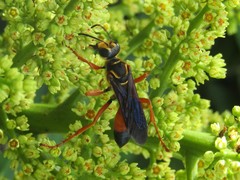
Sphex ichneumoneus, known commonly as the great golden digger wasp or great golden sand digger is a wasp in the family Sphecidae. It is identified by the golden pubescence on its head and thorax, its reddish orange legs, and partly reddish orange body. This wasp is native to the Western Hemisphere, from Canada to South America, and provisions its young with various types of paralyzed Orthoptera.

Douglas Hofstadter cites the observation by Woodridge of S. ichneumoneus continually repeating behavior (checking a burrow before pulling in a cricket) as an example of genetic determinism, calling the behavior "sphexish". It is an example of a fixed action pattern, as described by H.J. Brockmann, where the sign stimulus is the sight of paralyzed prey in correct orientation (head facing burrow) and position (≤3 cm from entrance in alignment with the dug mound) and the behavioral sequence is to pull the prey into the burrow by its antennae, if present (otherwise the wasp will position the prey outside, go into the burrow alone, reemerge headfirst and reevaluate, although it may uncommonly attempt to pull the prey in by another part of its body). The burrow of the great golden sand digger consists of a descending shaft with individual brood chambers arranged at right angles to it. This arrangement makes it difficult to pull prey into a brood chamber without getting stuck and is one possible reason why the wasp always checks to ensure the path is clear before preferentially pulling its prey down by its antennae. In addition, female wasps commonly build their burrows nearby those of other females of their species and may even share a nest, but will fight with other wasps if they encounter them inside their burrow during prey retrieval. Thus, an unattended nest may pose a risk to a laden wasp if it has not been inspected first. Wikipedia →
Global Distribution

Parks Where Found

# Park Country Daily sighting probability
1 Grand Canyon National Park 🇺🇸 United States
~10%
2 Acadia National Park 🇺🇸 United States
~10%
3 Great Smoky Mountains National Park 🇺🇸 United States
~10%
4 Everglades National Park 🇺🇸 United States
~10%
5 Yosemite National Park 🇺🇸 United States
~10%
6 Shenandoah National Park 🇺🇸 United States
<5%
7 Olympic National Park 🇺🇸 United States
<5%

Cities Where Found

# City Country Daily sighting probability
1 Seattle 🇺🇸 United States
~20%
2 Toronto 🇨🇦 Canada
~10%
3 Boston 🇺🇸 United States
~10%
4 Detroit 🇺🇸 United States
~10%
5 Minneapolis [Saint Paul] 🇺🇸 United States
~10%
6 Chicago 🇺🇸 United States
~10%
7 Austin 🇺🇸 United States
~10%
8 Dallas 🇺🇸 United States
~10%
9 New York City 🇺🇸 United States
~10%
10 Los Angeles 🇺🇸 United States
~10%

Before you go

What are the chances of seeing a Great Golden Digger Wasp in Yosemite National Park?

With luck

About 10% of wildlife watchers report a Great Golden Digger Wasp sighting in Yosemite National Park on a given day, based on 10 verified sightings from GBIF citizen-science data from 2019 to 2026. It is the 134th most-seen of the 227 insects we can rate there. Over three days the chance rises to about 20%, and over a week to about 30%, if each day is a fresh chance.

When is the best time to see a Great Golden Digger Wasp in Yosemite National Park?

July

In that month about 10% of wildlife watchers report a Great Golden Digger Wasp in Yosemite National Park on a given day, against under 5% in August to June, the lowest months. That is one of Yosemite National Park's driest months, with about 25 mm of rain against 220 mm in January.

What time of day is best to see a Great Golden Digger Wasp?

Between 11 am and 2 pm

Across all the parks we cover, that three-hour window holds the most Great Golden Digger Wasp sightings with a recorded time, and nearly all of them come between 6 am and 6 pm: it is a daytime animal.

Is Yosemite National Park the best place to see a Great Golden Digger Wasp?

Among the best

Of the 7 parks where we can rate Great Golden Digger Wasp sightings, Yosemite National Park ranks 5th at about 10%, level with the leaders once rounded. The best odds are in Grand Canyon National Park (United States, about 10%), Acadia National Park (United States, about 10%) and Great Smoky Mountains National Park (United States, about 10%).

Where does the Great Golden Digger Wasp sighting chance come from?

GBIF citizen-science records

It is estimated from how often the Great Golden Digger Wasp is recorded against all the insects logged in Yosemite National Park (10 verified sightings from 2019 to 2026), calibrated against known sighting rates. Figures are rounded to the nearest 10% because citizen-science data supports honest approximations, not decimals, and months with records from fewer than five people show "—". How it works.

← Back to Yosemite National Park