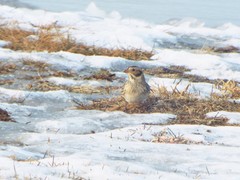
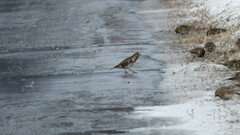
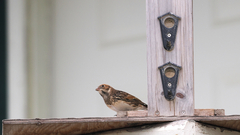
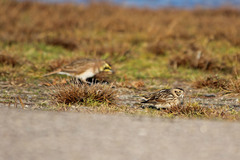

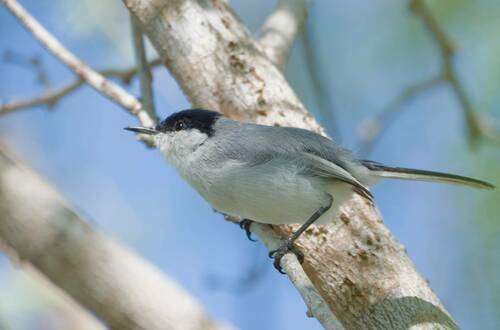
Lapland Longspur

Lapland Longspur

Calcarius lapponicus

Silhouette: Sheatherius · PhyloPic

LCLeast ConcernNTVUENCR
Daily sighting probability <5% · Rare
at Celestún Biosphere Reserve

In 3 days <5%

11 Verified sightings at Celestún Biosphere Reserve From 2019 to 2026
316 In all 12 parks
December Best month
☀️ Diurnal When it's spotted

About the Lapland Longspur

The Lapland longspur (Calcarius lapponicus), also known as the Lapland bunting, is a passerine bird in the longspur family Calcariidae. It is a circumpolar arctic breeder and the only member of the genus Calcarius present in Eurasia.

The Lapland longspur was formally described in 1758 by the Swedish naturalist Carl Linnaeus in the tenth edition of his Systema Naturae. He placed it with the finches in the genus Fringilla and coined the binomial name Fringilla lapponica. The family is now generally separated by modern authors from the Fringillidae (Old World finches). The Lapland longspur is now one of three longspurs placed in the genus Calcarius that was introduced in 1802 by the German naturalist Johann Matthäus Bechstein. The English name refers to the long hind claws. The genus name Calcarius is from Latin calcaria, "spurs", and the specific lapponicus refers to Lapland.

Five subspecies are recognised: Wikipedia →

Sounds

Call0:07

United States · 2022

© AUDEVARD Aurélien · XC1045852 · CC BY-NC-SA 4.0

Song1:10

Sweden · 2025

© Dag Österlund · XC1005653 · CC BY-NC-SA 4.0

Flight call0:18

Sweden · 2019

© Mats Rellmar · XC499457 · CC BY-NC-SA 4.0

Global Distribution

Parks Where Found

# Park Country Daily sighting probability
1 Wrangell-St. Elias National Park 🇺🇸 United States
~10%
2 Kluane National Park 🇨🇦 Canada
<5%
3 Denali National Park 🇺🇸 United States
<5%
4 Redwood National Park 🇺🇸 United States
<5%
5 Great Bear Rainforest 🇨🇦 Canada
<5%
6 Pacific Rim National Park Reserve 🇨🇦 Canada
<5%
7 Big Cypress National Preserve 🇺🇸 United States
<5%
8 Snowdonia National Park 🇬🇧 United Kingdom
<5%
9 Celestún Biosphere Reserve 🇲🇽 Mexico
<5%
10 Wadden Sea National Park 🇩🇪 Germany
<5%
11 Olympic National Park 🇺🇸 United States
<5%
12 Point Pelee National Park 🇨🇦 Canada
<5%

Cities Where Found

# City Country Daily sighting probability
1 Novosibirsk 🇷🇺 Russia
~10%
2 Chicago 🇺🇸 United States
<5%
3 San Diego 🇺🇸 United States
<5%
4 Beijing 🇨🇳 China
<5%
5 Anchorage 🇺🇸 United States
<5%
6 San Francisco 🇺🇸 United States
<5%
7 London 🇬🇧 United Kingdom
<5%
8 Philadelphia 🇺🇸 United States
<5%
9 Seattle 🇺🇸 United States
<5%
10 Minneapolis [Saint Paul] 🇺🇸 United States
<5%

Before you go

What are the chances of seeing a Lapland Longspur in Celestún Biosphere Reserve?

Rare

Under 5% of wildlife watchers report a Lapland Longspur sighting in Celestún Biosphere Reserve on a given day, based on 11 verified sightings from GBIF citizen-science data from 2019 to 2026. It is the 260th most-seen of the 297 birds we can rate there. Over three days the chance rises to under 5%, if each day is a fresh chance.

When is the best time to see a Lapland Longspur in Celestún Biosphere Reserve?

December

In that month about 10% of wildlife watchers report a Lapland Longspur in Celestún Biosphere Reserve on a given day, against under 5% in January to November, the lowest months. That is one of Celestún Biosphere Reserve's driest months, with about 25 mm of rain against 160 mm in June.

What time of day is best to see a Lapland Longspur?

Between noon and 3 pm

Across all the parks we cover, that three-hour window holds the most Lapland Longspur sightings with a recorded time, and about 7 in 10 of them come between 6 am and 6 pm: it is a daytime animal.

Is Celestún Biosphere Reserve the best place to see a Lapland Longspur?

9th of 12

Of the 12 parks where we can rate Lapland Longspur sightings, Celestún Biosphere Reserve ranks 9th at under 5%. The best odds are in Wrangell-St. Elias National Park (United States, about 10%), Kluane National Park (Canada, under 5%) and Denali National Park (United States, under 5%).

Which relatives of the Lapland Longspur live in Celestún Biosphere Reserve?

Same order: Passeriformes

The closest relatives of the Lapland Longspur that you can see in Celestún Biosphere Reserve (order Passeriformes, Perching Birds) are Tropical Mockingbird (about 70%), Mangrove Vireo (about 60%) and Yellow Warbler (about 60%), with each one's daily chance of a sighting.

Where does the Lapland Longspur sighting chance come from?

GBIF citizen-science records

It is estimated from how often the Lapland Longspur is recorded against all the birds logged in Celestún Biosphere Reserve (11 verified sightings from 2019 to 2026), calibrated against known sighting rates. Figures are rounded to the nearest 10% because citizen-science data supports honest approximations, not decimals, and months with records from fewer than five people show "—". How it works.

← Back to Celestún Biosphere Reserve