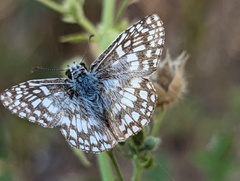
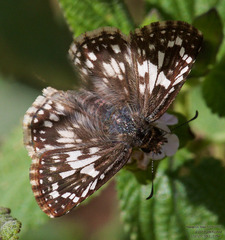
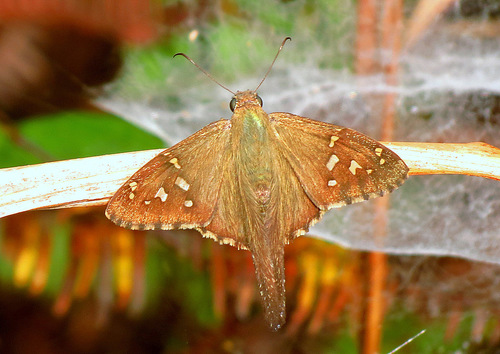
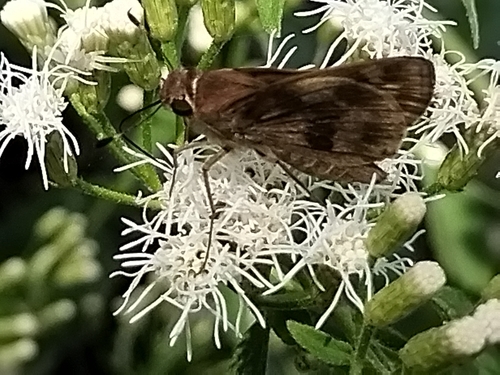
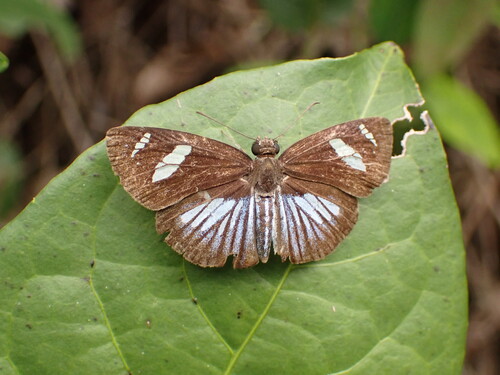
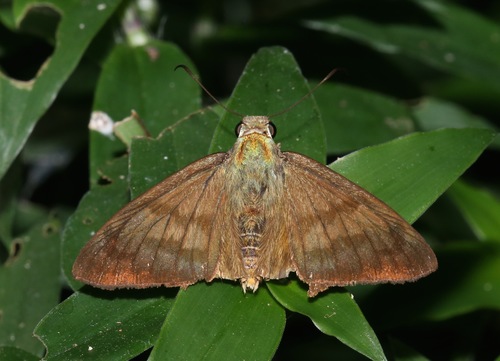
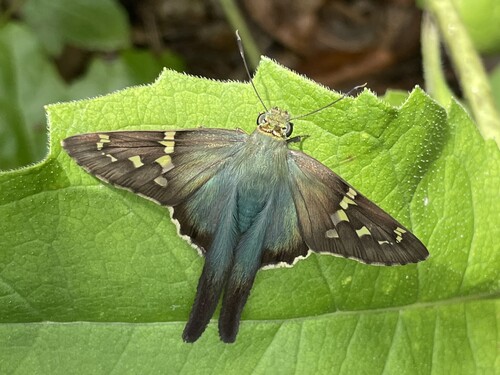
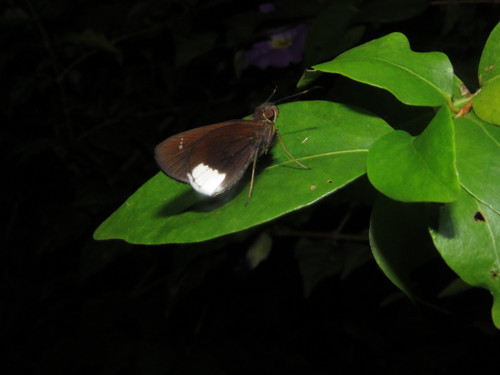
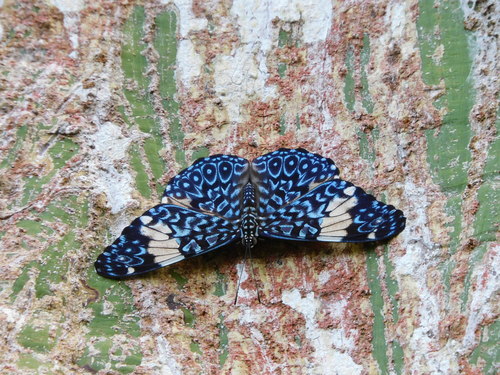
Tropical Checkered-Skipper

Tropical Checkered-Skipper

Pyrgus oileus

Daily sighting probability ~10% · With luck
at Belo Horizonte

In 3 days ~20% in a week ~40%

15 Verified sightings at Belo Horizonte
271 In all 15 parks From 2019 to 2026
September Best month
☀️ Diurnal When it's spotted

About the Tropical Checkered-Skipper

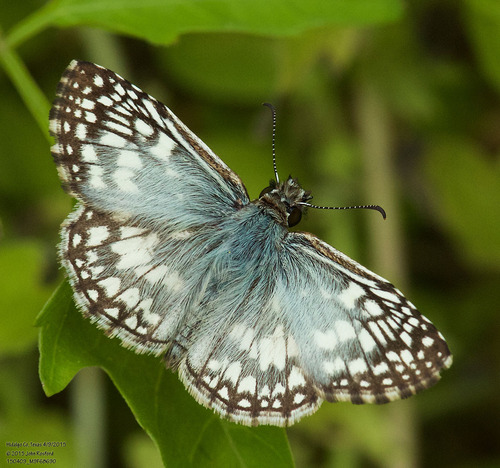
Burnsius oileus, the tropical checkered skipper, is a species of skipper (family Hesperiidae). It is found in the United States (Peninsular Florida, the Gulf Coast, and southern Texas), south through the West Indies, Mexico and Central America to Costa Rica. It was transferred to genus Burnsius in 2019, and was previously known as Pyrgus oileus.

The wingspan is 32–38 mm. There are four to five generations throughout the year in southern Texas and Florida. The larvae feed on several plants in the family Malvaceae, including Sida rhombifolia, Malva, Althaea rosea, Abutilon and Malvastrum. Adults feed on the nectar of the flowers of Sidas species and small-flowered composites such as shepherd's needles.

Burnsius oileus oileus Burnsius oileus syrichtus Butterflies and Moths of North America Archived 2010-06-20 at the Wayback Machine Wikipedia →

Global Distribution

Parks Where Found

# Park Country Daily sighting probability
1 Jaragua National Park 🇩🇴 Dominican Republic
~40%
2 Los Haitises National Park 🇩🇴 Dominican Republic
~40%
3 El Palmar National Park 🇦🇷 Argentina
~20%
4 Iberá National Park 🇦🇷 Argentina
~20%
5 Iguazú National Park 🇦🇷 Argentina
~20%
6 Caroni Swamp 🇹🇹 Trinidad and Tobago
~20%
7 Iguaçu National Park 🇧🇷 Brazil
~10%
8 Everglades National Park 🇺🇸 United States
~10%
9 Ría Lagartos Biosphere Reserve 🇲🇽 Mexico
~10%
10 Congaree National Park 🇺🇸 United States
~10%
11 Serra dos Órgãos National Park 🇧🇷 Brazil
~10%
12 Arrecifes de Cozumel National Park 🇲🇽 Mexico
~10%
13 Cañón del Sumidero National Park 🇲🇽 Mexico
~10%
14 Cumbres de Monterrey National Park 🇲🇽 Mexico
~10%
15 Monteverde Cloud Forest Reserve 🇨🇷 Costa Rica
<5%

Cities Where Found

# City Country Daily sighting probability
1 Santo Domingo 🇩🇴 Dominican Republic
~30%
2 Valencia 🇻🇪 Venezuela
~20%
3 Caracas 🇻🇪 Venezuela
~20%
4 São Luís 🇧🇷 Brazil
~20%
5 Salvador 🇧🇷 Brazil
~20%
6 Campo Grande 🇧🇷 Brazil
~20%
7 Porto Alegre 🇧🇷 Brazil
~20%
8 Asuncion 🇵🇾 Paraguay
~10%
9 Santa Cruz de la Sierra 🇧🇴 Bolivia
~10%
10 Fortaleza 🇧🇷 Brazil
~10%

Before you go

What are the chances of seeing a Tropical Checkered-Skipper in Belo Horizonte?

With luck

About 10% of wildlife watchers report a Tropical Checkered-Skipper sighting in Belo Horizonte on a given day, based on 15 verified sightings from GBIF citizen-science data. It is the 59th most-seen of the 186 insects we can rate there. Over three days the chance rises to about 20%, and over a week to about 40%, if each day is a fresh chance.

When is the best time to see a Tropical Checkered-Skipper in Belo Horizonte?

February, April–June and August–September

In those months about 10% of wildlife watchers report a Tropical Checkered-Skipper in Belo Horizonte on a given day, against under 5% in March, July and October–January, the lowest months. Those are among Belo Horizonte's driest months, with about 45 mm of rain a month against 270 mm in December.

What time of day is best to see a Tropical Checkered-Skipper?

Between 11 am and 2 pm

Across all the parks we cover, that three-hour window holds the most Tropical Checkered-Skipper sightings with a recorded time, and nearly all of them come between 6 am and 6 pm: it is a daytime animal.

Is Belo Horizonte the best place to see a Tropical Checkered-Skipper?

22nd of 29

Of the 29 cities where we can rate Tropical Checkered-Skipper sightings, Belo Horizonte ranks 22nd at about 10%. The best odds are in Santo Domingo (Dominican Republic, about 30%), Valencia (Venezuela, about 20%) and Caracas (Venezuela, about 20%).

Which relatives of the Tropical Checkered-Skipper live in Belo Horizonte?

Same family: Hesperiidae

The closest relatives of the Tropical Checkered-Skipper that you can see in Belo Horizonte (family Hesperiidae, Skippers) are Dorantes Longtail (about 10%), Pompeius Skipper (about 10%) and Pythonides jovianus (about 10%), with each one's daily chance of a sighting.

Where does the Tropical Checkered-Skipper sighting chance come from?

GBIF citizen-science records

It is estimated from how often the Tropical Checkered-Skipper is recorded against all the insects logged in Belo Horizonte (15 verified sightings), calibrated against known sighting rates. Figures are rounded to the nearest 10% because citizen-science data supports honest approximations, not decimals, and months with records from fewer than five people show "—". How it works.
← Back to Belo Horizonte