Caper White

Caper White

Belenois java

Daily sighting probability ~10% · With luck
at Brisbane

In 3 days ~40% in a week ~60%

296 Verified sightings at Brisbane
324 In all 12 parks From 2019 to 2026
October Best month
☀️ Diurnal When it's spotted

About the Caper White

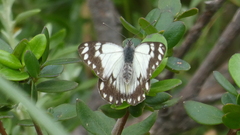
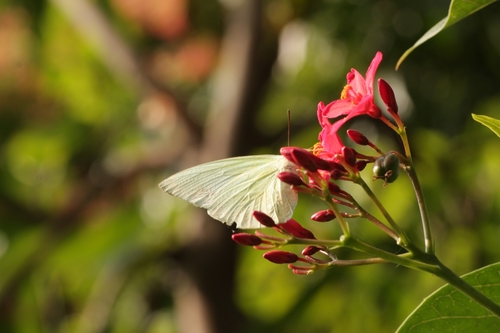
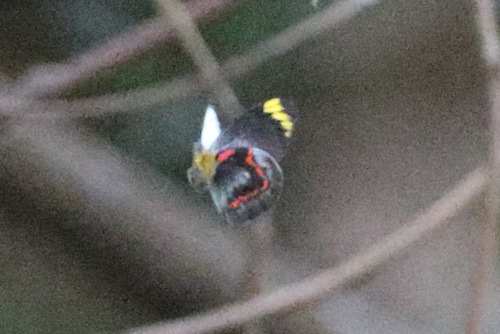
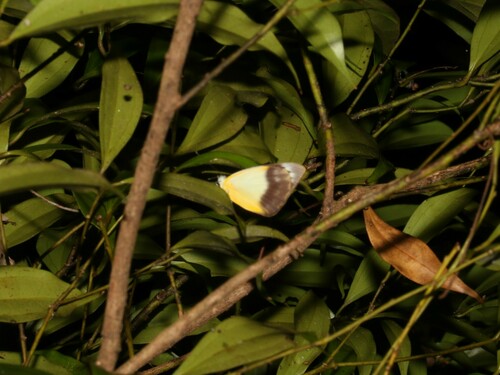
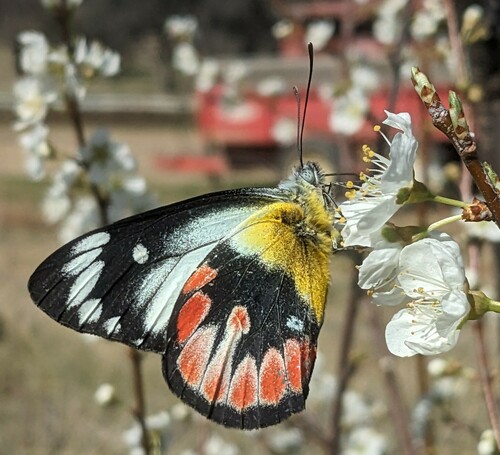
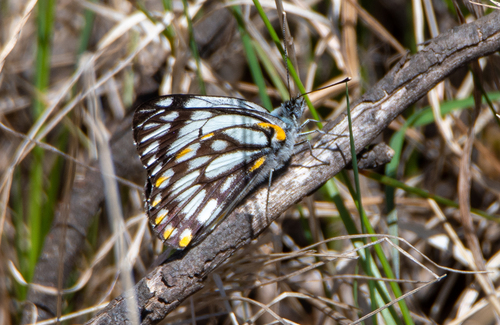
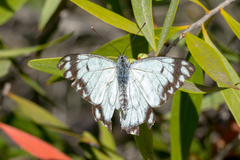
Belenois java, the caper white or common white, is a small butterfly of the family Pieridae found in Australia, Indonesia, and Melanesia. It is highly migratory and is often confused with the cabbage white (Pieris rapae).

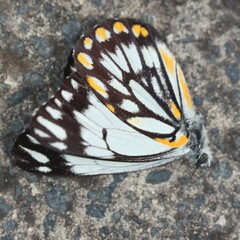
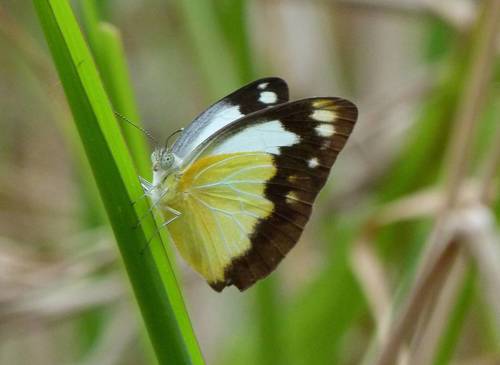
The upper surface of the male's wings are white with a broad black apical patch, the hindwing has a black terminal border. On both wings the black area encloses white dots. The under surface of the hindwing is almost exclusively black except for white and yellow patches between the veins. The wingspan on the male is 5 cm whereas the female's wingspan is larger at 6 cm. The female can vary dramatically including a pale form which looks strikingly similar to the male. The upper surface of the wings is white and have a much broader black margin. The body of both is olive green to dark brown.

The first instar of this species is pale yellow sparsely covered in long hairs. The later instars of this species are dark brownish-green with white and yellow raised spots. The head has a V-shaped white mark and is shiny black. There are two lines of hair on the side of the caterpillar's 3-cm body in its later stages. The pupa is white... Wikipedia →

Global Distribution

Parks Where Found

# Park Country Daily sighting probability
1 Grampians National Park 🇦🇺 Australia
~30%
2 Bali Barat National Park 🇮🇩 Indonesia
~30%
3 Cape Range 🇦🇺 Australia
~20%
4 Komodo National Park 🇮🇩 Indonesia
~20%
5 Ningaloo Marine Park 🇦🇺 Australia
~20%
6 Blue Mountains National Park 🇦🇺 Australia
~20%
7 Uluru-Kata Tjuta National Park 🇦🇺 Australia
~20%
8 Lamington National Park 🇦🇺 Australia
~20%
9 Great Otway National Park 🇦🇺 Australia
~10%
10 Kosciuszko National Park 🇦🇺 Australia
~10%
11 Springbrook National Park 🇦🇺 Australia
~10%
12 Royal National Park 🇦🇺 Australia
~10%

Cities Where Found

# City Country Daily sighting probability
1 Brisbane 🇦🇺 Australia
~10%
2 Denpasar 🇮🇩 Indonesia
~10%
3 Melbourne 🇦🇺 Australia
~10%
4 Sydney 🇦🇺 Australia
~10%

Before you go

What are the chances of seeing a Caper White in Brisbane?

With luck

About 10% of wildlife watchers report a Caper White sighting in Brisbane on a given day, based on 296 verified sightings from GBIF citizen-science data. It is the 51st most-seen of the 1083 insects we can rate there. Over three days the chance rises to about 40%, and over a week to about 60%, if each day is a fresh chance.

When is the best time to see a Caper White in Brisbane?

October and November

In those months about 30% of wildlife watchers report a Caper White in Brisbane on a given day, against under 5% in May to August, the lowest months.

What time of day is best to see a Caper White?

Between 1 and 4 pm

Across all the parks we cover, that three-hour window holds the most Caper White sightings with a recorded time, and about 9 in 10 of them come between 6 am and 6 pm: it is a daytime animal.

Is Brisbane the best place to see a Caper White?

Yes

Of the 4 cities where we can rate Caper White sightings, Brisbane has the highest daily chance: about 10%. Next come Denpasar (Indonesia, about 10%) and Melbourne (Australia, about 10%).

Which relatives of the Caper White live in Brisbane?

Same family: Pieridae

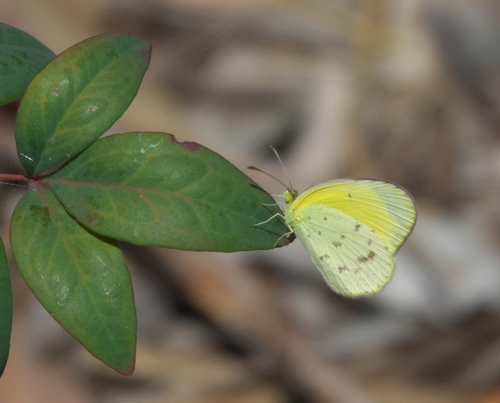
The closest relatives of the Caper White that you can see in Brisbane (family Pieridae, Whites, Yellows, and Sulphurs) are Lemon Migrant (about 20%), Common Grass Yellow (about 20%) and Small White (about 10%), with each one's daily chance of a sighting.

Where does the Caper White sighting chance come from?

GBIF citizen-science records

It is estimated from how often the Caper White is recorded against all the insects logged in Brisbane (296 verified sightings), calibrated against known sighting rates. Figures are rounded to the nearest 10% because citizen-science data supports honest approximations, not decimals, and months with records from fewer than five people show "—". How it works.
← Back to Brisbane