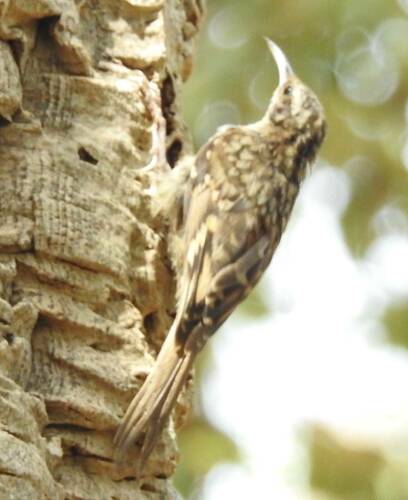
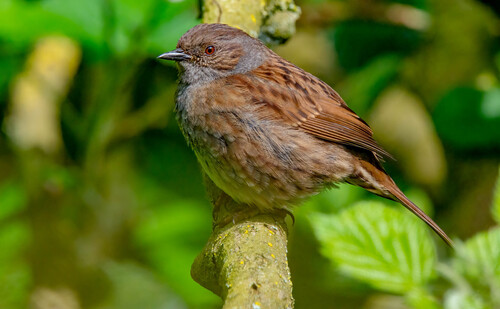
Cetti's Warbler

Cetti's Warbler

Cettia cetti

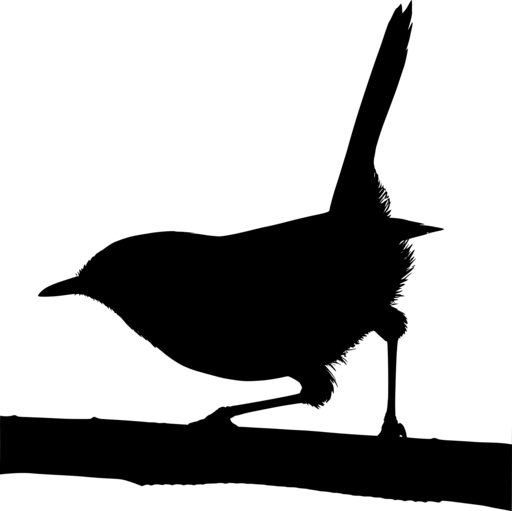
Silhouette: Jiekun He · PhyloPic

LCLeast ConcernNTVUENCR
Daily sighting probability <5% · Rare
at Brussels

In 3 days <5% in a week ~10%

7 Verified sightings at Brussels
6,740 In all 11 parks From 2019 to 2026
November Best month
☀️ Diurnal When it's spotted

About the Cetti's Warbler

Cetti's warbler (Cettia cetti) is a small, brown warbler in the family Cettiidae, which breeds in southern and western Europe, northwest Africa and the east Palearctic as far as Afghanistan and northwest Pakistan. The sexes are alike. The bird is named after the 18th-century Italian zoologist, Francesco Cetti. This species is often difficult to see because of its skulking habits.

Cetti's warbler was described in 1820 by the Dutch zoologist Coenraad Jacob Temminck from specimens collected by Alberto della Marmora in Sardinia. Temminck coined the binomial name Sylvia cetti. The specific epithet was chosen to commemorate the Italian zoologist Francesco Cetti. Cetti's warbler is now placed in the genus Cettia that was erected in 1834 by the French ornithologist Charles Lucien Bonaparte, a nephew of Napoleon, with Cetti's warbler as the type species.

The phylogenetic relationships among the Cettia species are shown below, based on the data by the Cornell Lab of Ornithology. Wikipedia →

Sounds

Song0:12

Portugal · 2026

© Paul van Nuys · XC1136059 · CC BY-NC-SA 4.0

Call1:02

Belgium · 2025

© Bram Piot · XC1030985 · CC BY-NC-SA 4.0

Song0:14

Ireland · 2026

© Harry Hussey · XC1135841 · CC BY-NC-SA 4.0

Global Distribution

Parks Where Found

# Park Country Daily sighting probability
1 Camargue 🇫🇷 France
~60%
2 Doñana National Park 🇪🇸 Spain
~50%
3 Monfragüe National Park 🇪🇸 Spain
~50%
4 Sierra Nevada National Park 🇪🇸 Spain
~30%
5 Snowdonia National Park 🇬🇧 United Kingdom
~10%
6 Sierra de Guadarrama National Park 🇪🇸 Spain
~10%
7 Aigüestortes National Park 🇪🇸 Spain
<5%
8 Cévennes National Park 🇫🇷 France
<5%
9 Wadden Sea National Park 🇩🇪 Germany
<5%
10 Picos de Europa National Park 🇪🇸 Spain
<5%
11 Pyrénées National Park 🇫🇷 France
<5%

Cities Where Found

# City Country Daily sighting probability
1 Antalya 🇹🇷 Turkey
~50%
2 Barcelona 🇪🇸 Spain
~30%
3 Madrid 🇪🇸 Spain
~30%
4 Rabat 🇲🇦 Morocco
~30%
5 Liverpool 🇬🇧 United Kingdom
~30%
6 London 🇬🇧 United Kingdom
~20%
7 Birmingham 🇬🇧 United Kingdom
~10%
8 Yerevan 🇦🇲 Armenia
~10%
9 Istanbul 🇹🇷 Turkey
~10%
10 Tel Aviv 🇮🇱 Israel
~10%

Before you go

What are the chances of seeing a Cetti's Warbler in Brussels?

Rare

Under 5% of wildlife watchers report a Cetti's Warbler sighting in Brussels on a given day, based on 7 verified sightings from GBIF citizen-science data. It is the 91st most-seen of the 93 birds we can rate there. Over three days the chance rises to under 5%, and over a week to about 10%, if each day is a fresh chance.

When is the best time to see a Cetti's Warbler in Brussels?

Any time of year

In every month with enough records, under 5% of wildlife watchers report a Cetti's Warbler in Brussels on a given day, so our monthly data shows no clear season.

What time of day is best to see a Cetti's Warbler?

Between 8 and 11 am

Across all the parks we cover, that three-hour window holds the most Cetti's Warbler sightings with a recorded time, and about 8 in 10 of them come between 6 am and 6 pm: it is a daytime animal.

Is Brussels the best place to see a Cetti's Warbler?

32nd of 32

Of the 32 cities where we can rate Cetti's Warbler sightings, Brussels ranks 32nd at under 5%. The best odds are in Antalya (Turkey, about 50%), Barcelona (Spain, about 30%) and Madrid (Spain, about 30%).

Which relatives of the Cetti's Warbler live in Brussels?

Same order: Passeriformes

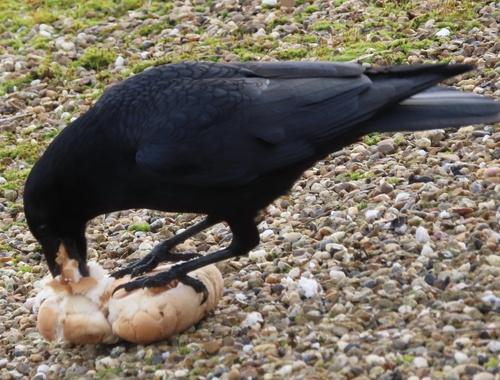
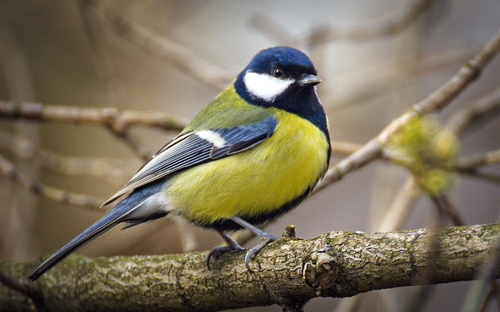
The closest relatives of the Cetti's Warbler that you can see in Brussels (order Passeriformes, Perching Birds) are Carrion Crow (about 90%), Eurasian Magpie (about 80%) and Great Tit (about 80%), with each one's daily chance of a sighting.

Where does the Cetti's Warbler sighting chance come from?

GBIF citizen-science records

It is estimated from how often the Cetti's Warbler is recorded against all the birds logged in Brussels (7 verified sightings), calibrated against known sighting rates. Figures are rounded to the nearest 10% because citizen-science data supports honest approximations, not decimals, and months with records from fewer than five people show "—". How it works.

← Back to Brussels