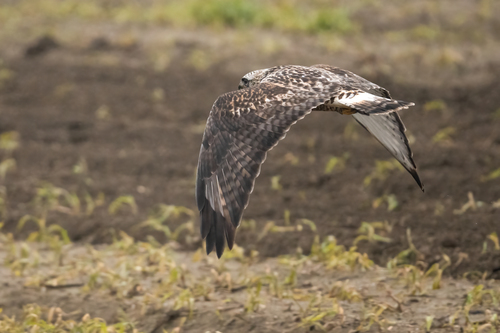
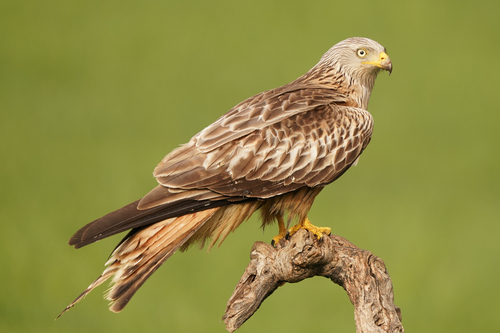
Red Kite

Red Kite

Milvus milvus

Silhouette: Andy Wilson · PhyloPic

LCLeast ConcernNTVUENCR
Daily sighting probability <5% · Rare
at Copenhagen

In 3 days <5% in a week ~10%

27 Verified sightings at Copenhagen
8,971 In all 16 parks From 2019 to 2026
March Best month
☀️ Diurnal When it's spotted

About the Red Kite

The red kite (Milvus milvus) is a bird of prey in the family Accipitridae, which also includes many other diurnal raptors such as eagles, buzzards, and harriers. The species currently breeds only in Europe, though it formerly also bred in West Asia and Northwest Africa. Historically, it was only resident in the milder parts of its range in Western Europe and Northwestern Africa, whereas all or most red kites in Northern mainland Europe wintered to the south and west, some also reaching western Asia, but an increasing number of northern birds now remain in that region year-round. Vagrants have reached north to Finland and south to Israel, Libya and the Gambia.

The English word "kite" is from the Old English cyta which is of unknown origin. A kite is mentioned by Geoffrey Chaucer in his Knight's Tale. The early 15th century Hengwrt manuscript contains the lines: "Ther cam a kyte, whil þt they were so wrothe That bar awey the boon bitwix hem bothe." The first recorded use of the word kite for the human-operated aerial device dates from the 17th century.

The red kite was described by the Swedish naturalist Carl Linnaeus in 1758 in the 10th edition of his Systema... Wikipedia →

Sounds

Call0:25

United Kingdom · 2026

© Simon Elliott · XC1141994 · CC BY-NC-ND 4.0

Flight call0:09

France · 2025

© Jack Berteau · XC1052237 · CC BY-NC-SA 4.0

Alarm call0:30

Sweden · 2024

© Roger Ahlman · XC926887 · CC BY-NC-SA 4.0

Global Distribution

Parks Where Found

# Park Country Daily sighting probability
1 Sierra de Guadarrama National Park 🇪🇸 Spain
~50%
2 Pyrénées National Park 🇫🇷 France
~40%
3 Monfragüe National Park 🇪🇸 Spain
~40%
4 Ordesa y Monte Perdido National Park 🇪🇸 Spain
~20%
5 Doñana National Park 🇪🇸 Spain
~20%
6 Cévennes National Park 🇫🇷 France
~20%
7 Snowdonia National Park 🇬🇧 United Kingdom
~20%
8 Aigüestortes National Park 🇪🇸 Spain
~10%
9 Cairngorms National Park 🇬🇧 United Kingdom
~10%
10 Fertő-Hanság National Park 🇭🇺 Hungary
~10%
11 Camargue 🇫🇷 France
<5%
12 Biebrza National Park 🇵🇱 Poland
<5%
13 Bavarian Forest National Park 🇩🇪 Germany
<5%
14 Kiskunság National Park 🇭🇺 Hungary
<5%
15 Wadden Sea National Park 🇩🇪 Germany
<5%
16 Picos de Europa National Park 🇪🇸 Spain
<5%

Cities Where Found

# City Country Daily sighting probability
1 Leeds 🇬🇧 United Kingdom
~20%
2 Madrid 🇪🇸 Spain
~20%
3 London 🇬🇧 United Kingdom
~10%
4 Lyon 🇫🇷 France
<5%
5 Cologne 🇩🇪 Germany
<5%
6 Berlin 🇩🇪 Germany
<5%
7 Turin 🇮🇹 Italy
<5%
8 Copenhagen 🇩🇰 Denmark
<5%
9 Liverpool 🇬🇧 United Kingdom
<5%
10 Munich 🇩🇪 Germany
<5%

Zoos & Centres Where Found

# Zoo / Centre Country
1 Pairi Daiza 🇧🇪 Belgium In captivity
2 Prague Zoo 🇨🇿 Czechia In captivity
3 Parc des oiseaux 🇫🇷 France In captivity
4 Zoobotánico Jerez 🇪🇸 Spain In captivity
5 Wisentgehege Springe 🇩🇪 Germany In captivity
6 Parc ornithologique de Pont-de-Gau 🇫🇷 France In captivity
7 Chișinău Zoo 🇲🇩 Moldova In captivity
8 Wildparadies Tripsdrill 🇩🇪 Germany In captivity
9 Wild-Park Klaushof 🇩🇪 Germany In captivity
10 Ouwehands Dierenpark 🇳🇱 Netherlands In captivity
11 Oasi Naturalistica di Sant'Alessio 🇮🇹 Italy In captivity
12 Tierpark Hexentanzplatz 🇩🇪 Germany In captivity
13 Belgrade Zoo 🇷🇸 Serbia In captivity
14 Les Aigles du Léman 🇫🇷 France In captivity
15 Cim d'Àligues 🇪🇸 Spain In captivity
16 Zoo La Garenne 🇨🇭 Switzerland In captivity
17 Tiggywinkles Wildlife Teaching Hospital 🇬🇧 United Kingdom In captivity
18 Centro de Recuperación de Fauna Silvestre El Valle 🇪🇸 Spain In captivity
19 Gauntlet Birds of Prey 🇬🇧 United Kingdom In captivity
20 蘭陽動植物王國 🇹🇼 Taiwan In captivity
21 Xpark 🇹🇼 Taiwan In captivity
22 Adlerarena Burg Landskron 🇦🇹 Austria In captivity
23 Loch Lomond Bird of Prey Centre 🇬🇧 United Kingdom In captivity
24 Rákosův pavilon 🇨🇿 Czechia In captivity
25 Velemlokárium 🇨🇿 Czechia In captivity
26 Centro Animali Non Convenzionali 🇮🇹 Italy In captivity
27 Donjon des aigles 🇫🇷 France In captivity
28 Greifvogelwarte Riegersburg 🇦🇹 Austria In captivity
29 Zoológico La Era de las aves 🇪🇸 Spain In captivity

Before you go

What are the chances of seeing a Red Kite in Copenhagen?

Rare

Under 5% of wildlife watchers report a Red Kite sighting in Copenhagen on a given day, based on 27 verified sightings from GBIF citizen-science data. It is the 106th most-seen of the 154 birds we can rate there. Over three days the chance rises to under 5%, and over a week to about 10%, if each day is a fresh chance.

When is the best time to see a Red Kite in Copenhagen?

March

In that month about 10% of wildlife watchers report a Red Kite in Copenhagen on a given day, against under 5% in April to February, the lowest months.

What time of day is best to see a Red Kite?

Between 7 and 10 am

Across all the parks we cover, that three-hour window holds the most Red Kite sightings with a recorded time, and about 8 in 10 of them come between 6 am and 6 pm: it is a daytime animal.

Is Copenhagen the best place to see a Red Kite?

8th of 15

Of the 15 cities where we can rate Red Kite sightings, Copenhagen ranks 8th at under 5%. The best odds are in Leeds (United Kingdom, about 20%), Madrid (Spain, about 20%) and London (United Kingdom, about 10%).

Which relatives of the Red Kite live in Copenhagen?

Same family: Accipitridae

The closest relatives of the Red Kite that you can see in Copenhagen (family Accipitridae, Hawks, Eagles, and Kites) are Eurasian Sparrowhawk (about 10%) and Common Buzzard (about 10%), with each one's daily chance of a sighting.

Where does the Red Kite sighting chance come from?

GBIF citizen-science records

It is estimated from how often the Red Kite is recorded against all the birds logged in Copenhagen (27 verified sightings), calibrated against known sighting rates. Figures are rounded to the nearest 10% because citizen-science data supports honest approximations, not decimals, and months with records from fewer than five people show "—". How it works.
← Back to Copenhagen