Upland Sandpiper

Upland Sandpiper

Bartramia longicauda

Silhouette: Andy Wilson · PhyloPic

LCLeast ConcernNTVUENCR
Daily sighting probability <5% · Rare
at Guatemala City

In 3 days <5%

8 Verified sightings at Guatemala City
444 In all 17 parks From 2019 to 2026
September Best month
☀️ Diurnal When it's spotted

About the Upland Sandpiper

The upland sandpiper (Bartramia longicauda) is a large sandpiper, closely related to the curlews. Older names are the upland plover and Bartram's sandpiper. In Louisiana, it is also colloquially known as the papabotte. It is the sole extant member of the genus Bartramia. The genus name and the old common name Bartram's sandpiper commemorate the American naturalist William Bartram. The species name longicauda is from Latin longus, "long" and caudus, "tail". The name "Bartram's sandpiper" was made popular by Alexander Wilson, who was taught ornithology and natural history illustration by Bartram.

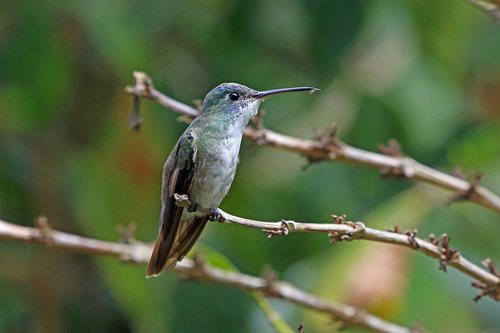
An adult is roughly 30 cm (12 in) long with a 66 cm (26 in) wingspan. The average weight is 170 g (6 oz). This odd bird has a small dove-like head on a long neck. It is heavily marbled black and brown on the back and wings. The neck is streaked with dark brown which continues down to the breast and on to the flanks. The belly and undertail coverts are white, and the tail is quite long for a sandpiper. The upland sandpiper also has a white eye-ring and long yellow legs.

They breed from eastern Alaska south east of the Rocky Mountains through Montana to northern... Wikipedia →

Sounds

Song0:13

United States · 2016

© Stanislas Wroza · XC861197 · CC BY-NC-SA 4.0

Call0:05

Canada · 2019

© Logan McLeod · XC549229 · CC BY-NC-SA 4.0

Alarm call1:14

United States · 2013

© Laura Gooch · XC143966 · CC BY-NC-SA 3.0

Global Distribution

Parks Where Found

# Park Country Daily sighting probability
1 Badlands National Park 🇺🇸 United States
~20%
2 Table Mountain National Park 🇿🇦 South Africa
<5%
3 Iberá National Park 🇦🇷 Argentina
<5%
4 Padre Island National Seashore 🇺🇸 United States
<5%
5 Amacayacu National Natural Park 🇨🇴 Colombia
<5%
6 Caroni Swamp 🇹🇹 Trinidad and Tobago
<5%
7 Parque Estadual Encontro das Águas 🇧🇷 Brazil
<5%
8 Palo Verde National Park 🇨🇷 Costa Rica
<5%
9 Big Bend National Park 🇺🇸 United States
<5%
10 Celestún Biosphere Reserve 🇲🇽 Mexico
<5%
11 Manu National Park 🇵🇪 Peru
<5%
12 Parque Natural Metropolitano 🇵🇦 Panama
<5%
13 Bastimentos Island National Marine Park 🇵🇦 Panama
<5%
14 La Amistad International Park (Panama) 🇵🇦 Panama
<5%
15 Tambopata National Reserve 🇵🇪 Peru
<5%
16 Everglades National Park 🇺🇸 United States
<5%
17 Soberanía National Park 🇵🇦 Panama
<5%

Cities Where Found

# City Country Daily sighting probability
1 Toluca 🇲🇽 México
~10%
2 New York City 🇺🇸 United States
<5%
3 San Pedro Sula 🇭🇳 Honduras
<5%
4 Dallas 🇺🇸 United States
<5%
5 Austin 🇺🇸 United States
<5%
6 Houston 🇺🇸 United States
<5%
7 Asuncion 🇵🇾 Paraguay
<5%
8 Mexico City 🇲🇽 México
<5%
9 San José 🇨🇷 Costa Rica
<5%
10 Panama City 🇵🇦 Panama
<5%

Before you go

What are the chances of seeing an Upland Sandpiper in Guatemala City?

Rare

Under 5% of wildlife watchers report an Upland Sandpiper sighting in Guatemala City on a given day, based on 8 verified sightings from GBIF citizen-science data. It is the 220th most-seen of the 220 birds we can rate there. Over three days the chance rises to under 5%, if each day is a fresh chance.

When is the best time to see an Upland Sandpiper in Guatemala City?

Any time of year

In every month with enough records, under 5% of wildlife watchers report an Upland Sandpiper in Guatemala City on a given day, so our monthly data shows no clear season.

What time of day is best to see an Upland Sandpiper?

Between 10 am and 1 pm

Across all the parks we cover, that three-hour window holds the most Upland Sandpiper sightings with a recorded time, and about 9 in 10 of them come between 6 am and 6 pm: it is a daytime animal.

Is Guatemala City the best place to see an Upland Sandpiper?

13th of 17

Of the 17 cities where we can rate Upland Sandpiper sightings, Guatemala City ranks 13th at under 5%. The best odds are in Toluca (México, about 10%), New York City (United States, under 5%) and San Pedro Sula (Honduras, under 5%).

Where does the Upland Sandpiper sighting chance come from?

GBIF citizen-science records

It is estimated from how often the Upland Sandpiper is recorded against all the birds logged in Guatemala City (8 verified sightings), calibrated against known sighting rates. Figures are rounded to the nearest 10% because citizen-science data supports honest approximations, not decimals, and months with records from fewer than five people show "—". How it works.

← Back to Guatemala City