Silver Υ

Silver Υ

Autographa gamma

Daily sighting probability <5% · Rare
at Yekaterinburg

In 3 days ~10% in a week ~20%

9 Verified sightings at Yekaterinburg
573 In all 18 parks From 2019 to 2026
September Best month
☀️🌙 Day & Night When it's spotted

About the Silver Υ

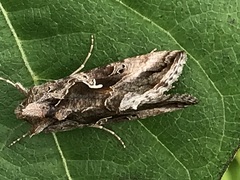
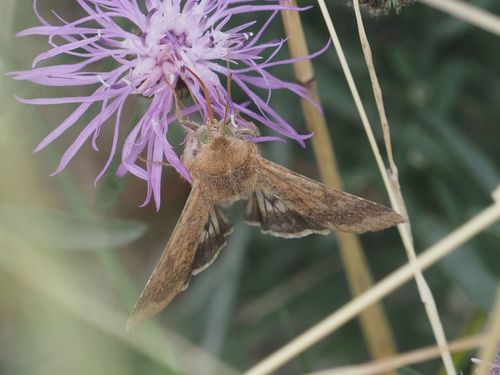
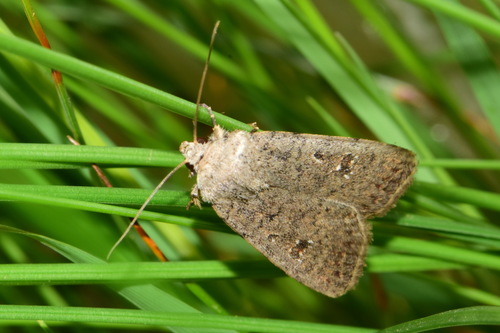
The silver Y (Autographa gamma) is a migratory moth of the family Noctuidae which is named for the silvery Y-shaped mark on each of its forewings. The species is widespread throughout most of the palearctic. The silver Y is a medium-sized moth with a wingspan described in the range of 30-45 mm.

The wings are intricately patterned with various shades of brown and grey serving as camouflage. In the centre of each forewing there is a silver-coloured mark shaped like a lower case Y (y) or a lower case Greek letter gamma (γ). There are several different forms with varying colours depending on the climate in which the larvae grow.

P. gamma Forewing purplish grey, with darker suffusion in places; the lines pale silvery edged on both sides with dark fuscous, the outer line indented on vein 2 and submedian fold, as in circumflexa; the oblique orbicular and the reniform conversely oblique and constricted in middle, both edged with silvery: the median area below middle blackish, containing a silvery gamma; the subterminal dentate and indented, preceded by a darker shade; hindwing brownish grey with darker veins and a broad blackish... Wikipedia →

Global Distribution

Parks Where Found

# Park Country Daily sighting probability
1 Snowdonia National Park 🇬🇧 United Kingdom
~20%
2 Kiskunság National Park 🇭🇺 Hungary
~20%
3 Wadden Sea National Park 🇩🇪 Germany
~20%
4 Bavarian Forest National Park 🇩🇪 Germany
~20%
5 Sierra Nevada National Park 🇪🇸 Spain
~20%
6 Triglav National Park 🇸🇮 Slovenia
~20%
7 Mercantour National Park 🇫🇷 France
~10%
8 Monfragüe National Park 🇪🇸 Spain
~10%
9 Picos de Europa National Park 🇪🇸 Spain
~10%
10 Pyrénées National Park 🇫🇷 France
~10%
11 Hohe Tauern National Park 🇦🇹 Austria
~10%
12 Aigüestortes National Park 🇪🇸 Spain
~10%
13 Cévennes National Park 🇫🇷 France
~10%
14 Doñana National Park 🇪🇸 Spain
~10%
15 Vanoise National Park 🇫🇷 France
~10%
16 Tatra National Park 🇸🇰 Slovakia
~10%
17 Sierra de Guadarrama National Park 🇪🇸 Spain
~10%
18 Cairngorms National Park 🇬🇧 United Kingdom
~10%

Cities Where Found

# City Country Daily sighting probability
1 Liverpool 🇬🇧 United Kingdom
~40%
2 Birmingham 🇬🇧 United Kingdom
~20%
3 London 🇬🇧 United Kingdom
~20%
4 Bucharest 🇷🇴 Romania
~20%
5 Budapest 🇭🇺 Hungary
~20%
6 Jerusalem 🇮🇱 Israel
~20%
7 Manchester 🇬🇧 United Kingdom
~20%
8 Astana 🇰🇿 Kazakhstan
~20%
9 Turin 🇮🇹 Italy
~20%
10 Sofia 🇧🇬 Bulgaria
~20%

Before you go

What are the chances of seeing a Silver Υ in Yekaterinburg?

Rare

Under 5% of wildlife watchers report a Silver Υ sighting in Yekaterinburg on a given day, based on 9 verified sightings from GBIF citizen-science data. It is the 81st most-seen of the 155 insects we can rate there. Over three days the chance rises to about 10%, and over a week to about 20%, if each day is a fresh chance.

When is the best time to see a Silver Υ in Yekaterinburg?

August and September

In those months about 10% of wildlife watchers report a Silver Υ in Yekaterinburg on a given day, against under 5% in October to July, the lowest months.

What time of day is best to see a Silver Υ?

Between 11 am and 2 pm

Across all the parks we cover, that three-hour window holds the most Silver Υ sightings with a recorded time, and about 6 in 10 of them come between 6 am and 6 pm: it is seen both by day and at night.

Is Yekaterinburg the best place to see a Silver Υ?

50th of 50

Of the 50 cities where we can rate Silver Υ sightings, Yekaterinburg ranks 50th at under 5%. The best odds are in Liverpool (United Kingdom, about 40%), Birmingham (United Kingdom, about 20%) and London (United Kingdom, about 20%).

Where does the Silver Υ sighting chance come from?

GBIF citizen-science records

It is estimated from how often the Silver Υ is recorded against all the insects logged in Yekaterinburg (9 verified sightings), calibrated against known sighting rates. Figures are rounded to the nearest 10% because citizen-science data supports honest approximations, not decimals, and months with records from fewer than five people show "—". How it works.

← Back to Yekaterinburg