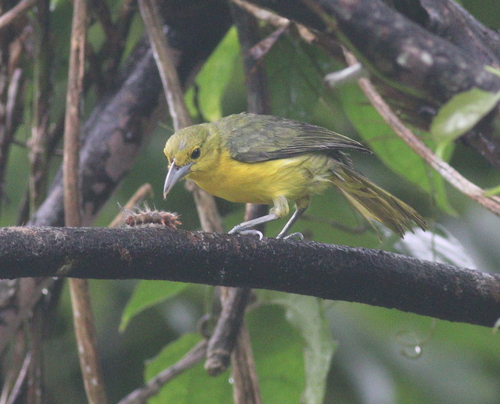
Plain Flowerpecker

Plain Flowerpecker

Dicaeum minullum

Silhouette: Rachael Joakim · PhyloPic

LCLeast ConcernNTVUENCR
Daily sighting probability ~10% · With luck
at Cuc Phuong National Park

In 3 days ~30% in a week ~60%

43 Verified sightings at Cuc Phuong National Park From 2019 to 2026
1,357 In all 16 parks
April Best month
☀️ Diurnal When it's spotted

About the Plain Flowerpecker

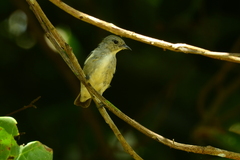
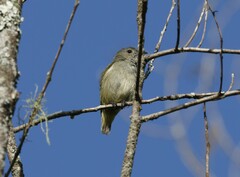
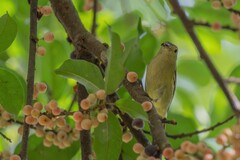
The plain flowerpecker (Dicaeum minullum) is a bird in the family Dicaeidae. The species was described and given its binomial name by Robert Swinhoe in 1870. It is found in the central Himalayas, through western Indonesia to Taiwan.

These birds are tiny (9 cm long) and there is no marked difference between the males and females. The subspecies found in northeastern India, extending into Myanmar, Laos and southern China is called olivaceum by earlier authors but is treated by Pamela C. Rasmussen as a separate species Dicaeum minullum (which includes the population minullum from Hainan Island and is now termed as the plain flowerpecker in the more restricted sense).

Its natural habitat is subtropical or tropical moist lowland forests. Like many flowerpeckers, it favours mistletoe for foraging. Wikipedia →

Sounds

Call0:08

China · 2023

© JJSUN · XC1078957 · CC BY-NC-SA 4.0

Song0:22

Cambodia · 2025

© Ding Li Yong · XC981341 · CC BY-NC-ND 4.0

Call0:15

Malaysia · 2021

© Lim Ying Hien · XC854786 · CC BY-NC-ND 4.0

Global Distribution

Parks Where Found

# Park Country Daily sighting probability
1 Manas National Park 🇮🇳 India
~20%
2 Cuc Phuong National Park 🇻🇳 Vietnam
~10%
3 Way Kambas National Park 🇮🇩 Indonesia
~10%
4 Royal Manas National Park 🇧🇹 Bhutan
~10%
5 Doi Inthanon National Park 🇹🇭 Thailand
~10%
6 Khao Yai National Park 🇹🇭 Thailand
~10%
7 Taroko National Park 🇹🇼 Taiwan
~10%
8 Taman Negara National Park 🇲🇾 Malaysia
~10%
9 Danum Valley Conservation Area 🇲🇾 Malaysia
<5%
10 Kaeng Krachan National Park 🇹🇭 Thailand
<5%
11 Sepilok 🇲🇾 Malaysia
<5%
12 Bali Barat National Park 🇮🇩 Indonesia
<5%
13 Kerinci Seblat National Park 🇮🇩 Indonesia
<5%
14 Kaziranga National Park 🇮🇳 India
<5%
15 Kinabalu Park 🇲🇾 Malaysia
<5%
16 Namdapha National Park 🇮🇳 India
<5%

Cities Where Found

# City Country Daily sighting probability
1 Hanoi 🇻🇳 Vietnam
~10%
2 Guwahati 🇮🇳 India
<5%
3 Kathmandu 🇳🇵 Nepal
<5%
4 Denpasar 🇮🇩 Indonesia
<5%
5 Jakarta 🇮🇩 Indonesia
<5%
6 Taipei 🇹🇼 Taiwan
<5%
7 Kuala Lumpur 🇲🇾 Malaysia
<5%
8 Guangzhou 🇨🇳 China
<5%

Before you go

What are the chances of seeing a Plain Flowerpecker in Cuc Phuong National Park?

With luck

About 10% of wildlife watchers report a Plain Flowerpecker sighting in Cuc Phuong National Park on a given day, based on 43 verified sightings from GBIF citizen-science data from 2019 to 2026. It is the 64th most-seen of the 159 birds we can rate there. Over three days the chance rises to about 30%, and over a week to about 60%, if each day is a fresh chance.

When is the best time to see a Plain Flowerpecker in Cuc Phuong National Park?

April and August

In those months about 30% of wildlife watchers report a Plain Flowerpecker in Cuc Phuong National Park on a given day, against under 5% in January and November, the lowest months. July has too few records to rate.

What time of day is best to see a Plain Flowerpecker?

Between 7 and 10 am

Across all the parks we cover, that three-hour window holds the most Plain Flowerpecker sightings with a recorded time, and about 9 in 10 of them come between 6 am and 6 pm: it is a daytime animal.

Is Cuc Phuong National Park the best place to see a Plain Flowerpecker?

2nd of 16

Of the 16 parks where we can rate Plain Flowerpecker sightings, Cuc Phuong National Park ranks 2nd at about 10%. The best odds are in Manas National Park (India, about 20%).

Where does the Plain Flowerpecker sighting chance come from?

GBIF citizen-science records

It is estimated from how often the Plain Flowerpecker is recorded against all the birds logged in Cuc Phuong National Park (43 verified sightings from 2019 to 2026), calibrated against known sighting rates. Figures are rounded to the nearest 10% because citizen-science data supports honest approximations, not decimals, and months with records from fewer than five people show "—". How it works.

← Back to Cuc Phuong National Park