About the Indian Thick-knee
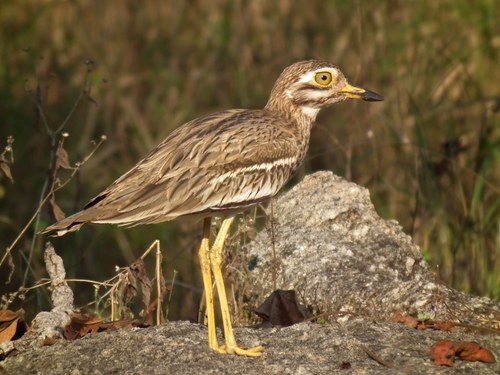
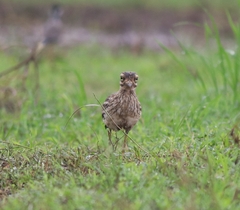
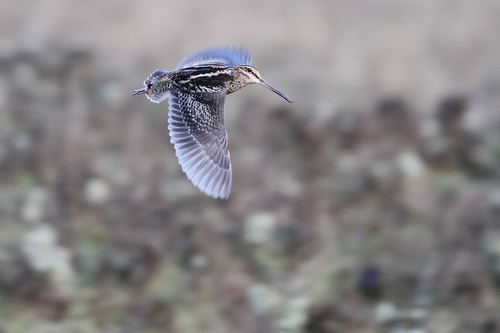
The Indian stone-curlew or Indian thick-knee (Burhinus indicus) is a species of bird in the family Burhinidae. It was formerly included as a subspecies of the Eurasian stone-curlew. This species is found in the plains of South and South-eastern Asia. They have large eyes and are brown with streaks and pale marks making it hard to spot against the background of soils and rocks. Mostly active in the dark, they produce calls similar to the true curlews, giving them their names.
The Indian stone-curlew was formally described in 1866 by the Italian zoologist Tommaso Salvadori based on specimens obtained in India. He coined the binomial name Oedicnemus indicus. The specific epithet is Latin meaning "Indian". The Indian stone-curlew is now placed in the genus Burhinus that was erected in 1811 by the German zoologist Johann Karl Wilhelm Illiger in 1811. The species is monotypic: no subspecies are recognised.
This species was formerly treated as a subspecies of the Eurasian stone-curlew Burhinus oedicnemus but the Indian population is distinctive in plumage, and non-migratory, leading to its being treated as a full species by Pamela Rasmussen in 2005. There has however been no... Wikipedia →