About the European Golden Plover
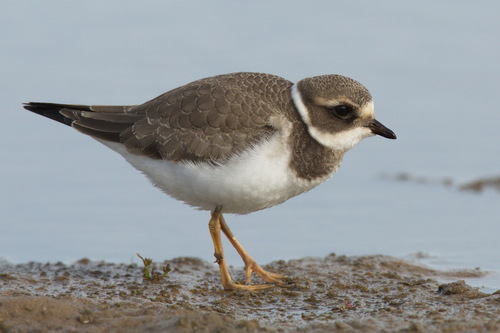
The European golden plover (Pluvialis apricaria), also known as the Eurasian golden plover, greater golden plover, or just the golden plover within Europe, is a relatively large species of plover. This species is similar to two other golden plovers, the American golden plover, Pluvialis dominica, and Pacific golden plover, Pluvialis fulva, which are both slightly smaller, slimmer and longer-legged than European golden plover, and both have grey rather than white axillary (armpit) feathers (visible in flight, and when the bird stretches its wings on the ground).
The European golden plover was formally described by the Swedish naturalist Carl Linnaeus in 1758 in the tenth edition of his Systema Naturae. He placed it with the other plovers in the genus Charadrius and coined the binomial name Charadrius apricarius. The species is now placed in the genus Pluvialis that was introduced in 1760 by the French zoologist Mathurin Jacques Brisson. The genus name is Latin and means "relating to rain", from pluvia, "rain". It was believed that golden plovers flocked when rain was imminent. The species name apricaria is Latin and means "to bask in the sun". The European golden plover... Wikipedia →