Whale Migrations of the World
Humpback, gray, right and blue whales between feeding and breeding grounds · 🇺🇸 United States 🇲🇽 Mexico 🇨🇷 Costa Rica 🇵🇦 Panama 🇨🇴 Colombia 🇪🇨 Ecuador 🇿🇦 South Africa 🇦🇺 Australia 🇨🇦 Canada 🇦🇷 Argentina


Great whales feed in cold, rich waters near the poles and cross whole oceans to breed and calve in warm, sheltered ones. Each population keeps its own feeding ground, its own breeding ground and its own route between them.
Since 2016 the humpback has been managed as 14 distinct stocks; the Southeast Africa/Madagascar stock has two routes, Mozambique–South Africa and Madagascar.
The seasons are mirrored: northern whales breed off Mexico, Central America, the Caribbean and Cape Verde from December to May, southern whales off South America, Africa and Australia from June to October. Off Pacific Central America the two meet, in opposite seasons.
Seven humpbacks photographed off the Antarctic Peninsula were later seen off Costa Rica, about 8,300 km away — when it was published, the longest migration recorded for any mammal.
Only the males sing: long, structured songs, heard mostly on the breeding grounds. A population's song changes over the years, and new songs spread across whole oceans, from eastern Australia to French Polynesia.
On the breeding grounds most whales live off the reserves they built while feeding, though some feed on the way, as off eastern Australia.
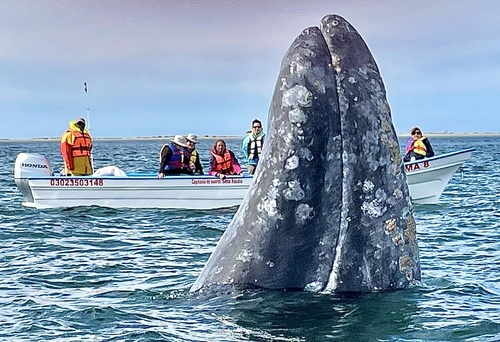
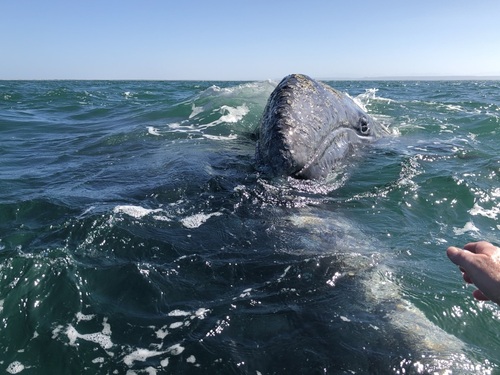
Eastern North Pacific gray whales feed in summer on the seafloor of the Bering and Chukchi seas and spend the winter in the Baja California lagoons (Ojo de Liebre, San Ignacio, Bahía Magdalena), where the calves are born.
They travel close to shore, so the migration can be watched from land: pregnant females lead the way south, and mothers with calves are the last to head north in spring. A small group skips the Arctic and feeds along the coast all summer.
The population fell by almost half, from about 27,000 whales around 2016 to 14,526 in 2023, during the 2019–2023 unusual mortality event. A western gray whale tagged off Sakhalin swam to Mexico and back, the longest mammal migration on record.
Southern right whales leave the Southern Ocean each winter for sheltered coastal bays in Argentina, South Africa and southern Australia. Satellite tags follow them back to feed at the Subtropical Front and in Antarctic waters, one possibly as far as the ice edge.
Only about 380 North Atlantic right whales are left. They calve off Georgia and Florida and feed off New England and Canada, where about 40% of them now use the Gulf of St. Lawrence.
Eastern North Pacific blue whales feed off the US West Coast and winter in the Gulf of California and beyond: one tagged whale travelled to within about 450 km of the Costa Rica Dome, and another crossed from the Dome to the Galápagos.
Península Valdés (Argentina) holds the species' largest breeding population, with more than 2,000 whales in its gulfs. Whales arrive in late May–June and stay until December: the first half of the season has mating groups and mothers with newborns, while mother–calf pairs are the last to leave.
In South Africa the whales use the south coast from June to November: Hermanus (more than 100 whales known to visit), De Hoop, False Bay, Plettenberg Bay and Algoa Bay.
In southern Australia Head of Bight gets 100+ whales from June to October, and Warrnambool is the only established breeding ground in Victoria. Tagged whales left Head of Bight in October and fed in the Southern Ocean.
After the nursery: 34 whales tagged in South Africa (2021–24) ranged across the South Atlantic and south-west Indian Ocean, from the Antarctic Circumpolar Current and the sea-ice zone to the Crozet Islands and the Benguela upwelling; 7 of them (21%) crossed the Atlantic to feeding grounds shared with the Argentine population. Reproductive output has declined in South Africa and in south-west Australia.


Whales here: Mar–Nov

Whales here: Apr–Jan

Whales here: Dec–Mar

Whales here: Dec–Apr

Whales here: Jul–Oct, Dec–Apr
Whales here: Jul–Oct

Whales here: Jun–Oct
Whales here: Jun–Oct

Whales here: May–Oct

Whales here: Oct–Feb

Whales here: Jun–Nov

Whales here: Jun–Nov

Whales here: Jun–Nov

Whales here: Jun–Jul, Sep–Oct

Whales here: May–Jul, Sep–Nov

Whales here: Jun–Jul, Sep–Nov

Whales here: May–Nov

Whales here: May–Jul, Sep–Nov

Whales here: Dec–Apr

Whales here: Jan–Sep
Whales here: Mar–Oct
Whales here: Mar–Dec

Whales here: Jun–Oct

Whales here: Dec–Mar

Whales here: Jun–Oct
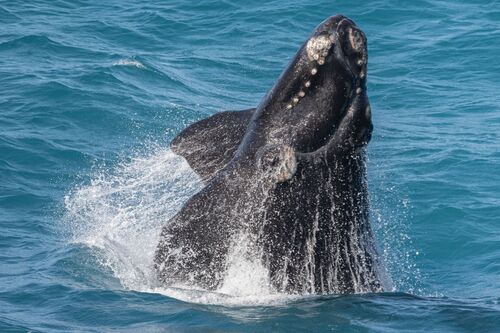
Whales here: May–Dec
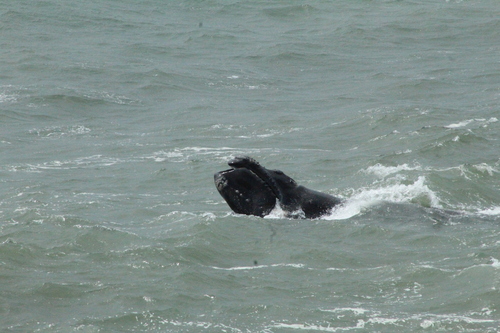
Whales here: Jun–Nov

Whales here: Jun–Nov

Whales here: Jun–Oct

Whales here: Dec–Mar

Whales here: Jun–Oct

Whales here: Jun–Oct

Whales here: Jun–Oct

Whales here: May–Jul, Sep–Nov
Where they are each month
 Where the whales are
- Dec–AprNorthern whales breed
- Jun–OctSouthern whales breed
- Jan–MarCalving in the Baja lagoons (peak February)
- Mar–MayNorthbound along the coast (peak Mar–Apr)
- Jun–SepFeeding in the Arctic and off Oregon and Washington
Northern winter, southern feedingN. winter
Northern humpbacks breed in the tropics and gray whales calve in the Baja lagoons; right whales calve off Georgia and Florida and blue whales winter in the Gulf of California; southern whales feed in the Southern Ocean
Northern winter, southern feedingN. winter
Breeding and calving at their height: northern humpbacks in the tropics, gray whales in the Baja lagoons, blue whales in the Gulf of California; the first gray whales head north
Northern winter, southern feedingN. winter
Northern whales start heading north: humpbacks leave the tropics and gray whales leave the lagoons; right whales finish calving in the south-east US; southern whales are still feeding offshore
Northern winter, southern feedingN. winter
Gray whales reach the Gulf of Alaska and the last northern humpbacks leave the tropics; right whales leave Georgia and Florida and blue whales head back up the Pacific coast; southern whales start for the coast
Pacific Rim National Park Reserve Kenai Fjords National Park
Northern feeding, southern calvingN. feeding
Northern whales feed from Alaska to the Gulf of Maine; the first southern right whales reach Península Valdés and southern humpbacks start north
Northern feeding, southern calvingN. feeding
Southern whales reach the tropics and the nurseries: right whales arrive on all three southern coasts; northern right and blue whales feed in the Gulf of Maine and off California; gray whales feed in the Arctic
Kenai Fjords National Park Freycinet National Park Wilsons Promontory National Park Booderee National Park Royal National Park
Northern feeding, southern calvingN. feeding
Southern breeding season begins: humpbacks mate and calve in the tropics and right whales in the coastal nurseries; northern whales are feeding
Kenai Fjords National Park iSimangaliso Wetland Park Ningaloo Marine Park Cape Range
Northern feeding, southern calvingN. feeding
Southern humpbacks breed in the tropics and right whales nurse their calves in three oceans; gray, blue and northern humpback whales are feeding
Kenai Fjords National Park Machalilla National Park Utría National Natural Park Coiba National Park Marino Ballena National Park
Northern feeding, southern calvingN. feeding
Southern humpback mothers and calves start back south; right whales still nurse in three oceans; northern whales feed
Machalilla National Park Utría National Natural Park Coiba National Park Marino Ballena National Park Ningaloo Marine Park
Northern feeding, southern calvingN. feeding
The last southern humpbacks leave the tropics; Australian right whales leave Head of Bight; northern whales start south, and blue whales begin their southbound trip
West Coast National Park Ningaloo Marine Park Cape Range Noosa National Park Royal National Park
Northern winter, southern feedingN. winter
Northern humpbacks and gray whales head south; right whales arrive at the Georgia–Florida calving ground; mother–calf pairs are the last to leave Valdés and South Africa
Northern winter, southern feedingN. winter
Northern whales arrive in the tropics and the Baja lagoons; right and blue whales are on their winter grounds; the last southern right whales leave Valdés and feed again
Watch the whales


Sounds of the Whale Migrations of the World
Song phrases of the eastern Australian population, Antarctica1:25
Antarctica · 2010
© Garland, Gedamke, Rekdahl, Noad, Garrigue & Gales · Wikimedia Commons · CC BY 2.5
Song phrases, western Antarctic Peninsula (first song)0:53
Antarctica · 2010
© Stimpert, Peavey, Friedlaender & Nowacek · Wikimedia Commons · CC BY 2.5
Song phrases, western Antarctic Peninsula (second song)0:55
Antarctica · 2010
© Stimpert, Peavey, Friedlaender & Nowacek · Wikimedia Commons · CC BY 2.5