


Completed


Tokay Gecko
Gekko gecko
Silhouette: Steven Traver · PhyloPic
- KingdomAnimalia (Animals)
- PhylumChordata (Chordates)
- ClassSquamata
- FamilyGekkonidae (Typical Geckos)
- GenusGekko (Calling Geckos)
- SpeciesGekko gecko (Tokay Gecko)
In 3 days ~50% in a week ~80%
109 Verified sightings at Everglades National Park From 2019 to 2026
586 In all 10 parks
September Best month
☀️🌙 Day & Night When it's spotted
About the Tokay Gecko
The tokay gecko (Gekko gecko) is a nocturnal arboreal gecko in the genus Gekko, the true geckos. It is native to Asia and some Pacific Islands. The word "tokay" is an onomatopoeia of the sound made by males of this species. The common and scientific names, as well as the family name Gekkonidae and the generic term "gecko" come from this species, too, from gekok [ɡekoʔ] in Java Malay, corresponding to tokek [tokeʔ] in Batavian Malay and to tĕkek [təkeʔ] and gokek [ɡokeʔ] in Peninsular Malay.
This species is found in northeast India, Bhutan, Nepal, and Bangladesh; throughout Southeast Asia, including Cambodia, Thailand, the Philippines, Malaysia, Vietnam and Indonesia; and toward western New Guinea. Its native habitat is rainforests, where it lives on trees and cliffs, and it frequently adapts to rural human habitations, roaming walls and ceilings at night in search of insect prey. This is an introduced species in some areas... Wikipedia →
Sounds
Recording0:19
Thailand · 2023
© andreakistner · iNaturalist · CC BY-NC 4.0
Recording0:11
Philippines · 2021
© henryedelman · iNaturalist · CC BY-NC 4.0
Recording0:09
Philippines · 2020
© anncabras24 · iNaturalist · CC BY-NC 4.0
Recent sightings of Tokay Gecko in Everglades National Park
LIVEiNaturalistGlobal Distribution
Parks Where Found
| # | Park | Country | Daily sighting probability |
|---|---|---|---|
| 1 | Cat Tien National Park | 🇻🇳 Vietnam | |
| 2 | Kaziranga National Park | 🇮🇳 India | |
| 3 | Kaeng Krachan National Park | 🇹🇭 Thailand | |
| 4 | Bali Barat National Park | 🇮🇩 Indonesia | |
| 5 | Khao Sok National Park | 🇹🇭 Thailand | |
| 6 | Komodo National Park | 🇮🇩 Indonesia | |
| 7 | Khao Yai National Park | 🇹🇭 Thailand | |
| 8 | Everglades National Park | 🇺🇸 United States | |
| 9 | Kinabalu Park | 🇲🇾 Malaysia | |
| 10 | Doi Inthanon National Park | 🇹🇭 Thailand |
Cities Where Found
| # | City | Country | Daily sighting probability |
|---|---|---|---|
| 1 | Makassar | 🇮🇩 Indonesia | |
| 2 | Tasikmalaya | 🇮🇩 Indonesia | |
| 3 | Denpasar | 🇮🇩 Indonesia | |
| 4 | Yogyakarta | 🇮🇩 Indonesia | |
| 5 | Semarang | 🇮🇩 Indonesia | |
| 6 | Jakarta | 🇮🇩 Indonesia | |
| 7 | Cebu City | 🇵🇭 Philippines | |
| 8 | Surakarta | 🇮🇩 Indonesia | |
| 9 | Malang | 🇮🇩 Indonesia | |
| 10 | Bandar Lampung | 🇮🇩 Indonesia |
Zoos & Centres Where Found
Closest Relatives at Everglades National Park







Before you go
What are the chances of seeing a Tokay Gecko in Everglades National Park?
Possible
About 20% of wildlife watchers report a Tokay Gecko sighting in Everglades National Park on a given day, based on 109 verified sightings from GBIF citizen-science data from 2019 to 2026. It is the 26th most-seen of the 54 reptiles we can rate there. Over three days the chance rises to about 50%, and over a week to about 80%, if each day is a fresh chance.
When is the best time to see a Tokay Gecko in Everglades National Park?
July and September
In those months about 40% of wildlife watchers report a Tokay Gecko in Everglades National Park on a given day, against about 10% in January and February, the lowest months. Those are among Everglades National Park's wettest months, with about 180 mm of rain a month against 40 mm in March.
What time of day is best to see a Tokay Gecko?
Between 7 and 10 pm
Across all the parks we cover, that three-hour window holds the most Tokay Gecko sightings with a recorded time, and about 7 in 10 of them come between 6 pm and 6 am: it is seen both by day and at night.
Is Everglades National Park the best place to see a Tokay Gecko?
8th of 10
Of the 10 parks where we can rate Tokay Gecko sightings, Everglades National Park ranks 8th at about 20%. The best odds are in Cat Tien National Park (Vietnam, about 60%), Kaziranga National Park (India, about 50%) and Kaeng Krachan National Park (Thailand, about 50%). All parks ranked.
Which relatives of the Tokay Gecko live in Everglades National Park?
Same family: Gekkonidae
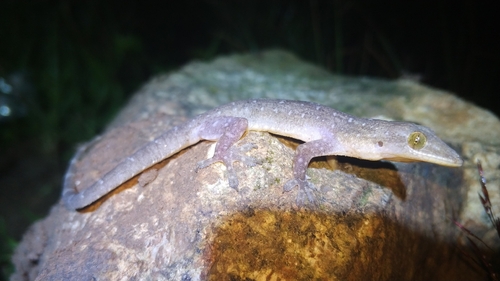
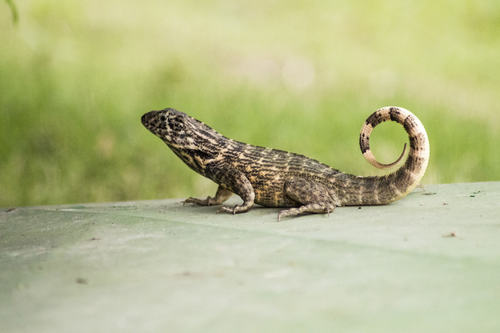
The closest relatives of the Tokay Gecko that you can see in Everglades National Park (family Gekkonidae, Typical Geckos) are Tropical House Gecko (about 40%), Common House Gecko (about 10%) and Garnot's House Gecko (about 10%), with each one's daily chance of a sighting.
Where does the Tokay Gecko sighting chance come from?
GBIF citizen-science records
It is estimated from how often the Tokay Gecko is recorded against all the reptiles logged in Everglades National Park (109 verified sightings from 2019 to 2026), calibrated against known sighting rates. Figures are rounded to the nearest 10% because citizen-science data supports honest approximations, not decimals, and months with records from fewer than five people show "—". How it works.
