Brown Hare

Brown Hare

Lepus europaeus

Silhouette: Anthony Caravaggi · PhyloPic

LCLeast ConcernNTVUENCR
Daily sighting probability ~40% · Likely
at Fertő-Hanság National Park

In 3 days ~80% in a week >90%

98 Verified sightings at Fertő-Hanság National Park From 2019 to 2026
817 In all 18 parks
June Best month
🌅 Crepuscular When it's spotted

About the Brown Hare

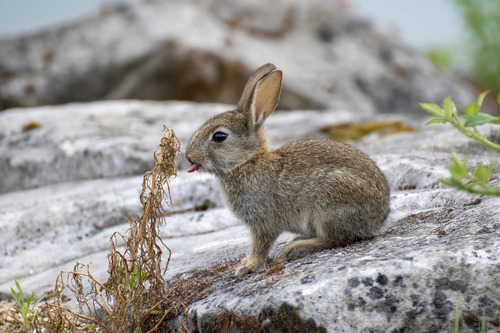
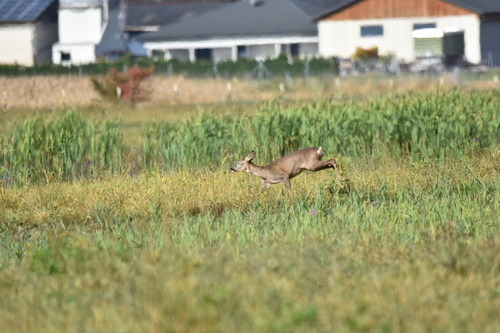
The European hare (Lepus europaeus), also known as the brown hare, is a species of hare native to Europe and parts of Asia. It is among the largest hare species and is adapted to temperate, open country. Hares are herbivorous and feed mainly on grasses and herbs, supplementing these with twigs, buds, bark and field crops, particularly in winter. Their natural predators include red foxes and large birds of prey. They rely on high-speed endurance running to escape predation, having long, powerful limbs and large nostrils.

Generally nocturnal and shy in nature, hares change their behaviour in the spring, when they can be seen in broad daylight chasing one another around in fields. During this spring frenzy they sometimes strike one another with their paws ("boxing"). This is not just competition between males: females may also hit males, either to show they are not ready to mate or to test the males' determination. The female nests in a depression on the surface of the ground known as a form rather than in a burrow, and the young are active as soon as they are born. Litters may consist of three or four young and a female can bear three litters a year, with hares living for up to twelve years. The breeding season lasts from January to August.

The European hare is listed as being of least concern by the International Union for Conservation of Nature because it has a wide range and is moderately abundant. However populations have been declining in mainland Europe since the 1960s, at least partly due to changes in farming practices. The hare has been hunted across Europe for centuries, with more than five million being shot each year; in Britain it has traditionally been hunted by beagling and hare coursing, but these field sports are now illegal (though illegal hare-coursing continues). The hare is a traditional symbol of fertility and reproduction in some cultures and its courtship behaviour in the spring inspired the English idiom mad as a March hare. Female hares are known as does, while juveniles are leverets. Wikipedia →

Sounds

Recording0:10

Germany · 2025

© Jonathan Wild · iNaturalist · CC BY-NC 4.0

Recording0:18

Russia · 2022

© Егор Пылёв · iNaturalist · CC BY-NC 4.0

Recording0:58

France · 2024

© Catmaove · iNaturalist · CC BY-NC 4.0

Global Distribution

Parks Where Found

# Park Country Daily sighting probability
1 Kiskunság National Park 🇭🇺 Hungary
~60%
2 Fertő-Hanság National Park 🇭🇺 Hungary
~40%
3 Biebrza National Park 🇵🇱 Poland
~40%
4 Wadden Sea National Park 🇩🇪 Germany
~40%
5 Hortobágy National Park 🇭🇺 Hungary
~40%
6 Torres del Paine National Park 🇨🇱 Chile
~40%
7 Península Valdés 🇦🇷 Argentina
~40%
8 Cairngorms National Park 🇬🇧 United Kingdom
~30%
9 Bavarian Forest National Park 🇩🇪 Germany
~30%
10 Białowieża National Park 🇵🇱 Poland
~20%
11 Arthur's Pass National Park 🇳🇿 New Zealand
~20%
12 Nahuel Huapi National Park 🇦🇷 Argentina
~20%
13 Cévennes National Park 🇫🇷 France
~10%
14 Snowdonia National Park 🇬🇧 United Kingdom
~10%
15 Lamington National Park 🇦🇺 Australia
~10%
16 Pyrénées National Park 🇫🇷 France
~10%
17 Springbrook National Park 🇦🇺 Australia
~10%
18 Fiordland National Park 🇳🇿 New Zealand
~10%

Cities Where Found

# City Country Daily sighting probability
1 Helsinki 🇫🇮 Finland
~40%
2 Prague 🇨🇿 Czechia
~30%
3 Astana 🇰🇿 Kazakhstan
~30%
4 Stockholm 🇸🇪 Sweden
~30%
5 Essen 🇩🇪 Germany
~20%
6 Rotterdam [The Hague] 🇳🇱 Netherlands
~10%
7 Vienna 🇦🇹 Austria
~10%
8 Minsk 🇧🇾 Belarus
~10%
9 Amsterdam 🇳🇱 Netherlands
~10%
10 Copenhagen 🇩🇰 Denmark
~10%

Zoos & Centres Where Found

# Zoo / Centre Country
1 Korkeasaari Zoo 🇫🇮 Finland In captivity
2 Mogilyov Zoo 🇧🇾 Belarus In captivity
3 Bioparque Municipal Vesty Pakos 🇧🇴 Bolivia In captivity
4 Tierpark Hagenbeck 🇩🇪 Germany In captivity
5 Langenberg Wildlife Park 🇨🇭 Switzerland In captivity
6 Lithuanian Zoo 🇱🇹 Lithuania In captivity

Before you go

What are the chances of seeing a Brown Hare in Fertő-Hanság National Park?

Likely

About 40% of wildlife watchers report a Brown Hare sighting in Fertő-Hanság National Park on a given day, based on 98 verified sightings from GBIF citizen-science data from 2019 to 2026. It is the 2nd most-seen of the 12 mammals we can rate there. Over three days the chance rises to about 80%, and over a week to over 90%, if each day is a fresh chance.

When is the best time to see a Brown Hare in Fertő-Hanság National Park?

June

In that month about 60% of wildlife watchers report a Brown Hare in Fertő-Hanság National Park on a given day, against under 5% in October, the lowest month.

What time of day is best to see a Brown Hare?

Between 4 and 7 pm

Across all the parks we cover, that three-hour window holds the most Brown Hare sightings with a recorded time, and about 7 in 10 of them come between 6 am and 6 pm: it is most active around dawn and dusk.

Is Fertő-Hanság National Park the best place to see a Brown Hare?

2nd of 18

Of the 18 parks where we can rate Brown Hare sightings, Fertő-Hanság National Park ranks 2nd at about 40%. The best odds are in Kiskunság National Park (Hungary, about 60%). All parks ranked.

Where does the Brown Hare sighting chance come from?

GBIF citizen-science records

It is estimated from how often the Brown Hare is recorded against all the mammals logged in Fertő-Hanság National Park (98 verified sightings from 2019 to 2026), calibrated against known sighting rates. Figures are rounded to the nearest 10% because citizen-science data supports honest approximations, not decimals, and months with records from fewer than five people show "—". How it works.

← Back to Fertő-Hanság National Park