


Completed


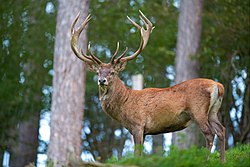
Red Deer
Cervus elaphus
Silhouette: Steven Traver · PhyloPic
- KingdomAnimalia (Animals)
- PhylumChordata (Chordates)
- ClassMammalia (Mammals)
- OrderArtiodactyla (Even-toed Ungulates and Cetaceans)
- FamilyCervidae (Deer)
- GenusCervus (Typical Old World Deer and Elk)
- SpeciesCervus elaphus (Red Deer)
In 3 days ~40% in a week ~70%
15 Verified sightings at Fertő-Hanság National Park From 2019 to 2026
1,383 In all 21 parks
November Best month
☀️🌙 Day & Night When it's spotted
About the Red Deer
The red deer (Cervus elaphus) is a species of deer in the genus Cervus. It is one of the largest deer species. A male red deer is called a stag or hart, and a female is called a hind. The red deer inhabits most of Europe, the Caucasus Mountains region, Anatolia, Iran, and parts of Western Asia. It also inhabits the Atlas Mountains of Northern Africa, being the only living species of deer to inhabit Africa. Red deer have been introduced to other areas, including Australia, New Zealand, the United States, Canada, Peru, Uruguay, Chile and Argentina. In many parts of the world, the meat (venison) from red deer is used as a food source.
The red deer is a ruminant, characterized by a four-chambered stomach. Genetic evidence indicates that the red deer, as traditionally defined, is a species group, rather than a single species, though exactly how many species the group includes remains disputed. The ancestor of the red deer probably originated in central Asia.
Although at one time red deer were rare in parts of Europe, they were never close to extinction. Reintroduction and conservation efforts, such as in the United Kingdom and Portugal, have resulted in an increase of red deer populations, while other areas, such as North Africa, have continued to show a population decline. Wikipedia →
Recent sightings of Red Deer in Fertő-Hanság National Park
LIVEiNaturalistGlobal Distribution
Parks Where Found
| # | Park | Country | Daily sighting probability |
|---|---|---|---|
| 1 | Monfragüe National Park | 🇪🇸 Spain | |
| 2 | Tatra National Park | 🇸🇰 Slovakia | |
| 3 | Białowieża National Park | 🇵🇱 Poland | |
| 4 | Doñana National Park | 🇪🇸 Spain | |
| 5 | Mercantour National Park | 🇫🇷 France | |
| 6 | Aigüestortes National Park | 🇪🇸 Spain | |
| 7 | Cairngorms National Park | 🇬🇧 United Kingdom | |
| 8 | Grampians National Park | 🇦🇺 Australia | |
| 9 | Pyrénées National Park | 🇫🇷 France | |
| 10 | Biebrza National Park | 🇵🇱 Poland | |
| 11 | Vanoise National Park | 🇫🇷 France | |
| 12 | Cévennes National Park | 🇫🇷 France | |
| 13 | Triglav National Park | 🇸🇮 Slovenia | |
| 14 | Nahuel Huapi National Park | 🇦🇷 Argentina | |
| 15 | Picos de Europa National Park | 🇪🇸 Spain | |
| 16 | Fertő-Hanság National Park | 🇭🇺 Hungary | |
| 17 | Arthur's Pass National Park | 🇳🇿 New Zealand | |
| 18 | Fiordland National Park | 🇳🇿 New Zealand | |
| 19 | Bavarian Forest National Park | 🇩🇪 Germany | |
| 20 | Wadden Sea National Park | 🇩🇪 Germany | |
| 21 | Great Otway National Park | 🇦🇺 Australia |
Cities Where Found
| # | City | Country | Daily sighting probability |
|---|---|---|---|
| 1 | London | 🇬🇧 United Kingdom | |
| 2 | Birmingham | 🇬🇧 United Kingdom | |
| 3 | Berlin | 🇩🇪 Germany | |
| 4 | Madrid | 🇪🇸 Spain |
Zoos & Centres Where Found
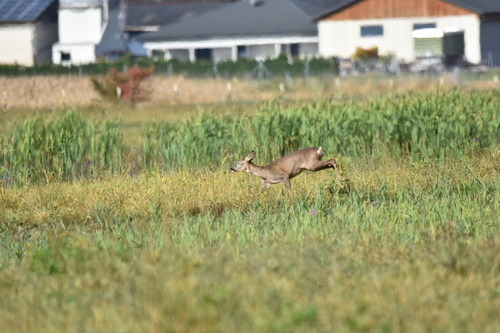
Closest Relatives at Fertő-Hanság National Park




Before you go
What are the chances of seeing a Red Deer in Fertő-Hanság National Park?
Possible
About 20% of wildlife watchers report a Red Deer sighting in Fertő-Hanság National Park on a given day, based on 15 verified sightings from GBIF citizen-science data from 2019 to 2026. It is the 7th most-seen of the 12 mammals we can rate there. Over three days the chance rises to about 40%, and over a week to about 70%, if each day is a fresh chance.
When is the best time to see a Red Deer in Fertő-Hanság National Park?
January and November
In those months about 40% of wildlife watchers report a Red Deer in Fertő-Hanság National Park on a given day, against under 5% in March and July–August, the lowest months.
What time of day is best to see a Red Deer?
Between 7 and 10 pm
Across all the parks we cover, that three-hour window holds the most Red Deer sightings with a recorded time, and about half of them come between 6 am and 6 pm: it is seen both by day and at night.
Is Fertő-Hanság National Park the best place to see a Red Deer?
16th of 21
Of the 21 parks where we can rate Red Deer sightings, Fertő-Hanság National Park ranks 16th at about 20%. The best odds are in Monfragüe National Park (Spain, about 80%), Tatra National Park (Slovakia, about 60%) and Białowieża National Park (Poland, about 60%). All parks ranked.
Where does the Red Deer sighting chance come from?
GBIF citizen-science records
It is estimated from how often the Red Deer is recorded against all the mammals logged in Fertő-Hanság National Park (15 verified sightings from 2019 to 2026), calibrated against known sighting rates. Figures are rounded to the nearest 10% because citizen-science data supports honest approximations, not decimals, and months with records from fewer than five people show "—". How it works.
