


Completed

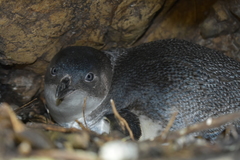

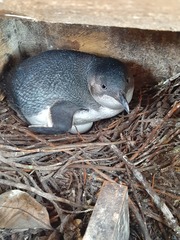


Little Penguin
Eudyptula minor
Silhouette: Fir0002/Flagstaffotos (photo), John E. McCormack, Michael G. Harvey, Brant C. Faircloth, Nicholas G. Crawford, Travis C. Glenn, Robb T. Brumfield & T. Michael Keesey · PhyloPic
- KingdomAnimalia (Animals)
- PhylumChordata (Chordates)
- ClassAves (Birds)
- OrderSphenisciformes (Penguins)
- FamilySpheniscidae (Penguins)
- GenusEudyptula (Little Penguins)
- SpeciesEudyptula minor (Little Penguin)
In 3 days ~10% in a week ~20%
73 Verified sightings at Fiordland National Park From 2019 to 2026
876 In all 8 parks
April Best month
🌅 Crepuscular When it's spotted
About the Little Penguin
The little penguin (Eudyptula minor) is the smallest species of penguin in the world, and originates from New Zealand and Australia. It is commonly known as the fairy penguin, little blue penguin, or blue penguin, owing to its slate-blue plumage, and is also known by its Māori name kororā. It is a marine neritic species that dives for food throughout the day and returns to burrows on the shore at dusk. Eudyptula minor feathers are dense in melanosomes, which increase water resistance and give them their unique blue colour.
The Australian little penguin (Eudyptula novaehollandiae), from Australia and the Otago region of New Zealand, was initially described as Spheniscus novaehollandiae in 1826 but was later classified as Eudyptula minor novaehollandiae, a subspecies of the little penguin.
The little penguin was first described by German naturalist Johann Reinhold Forster in 1781. Several subspecies are known, but a precise classification of these is still a matter of dispute. The holotypes of the subspecies E. m. variabilis and Eudyptula minor chathamensis are in the collection of the Museum of New Zealand Te Papa Tongarewa. Wikipedia →
Recent sightings of Little Penguin in Fiordland National Park
LIVEiNaturalistGlobal Distribution
Parks Where Found
| # | Park | Country | Daily sighting probability |
|---|---|---|---|
| 1 | Egmont National Park | 🇳🇿 New Zealand | |
| 2 | Rakiura National Park | 🇳🇿 New Zealand | |
| 3 | Booderee National Park | 🇦🇺 Australia | |
| 4 | Freycinet National Park | 🇦🇺 Australia | |
| 5 | Abel Tasman National Park | 🇳🇿 New Zealand | |
| 6 | Wilsons Promontory National Park | 🇦🇺 Australia | |
| 7 | Fiordland National Park | 🇳🇿 New Zealand | |
| 8 | Great Otway National Park | 🇦🇺 Australia |
Zoos & Centres Where Found
Closest Relatives at Fiordland National Park




Before you go
What are the chances of seeing a Little Penguin in Fiordland National Park?
Rare
Under 5% of wildlife watchers report a Little Penguin sighting in Fiordland National Park on a given day, based on 73 verified sightings from GBIF citizen-science data from 2019 to 2026. It is the 72nd most-seen of the 94 birds we can rate there. Over three days the chance rises to about 10%, and over a week to about 20%, if each day is a fresh chance.
When is the best time to see a Little Penguin in Fiordland National Park?
April
In that month about 10% of wildlife watchers report a Little Penguin in Fiordland National Park on a given day, against under 5% in May to March, the lowest months.
What time of day is best to see a Little Penguin?
Between 5 and 8 pm
Across all the parks we cover, that three-hour window holds the most Little Penguin sightings with a recorded time, and about 7 in 10 of them come between 6 am and 6 pm: it is most active around dawn and dusk.
Is Fiordland National Park the best place to see a Little Penguin?
7th of 8
Of the 8 parks where we can rate Little Penguin sightings, Fiordland National Park ranks 7th at under 5%. The best odds are in Egmont National Park (New Zealand, about 30%), Rakiura National Park (New Zealand, about 30%) and Booderee National Park (Australia, about 10%).
Where does the Little Penguin sighting chance come from?
GBIF citizen-science records
It is estimated from how often the Little Penguin is recorded against all the birds logged in Fiordland National Park (73 verified sightings from 2019 to 2026), calibrated against known sighting rates. Figures are rounded to the nearest 10% because citizen-science data supports honest approximations, not decimals, and months with records from fewer than five people show "—". How it works.
