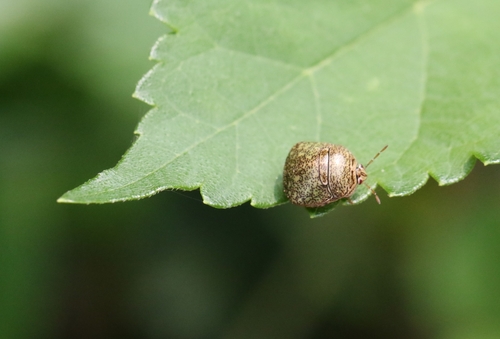
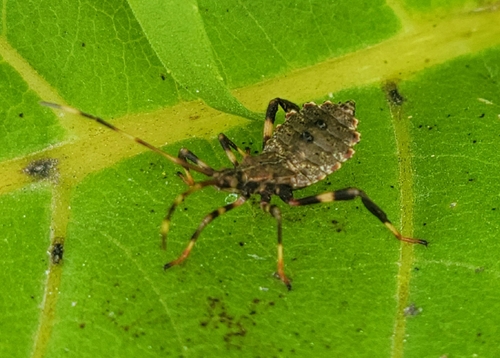

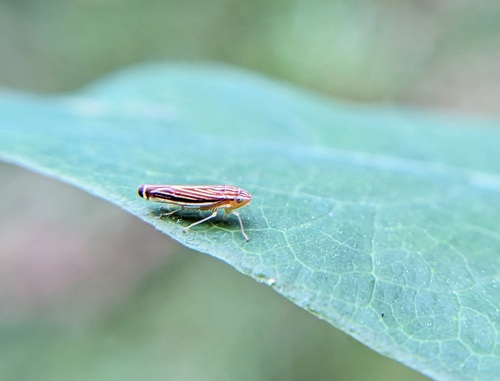
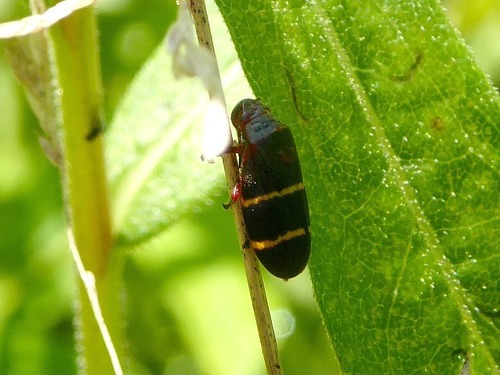
Large Milkweed Bug

Large Milkweed Bug

Oncopeltus fasciatus

Daily sighting probability ~10% · With luck
at Great Smoky Mountains National Park

In 3 days ~30% in a week ~60%

54 Verified sightings at Great Smoky Mountains National Park From 2019 to 2026
337 In all 15 parks
December Best month
☀️ Diurnal When it's spotted

About the Large Milkweed Bug

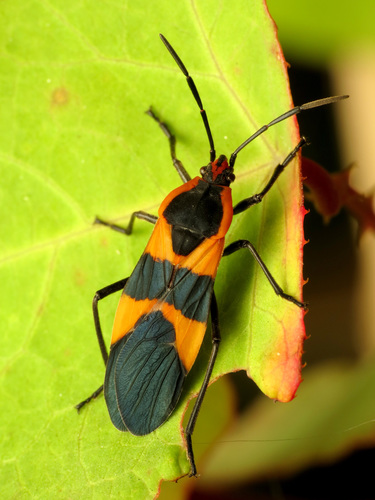
Oncopeltus fasciatus, known as the large milkweed bug, is a medium-sized hemipteran (true bug) of the family Lygaeidae. It is distributed throughout North America, from Central America through Mexico and the Caribbean to southern areas in Canada. Costa Rica is the southern limit of its range. It inhabits disturbed areas, roadsides, and open pastures. Due to this widespread geographic distribution, the large milkweed bug exhibits varying life history trade-offs depending on the population location, including differences in wing length and other traits based on location.

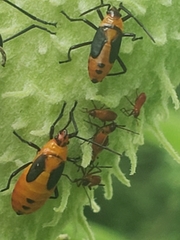
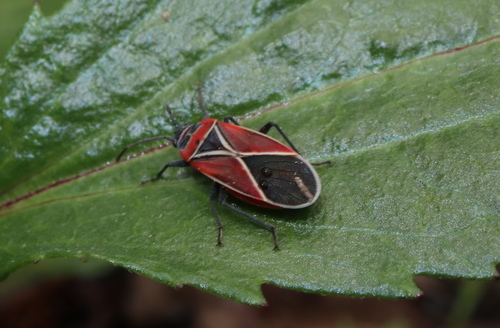
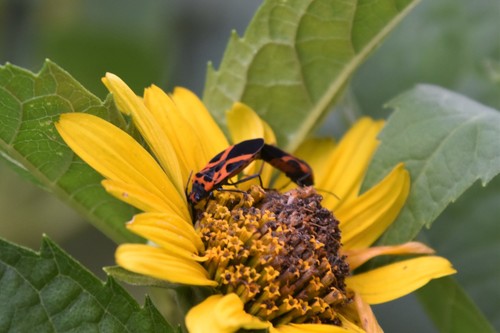
Adults can range from 11 to 12 mm in length and have a red/orange and black X-shaped pattern on their wings underneath the triangle that is typical to hemipterans. This feature makes the bug easily seen, acting as an aposematic warning to predators. O. fasciatus exhibits Müllerian mimicry and is noxious to predators. The ventral side of the fourth abdominal segment bears a black band in the male and two black spots in the female. Juveniles are born mostly red with black antennae and a few black spots, throughout growth the black spots are developed as well as wing pads. The eggs are bright orange... Wikipedia →

Global Distribution

Parks Where Found

# Park Country Daily sighting probability
1 Shenandoah National Park 🇺🇸 United States
~20%
2 Point Pelee National Park 🇨🇦 Canada
~10%
3 Great Smoky Mountains National Park 🇺🇸 United States
~10%
4 El Vizcaíno Biosphere Reserve 🇲🇽 Mexico
~10%
5 Grand Canyon National Park 🇺🇸 United States
~10%
6 Padre Island National Seashore 🇺🇸 United States
~10%
7 Saguaro National Park 🇺🇸 United States
~10%
8 Zion National Park 🇺🇸 United States
~10%
9 Sequoia and Kings Canyon National Parks 🇺🇸 United States
~10%
10 Merritt Island National Wildlife Refuge 🇺🇸 United States
~10%
11 Channel Islands National Park 🇺🇸 United States
~10%
12 Big Bend National Park 🇺🇸 United States
~10%
13 Cumbres de Monterrey National Park 🇲🇽 Mexico
~10%
14 Everglades National Park 🇺🇸 United States
~10%
15 Joshua Tree National Park 🇺🇸 United States
~10%

Cities Where Found

# City Country Daily sighting probability
1 Chicago 🇺🇸 United States
~20%
2 Washington 🇺🇸 United States
~20%
3 Baltimore 🇺🇸 United States
~20%
4 New York City 🇺🇸 United States
~20%
5 Philadelphia 🇺🇸 United States
~20%
6 Detroit 🇺🇸 United States
~20%
7 Ciudad Juárez 🇲🇽 México
~10%
8 Dallas 🇺🇸 United States
~10%
9 Minneapolis [Saint Paul] 🇺🇸 United States
~10%
10 Austin 🇺🇸 United States
~10%

Before you go

What are the chances of seeing a Large Milkweed Bug in Great Smoky Mountains National Park?

With luck

About 10% of wildlife watchers report a Large Milkweed Bug sighting in Great Smoky Mountains National Park on a given day, based on 54 verified sightings from GBIF citizen-science data from 2019 to 2026. It is the 100th most-seen of the 822 insects we can rate there. Over three days the chance rises to about 30%, and over a week to about 60%, if each day is a fresh chance.

When is the best time to see a Large Milkweed Bug in Great Smoky Mountains National Park?

June–July and October–December

In those months about 20% of wildlife watchers report a Large Milkweed Bug in Great Smoky Mountains National Park on a given day, against under 5% in January–April and August, the lowest months.

What time of day is best to see a Large Milkweed Bug?

Between 11 am and 2 pm

Across all the parks we cover, that three-hour window holds the most Large Milkweed Bug sightings with a recorded time, and about 9 in 10 of them come between 6 am and 6 pm: it is a daytime animal.

Is Great Smoky Mountains National Park the best place to see a Large Milkweed Bug?

3rd of 15

Of the 15 parks where we can rate Large Milkweed Bug sightings, Great Smoky Mountains National Park ranks 3rd at about 10%. The best odds are in Shenandoah National Park (United States, about 20%) and Point Pelee National Park (Canada, about 10%).

Which relatives of the Large Milkweed Bug live in Great Smoky Mountains National Park?

Same family: Lygaeidae

The closest relatives of the Large Milkweed Bug that you can see in Great Smoky Mountains National Park (family Lygaeidae, Seed Bugs) are White-Crossed Seed Bug (about 10%) and False Milkweed Bug (about 10%), with each one's daily chance of a sighting.

Where does the Large Milkweed Bug sighting chance come from?

GBIF citizen-science records

It is estimated from how often the Large Milkweed Bug is recorded against all the insects logged in Great Smoky Mountains National Park (54 verified sightings from 2019 to 2026), calibrated against known sighting rates. Figures are rounded to the nearest 10% because citizen-science data supports honest approximations, not decimals, and months with records from fewer than five people show "—". How it works.

← Back to Great Smoky Mountains National Park