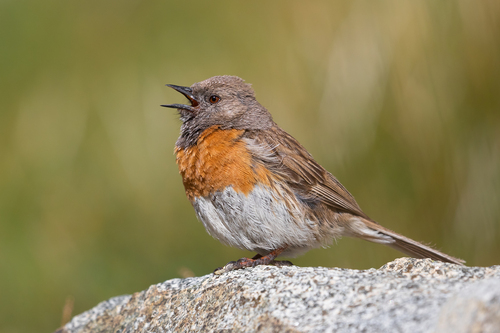
Rock Bunting

Rock Bunting

Emberiza cia

Silhouette: L. Shyamal · PhyloPic

LCLeast ConcernNTVUENCR
Daily sighting probability ~10% · With luck
at Hemis National Park

In 3 days ~30% in a week ~50%

12 Verified sightings at Hemis National Park From 2019 to 2026
3,832 In all 14 parks
June Best month
☀️ Diurnal When it's spotted

About the Rock Bunting

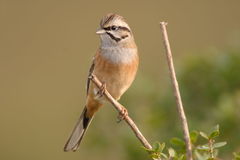
The rock bunting (Emberiza cia) is a passerine bird in the bunting family Emberizidae, a group now separated by most modern authors from the finches, Fringillidae. The genus name Emberiza is from Old German Embritz, a bunting. The specific cia is from a local Italian name for this bird, from zirlare, "to chirp".

It breeds in northwest Africa, southern Europe east to central Asia, and the Himalayas. It also breeds locally in central Europe. It is partially migratory, with northern populations wintering further south, mainly within the breeding range of the resident southern populations. It is a rare wanderer to western Europe.

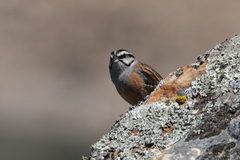
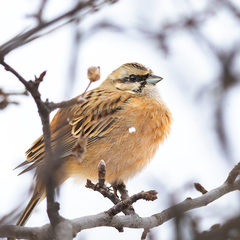
The rock bunting breeds in open dry rocky mountainous areas. This bird is 16 cm in length. The breeding male has chestnut upperparts, unmarked deep buff underparts, and a pale grey head marked with black striping. The female rock bunting is a washed-out version of the male, with paler underparts, a grey-brown back and a less contrasted head. The juvenile is similar to the female, but with a streaked head.

There are four races differing mainly in the plumage shades, although the subspecies which breeds in Europe, Africa... Wikipedia →

Sounds

Song1:23

China · 2026

© Bo Shunqi 薄顺奇 · XC1174798 · CC BY-NC-SA 4.0

Alarm call0:38

Hungary · 2019

© Jarek Matusiak · XC467505 · CC BY-NC-SA 4.0

Call0:22

Spain · 2016

© Marc Anderson · XC309143 · CC BY-NC-ND 4.0

Global Distribution

Parks Where Found

# Park Country Daily sighting probability
1 Sierra Nevada National Park 🇪🇸 Spain
~30%
2 Aigüestortes National Park 🇪🇸 Spain
~30%
3 Monfragüe National Park 🇪🇸 Spain
~30%
4 Sierra de Guadarrama National Park 🇪🇸 Spain
~20%
5 Vanoise National Park 🇫🇷 France
~20%
6 Mercantour National Park 🇫🇷 France
~20%
7 Picos de Europa National Park 🇪🇸 Spain
~20%
8 Ecrins National Park 🇫🇷 France
~10%
9 Ordesa y Monte Perdido National Park 🇪🇸 Spain
~10%
10 Hemis National Park 🇮🇳 India
~10%
11 Pyrénées National Park 🇫🇷 France
~10%
12 Cévennes National Park 🇫🇷 France
<5%
13 Jim Corbett National Park 🇮🇳 India
<5%
14 Triglav National Park 🇸🇮 Slovenia
<5%

Cities Where Found

# City Country Daily sighting probability
1 Almaty 🇰🇿 Kazakhstan
~10%
2 Srinagar 🇮🇳 India
<5%
3 Mashhad 🇮🇷 Iran
<5%
4 Milan 🇮🇹 Italy
<5%
5 Islamabad 🇵🇰 Pakistan
<5%
6 Marrakesh 🇲🇦 Morocco
<5%
7 Tehran 🇮🇷 Iran
<5%
8 Ramallah 🇵🇸 Palestine
<5%
9 Belgrade 🇷🇸 Serbia
<5%
10 Jerusalem 🇮🇱 Israel
<5%

Before you go

What are the chances of seeing a Rock Bunting in Hemis National Park?

With luck

About 10% of wildlife watchers report a Rock Bunting sighting in Hemis National Park on a given day, based on 12 verified sightings from GBIF citizen-science data from 2019 to 2026. It is the 38th most-seen of the 52 birds we can rate there. Over three days the chance rises to about 30%, and over a week to about 50%, if each day is a fresh chance.

When is the best time to see a Rock Bunting in Hemis National Park?

June

In that month about 20% of wildlife watchers report a Rock Bunting in Hemis National Park on a given day, against under 5% in February, May, September and November–December, the lowest months. That is one of Hemis National Park's wettest months, with about 45 mm of rain against 10 mm in October. January has too few records to rate.

What time of day is best to see a Rock Bunting?

Between 10 am and 1 pm

Across all the parks we cover, that three-hour window holds the most Rock Bunting sightings with a recorded time, and about 8 in 10 of them come between 6 am and 6 pm: it is a daytime animal.

Which relatives of the Rock Bunting live in Hemis National Park?

Same order: Passeriformes

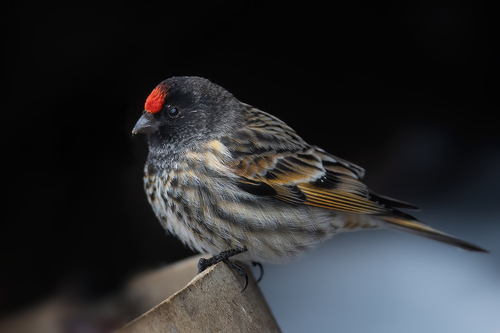
The closest relatives of the Rock Bunting that you can see in Hemis National Park (order Passeriformes, Perching Birds) are Eurasian Magpie (about 80%), Red-billed Chough (about 70%) and Fire-fronted Serin (about 60%), with each one's daily chance of a sighting.

Where does the Rock Bunting sighting chance come from?

GBIF citizen-science records

It is estimated from how often the Rock Bunting is recorded against all the birds logged in Hemis National Park (12 verified sightings from 2019 to 2026), calibrated against known sighting rates. Figures are rounded to the nearest 10% because citizen-science data supports honest approximations, not decimals, and months with records from fewer than five people show "—". How it works.

← Back to Hemis National Park