White-plumed Honeyeater

White-plumed Honeyeater

Ptilotula penicillata

Silhouette: PhyloPic

LCLeast ConcernNTVUENCR Endemic
Daily sighting probability <5% · Rare
at Kosciuszko National Park

In 3 days ~10% in a week ~20%

16 Verified sightings at Kosciuszko National Park From 2019 to 2026
1,152 In all 9 parks
May Best month
☀️ Diurnal When it's spotted

About the White-plumed Honeyeater

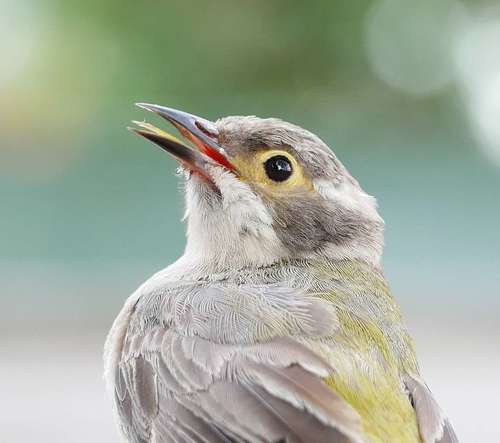
The white-plumed honeyeater (Ptilotula penicillata, formerly Lichenostomus penicillatus) is a medium-sized passerine of the family Meliphagidae (honeyeaters) endemic to mainland Australia. Its key identifying characteristics are a primarily olive-grey body and yellow face, a slightly down-curved bill and its white distal neck-plumes from which it takes its name. White-Plumed Honeyeaters exhibit a preference for woodlands and riparian areas and have a very strong association with River Red Gums. They exhibit a small seasonal migration from ranges to lower areas in winter. Today the species is most commonly seen through Victoria, South Australia and New South Wales, but is also found in regions of Western Australia and the Northern Territory. They are often seen in gardens and backyards with vegetation cover.

Honeyeaters are most diverse group of passerine birds on continental Australia and the White-plumed honeyeater is one of the most common honeyeaters of urban areas throughout much of Australia. The first formal description of Ptilotula penicillata was by John Gould in 1837 who named it Lichenostomus penicillatus and placed it within the Ptilotula group within the Meliphagidae... Wikipedia →

Sounds

Call1:09

Australia · 2025

© Peter Boesman · XC1066899 · CC BY-NC-ND 4.0

Dawn song0:33

Australia · 2021

© Marc Anderson · XC689127 · CC BY-NC-ND 4.0

Begging call1:00

Australia · 2021

© Toby Esplin · XC666739 · CC BY-NC-ND 4.0

Global Distribution

Parks Where Found

# Park Country Daily sighting probability
1 Uluru-Kata Tjuta National Park 🇦🇺 Australia
~90%
2 Flinders Ranges National Park 🇦🇺 Australia
~30%
3 Hattah-Kulkyne National Park 🇦🇺 Australia
~10%
4 Grampians National Park 🇦🇺 Australia
~10%
5 Great Otway National Park 🇦🇺 Australia
<5%
6 Kosciuszko National Park 🇦🇺 Australia
<5%
7 Ningaloo Marine Park 🇦🇺 Australia
<5%
8 Booderee National Park 🇦🇺 Australia
<5%
9 Blue Mountains National Park 🇦🇺 Australia
<5%

Cities Where Found

# City Country Daily sighting probability
1 Melbourne 🇦🇺 Australia
~30%
2 Sydney 🇦🇺 Australia
<5%

Zoos & Centres Where Found

# Zoo / Centre Country
1 Alice Springs Desert Park 🇦🇺 Australia In captivity

Before you go

What are the chances of seeing a White-plumed Honeyeater in Kosciuszko National Park?

Rare

Under 5% of wildlife watchers report a White-plumed Honeyeater sighting in Kosciuszko National Park on a given day, based on 16 verified sightings from GBIF citizen-science data from 2019 to 2026. It is the 101st most-seen of the 127 birds we can rate there. Over three days the chance rises to about 10%, and over a week to about 20%, if each day is a fresh chance.

When is the best time to see a White-plumed Honeyeater in Kosciuszko National Park?

May

In that month about 10% of wildlife watchers report a White-plumed Honeyeater in Kosciuszko National Park on a given day, against under 5% in July to April, the lowest months. June has too few records to rate.

What time of day is best to see a White-plumed Honeyeater?

Between noon and 3 pm

Across all the parks we cover, that three-hour window holds the most White-plumed Honeyeater sightings with a recorded time, and nearly all of them come between 6 am and 6 pm: it is a daytime animal.

Where does the White-plumed Honeyeater sighting chance come from?

GBIF citizen-science records

It is estimated from how often the White-plumed Honeyeater is recorded against all the birds logged in Kosciuszko National Park (16 verified sightings from 2019 to 2026), calibrated against known sighting rates. Figures are rounded to the nearest 10% because citizen-science data supports honest approximations, not decimals, and months with records from fewer than five people show "—". How it works.

← Back to Kosciuszko National Park