American Pelecinid Wasp

American Pelecinid Wasp

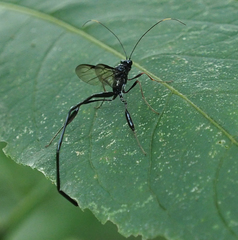
Pelecinus polyturator

Daily sighting probability ~10% · With luck
at Los Nevados National Natural Park

In 3 days ~30% in a week ~60%

11 Verified sightings at Los Nevados National Natural Park From 2019 to 2026
177 In all 10 parks
April Best month
☀️ Diurnal When it's spotted

About the American Pelecinid Wasp

Pelecinus polyturator is a species of wasp in the family Pelecinidae. The large (up to 7 cm) glossy black insects are the most common and well-known members of the family. The adults drink nectar, and they live in crop fields, woods, and suburban gardens throughout North, Central, and South America. Their antennae are long and the females have an elongated, cylindrical, articulated metasoma. They are parasitoids that lay their eggs directly into grubs of the June beetle (genus Phyllophaga) buried in the soil. The adults can be found in the late summer.

Some populations of Pelecinus polyturator are parthenogenic; females do not require fertilization by males to reproduce. Females are common throughout its range, but males are rare in the United States and Canada specially in some populations, and more prevalent further south. Wikipedia →

Global Distribution

Parks Where Found

# Park Country Daily sighting probability
1 Chirripó National Park 🇨🇷 Costa Rica
~20%
2 Itatiaia National Park 🇧🇷 Brazil
~10%
3 Monteverde Cloud Forest Reserve 🇨🇷 Costa Rica
~10%
4 Los Nevados National Natural Park 🇨🇴 Colombia
~10%
5 Acadia National Park 🇺🇸 United States
~10%
6 Cape Breton Highlands National Park 🇨🇦 Canada
~10%
7 Shenandoah National Park 🇺🇸 United States
~10%
8 Great Smoky Mountains National Park 🇺🇸 United States
~10%
9 Tijuca National Park 🇧🇷 Brazil
~10%
10 La Amistad International Park (Panama) 🇵🇦 Panama
~10%

Cities Where Found

# City Country Daily sighting probability
1 Montreal 🇨🇦 Canada
~10%
2 Denver 🇺🇸 United States
~10%
3 Minneapolis [Saint Paul] 🇺🇸 United States
<5%
4 Toronto 🇨🇦 Canada
<5%
5 Detroit 🇺🇸 United States
<5%
6 Medellín 🇨🇴 Colombia
<5%
7 São Paulo 🇧🇷 Brazil
<5%
8 Washington 🇺🇸 United States
<5%
9 Chicago 🇺🇸 United States
<5%
10 New York City 🇺🇸 United States
<5%

Before you go

What are the chances of seeing an American Pelecinid Wasp in Los Nevados National Natural Park?

With luck

About 10% of wildlife watchers report an American Pelecinid Wasp sighting in Los Nevados National Natural Park on a given day, based on 11 verified sightings from GBIF citizen-science data from 2019 to 2026. It is the 10th most-seen of the 32 insects we can rate there. Over three days the chance rises to about 30%, and over a week to about 60%, if each day is a fresh chance.

When is the best time to see an American Pelecinid Wasp in Los Nevados National Natural Park?

April

In that month about 40% of wildlife watchers report an American Pelecinid Wasp in Los Nevados National Natural Park on a given day, against under 5% in February–March, May–August and November, the lowest months. That is one of Los Nevados National Natural Park's wettest months, with about 300 mm of rain against 100 mm in January.

What time of day is best to see an American Pelecinid Wasp?

Between 10 am and 1 pm

Across all the parks we cover, that three-hour window holds the most American Pelecinid Wasp sightings with a recorded time, and about 9 in 10 of them come between 6 am and 6 pm: it is a daytime animal.

Is Los Nevados National Natural Park the best place to see an American Pelecinid Wasp?

4th of 10

Of the 10 parks where we can rate American Pelecinid Wasp sightings, Los Nevados National Natural Park ranks 4th at about 10%. The best odds are in Chirripó National Park (Costa Rica, about 20%), Itatiaia National Park (Brazil, about 10%) and Monteverde Cloud Forest Reserve (Costa Rica, about 10%).

Which relatives of the American Pelecinid Wasp live in Los Nevados National Natural Park?

Same order: Hymenoptera

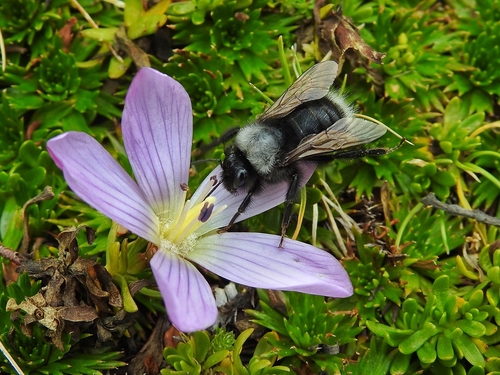
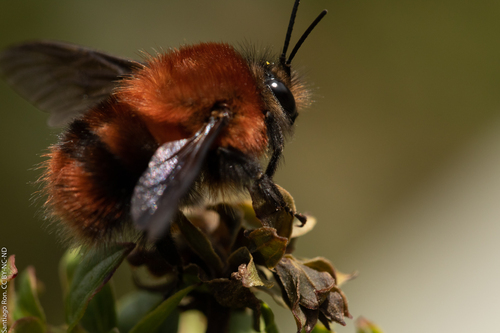
The closest relatives of the American Pelecinid Wasp that you can see in Los Nevados National Natural Park (order Hymenoptera, Ants, Bees, Wasps, and Sawflies) are Gray-Backed Bumble Bee (about 30%) and Andean Red Bumble Bee (about 20%), with each one's daily chance of a sighting.

Where does the American Pelecinid Wasp sighting chance come from?

GBIF citizen-science records

It is estimated from how often the American Pelecinid Wasp is recorded against all the insects logged in Los Nevados National Natural Park (11 verified sightings from 2019 to 2026), calibrated against known sighting rates. Figures are rounded to the nearest 10% because citizen-science data supports honest approximations, not decimals, and months with records from fewer than five people show "—". How it works.

← Back to Los Nevados National Natural Park