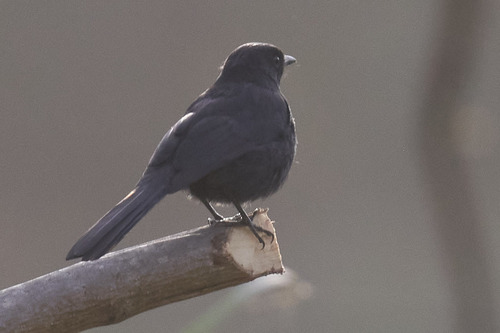
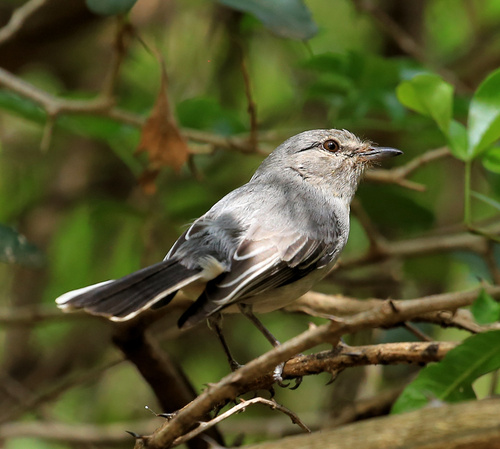
European Pied Flycatcher

European Pied Flycatcher

Ficedula hypoleuca

Silhouette: Rachael Joakim · PhyloPic

LCLeast ConcernNTVUENCR
Daily sighting probability ~50% · Likely
at Mole National Park

In 3 days ~80% in a week >90%

189 Verified sightings at Mole National Park From 2019 to 2026
3,095 In all 27 parks
October Best month
☀️ Diurnal When it's spotted

About the European Pied Flycatcher

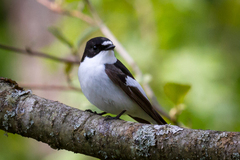
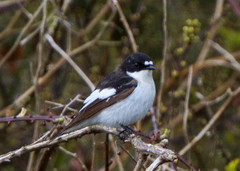
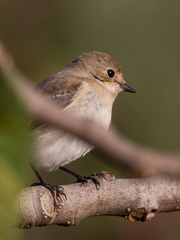
The European pied flycatcher (Ficedula hypoleuca) is a small passerine bird in the Old World flycatcher family. One of the four species of Western Palearctic black-and-white flycatchers, it hybridises to a limited extent with the collared flycatcher. It breeds in most of Europe and across the Western Palearctic. It is migratory, wintering mainly in tropical Africa. It usually builds its nests in holes on oak trees.

This species practices polygyny, usually bigamy, with the male travelling large distances to acquire a second mate. The male will mate with the secondary female and then return to the primary female in order to help with aspects of child rearing, such as feeding.

The European pied flycatcher is mainly insectivorous, although its diet also includes other arthropods. This species commonly feeds on caterpillars, flies, spiders, ants, bees and similar prey. The European pied flycatcher has a very large range and population size and so it is of least concern according to the International Union for Conservation of Nature (IUCN).

The European pied flycatcher is an Old World flycatcher, part of a family of insectivorous songbirds which typically feed by darting after...

Wikipedia →

Sounds

Call0:22

Burkina Faso · 2026

© Marc Languy · XC1186972 · CC BY-NC-SA 4.0

Song0:41

Sweden · 2026

© Lars Edenius · XC1143460 · CC BY-NC-SA 4.0

Flight call0:06

Latvia · 2024

© Teet Sirotkin · XC909493 · CC BY-NC-SA 4.0

Global Distribution

Parks Where Found

# Park Country Daily sighting probability
1 Mole National Park 🇬🇭 Ghana
~50%
2 Niokolo-Koba National Park 🇸🇳 Senegal
~30%
3 Sierra de Guadarrama National Park 🇪🇸 Spain
~10%
4 Biebrza National Park 🇵🇱 Poland
~10%
5 Pyrénées National Park 🇫🇷 France
~10%
6 Ordesa y Monte Perdido National Park 🇪🇸 Spain
~10%
7 Snowdonia National Park 🇬🇧 United Kingdom
~10%
8 Picos de Europa National Park 🇪🇸 Spain
~10%
9 Białowieża National Park 🇵🇱 Poland
~10%
10 Ecrins National Park 🇫🇷 France
~10%
11 Aigüestortes National Park 🇪🇸 Spain
~10%
12 Doñana National Park 🇪🇸 Spain
~10%
13 Camargue 🇫🇷 France
~10%
14 Gauja National Park 🇱🇻 Latvia
~10%
15 Cévennes National Park 🇫🇷 France
~10%
16 Cairngorms National Park 🇬🇧 United Kingdom
<5%
17 Vanoise National Park 🇫🇷 France
<5%
18 Monfragüe National Park 🇪🇸 Spain
<5%
19 Sierra Nevada National Park 🇪🇸 Spain
<5%
20 Hortobágy National Park 🇭🇺 Hungary
<5%
21 Fertő-Hanság National Park 🇭🇺 Hungary
<5%
22 Tatra National Park 🇸🇰 Slovakia
<5%
23 Triglav National Park 🇸🇮 Slovenia
<5%
24 Bavarian Forest National Park 🇩🇪 Germany
<5%
25 Wadden Sea National Park 🇩🇪 Germany
<5%
26 Corsica Regional Natural Park (Parc naturel régional de Corse) 🇫🇷 France
<5%
27 Kiskunság National Park 🇭🇺 Hungary
<5%

Cities Where Found

# City Country Daily sighting probability
1 Nizhny Novgorod 🇷🇺 Russia
~20%
2 Helsinki 🇫🇮 Finland
~20%
3 Madrid 🇪🇸 Spain
~10%
4 Yekaterinburg 🇷🇺 Russia
~10%
5 Marrakesh 🇲🇦 Morocco
~10%
6 Rabat 🇲🇦 Morocco
~10%
7 Milan 🇮🇹 Italy
~10%
8 Saint Petersburg 🇷🇺 Russia
~10%
9 Moscow 🇷🇺 Russia
~10%
10 Abuja 🇳🇬 Nigeria
~10%

Zoos & Centres Where Found

# Zoo / Centre Country
1 Korkeasaari Zoo 🇫🇮 Finland In captivity

Before you go

What are the chances of seeing a European Pied Flycatcher in Mole National Park?

Likely

About 50% of wildlife watchers report a European Pied Flycatcher sighting in Mole National Park on a given day, based on 189 verified sightings from GBIF citizen-science data from 2019 to 2026. It is the 39th most-seen of the 266 birds we can rate there. Over three days the chance rises to about 80%, and over a week to over 90%, if each day is a fresh chance.

When is the best time to see a European Pied Flycatcher in Mole National Park?

October

In that month about 70% of wildlife watchers report a European Pied Flycatcher in Mole National Park on a given day, against about 20% in August, the lowest month. July has too few records to rate.

What time of day is best to see a European Pied Flycatcher?

Between 10 am and 1 pm

Across all the parks we cover, that three-hour window holds the most European Pied Flycatcher sightings with a recorded time, and about 9 in 10 of them come between 6 am and 6 pm: it is a daytime animal.

Is Mole National Park the best place to see a European Pied Flycatcher?

Yes

Of the 27 parks where we can rate European Pied Flycatcher sightings, Mole National Park has the highest daily chance: about 50%. Next come Niokolo-Koba National Park (Senegal, about 30%) and Sierra de Guadarrama National Park (Spain, about 10%).

Which relatives of the European Pied Flycatcher live in Mole National Park?

Same family: Muscicapidae

The closest relatives of the European Pied Flycatcher that you can see in Mole National Park (family Muscicapidae, Old World Flycatchers, Robins, and Chats) are Northern Black-Flycatcher (about 60%), Swamp Flycatcher (about 30%) and Familiar Chat (about 30%), with each one's daily chance of a sighting.

Where does the European Pied Flycatcher sighting chance come from?

GBIF citizen-science records

It is estimated from how often the European Pied Flycatcher is recorded against all the birds logged in Mole National Park (189 verified sightings from 2019 to 2026), calibrated against known sighting rates. Figures are rounded to the nearest 10% because citizen-science data supports honest approximations, not decimals, and months with records from fewer than five people show "—". How it works.

← Back to Mole National Park