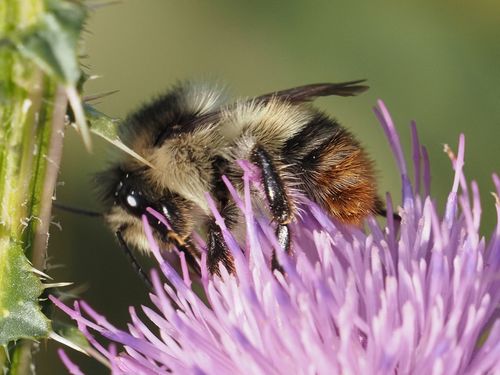
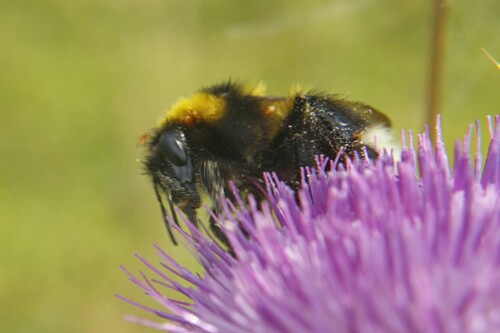
Common Carder Bumble Bee

Common Carder Bumble Bee

Bombus pascuorum

Daily sighting probability ~20% · Possible
at Pyrénées National Park

In 3 days ~40% in a week ~70%

112 Verified sightings at Pyrénées National Park From 2019 to 2026
706 In all 19 parks
September Best month
☀️ Diurnal When it's spotted

About the Common Carder Bumble Bee

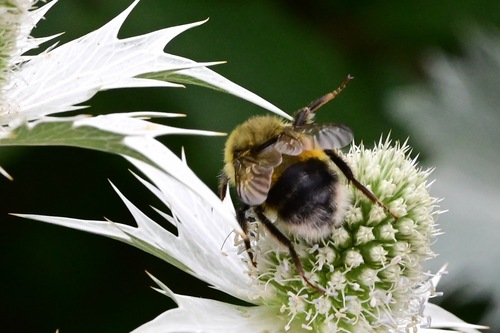
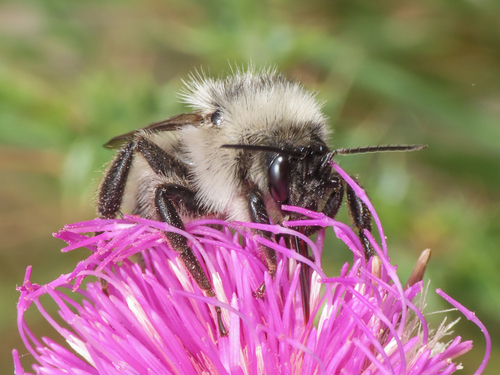
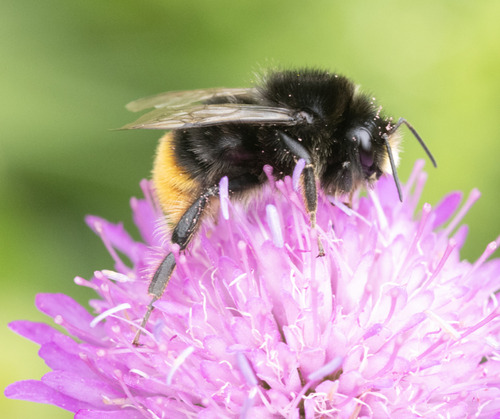
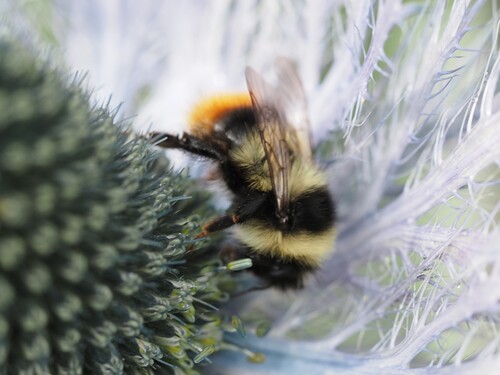
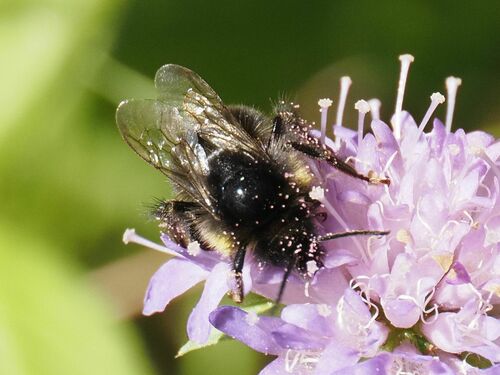
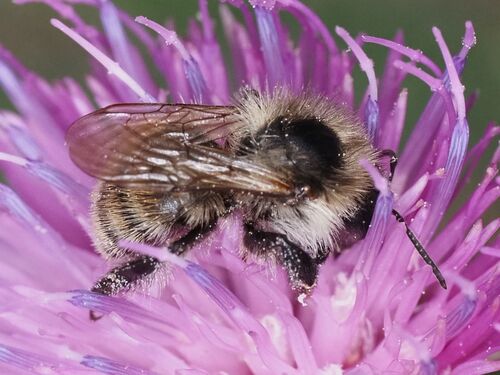
Bombus pascuorum, the common carder bee, is a species of bumblebee present in most of Europe in a wide variety of habitats such as meadows, pastures, waste ground, ditches and embankments, roads, and field margins, as well as gardens and parks in urban areas and forests and forest edges. It is similar in appearance to Bombus muscorum, and is replacing that species in northern Britain.

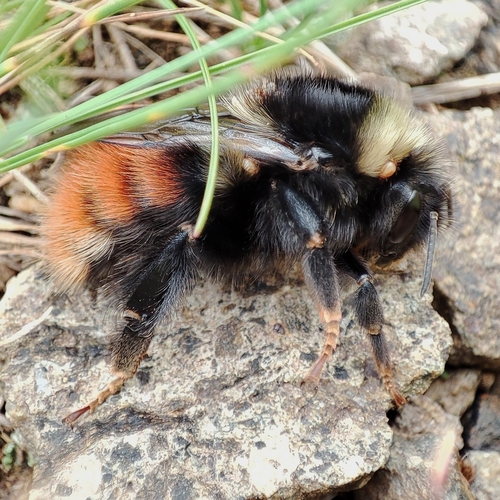
The thorax of the common carder bee is either yellowish or reddish-brown in color. The hair of the first four abdominal segments is gray, while the hair of the fifth and sixth terga is yellowish or reddish-brown. The body length of queens ranges from 15 to 18 mm (0.59 to 0.71 in) in length. The body length of female workers ranges from 9 to 15 mm (0.35 to 0.59 in) in length. The body length of males range from 12 to 14 mm (0.47 to 0.55 in) in length. Queens measure 28 to 32 mm (1.1 to 1.3 in) from wing to wing. Workers measure 24 to 27 mm (0.94 to 1.06 in) from wing to wing. Drones measure 24 to 27 mm (0.94 to 1.06 in) from wing to wing.

The head of the common carder bee is of medium length and the snout is long compared to other species of bumblebee. The snout of the queen ranges between... Wikipedia →

Global Distribution

Parks Where Found

# Park Country Daily sighting probability
1 Picos de Europa National Park 🇪🇸 Spain
~30%
2 Plitvice Lakes National Park 🇭🇷 Croatia
~20%
3 Hohe Tauern National Park 🇦🇹 Austria
~20%
4 Triglav National Park 🇸🇮 Slovenia
~20%
5 Cairngorms National Park 🇬🇧 United Kingdom
~20%
6 Gauja National Park 🇱🇻 Latvia
~20%
7 Snowdonia National Park 🇬🇧 United Kingdom
~20%
8 Białowieża National Park 🇵🇱 Poland
~20%
9 Bavarian Forest National Park 🇩🇪 Germany
~20%
10 Aigüestortes National Park 🇪🇸 Spain
~20%
11 Tatra National Park 🇸🇰 Slovakia
~20%
12 Cévennes National Park 🇫🇷 France
~20%
13 Pyrénées National Park 🇫🇷 France
~20%
14 Wadden Sea National Park 🇩🇪 Germany
~10%
15 Ordesa y Monte Perdido National Park 🇪🇸 Spain
~10%
16 Mercantour National Park 🇫🇷 France
~10%
17 Sierra Nevada National Park 🇪🇸 Spain
~10%
18 Fertő-Hanság National Park 🇭🇺 Hungary
~10%
19 Sierra de Guadarrama National Park 🇪🇸 Spain
~10%

Cities Where Found

# City Country Daily sighting probability
1 Liverpool 🇬🇧 United Kingdom
~40%
2 Warsaw 🇵🇱 Poland
~40%
3 Birmingham 🇬🇧 United Kingdom
~40%
4 London 🇬🇧 United Kingdom
~40%
5 Manchester 🇬🇧 United Kingdom
~30%
6 Dublin 🇮🇪 Ireland
~30%
7 Berlin 🇩🇪 Germany
~30%
8 Hamburg 🇩🇪 Germany
~30%
9 Essen 🇩🇪 Germany
~30%
10 Paris 🇫🇷 France
~30%

Before you go

What are the chances of seeing a Common Carder Bumble Bee in Pyrénées National Park?

Possible

About 20% of wildlife watchers report a Common Carder Bumble Bee sighting in Pyrénées National Park on a given day, based on 112 verified sightings from GBIF citizen-science data from 2019 to 2026. It is the 52nd most-seen of the 1277 insects we can rate there. Over three days the chance rises to about 40%, and over a week to about 70%, if each day is a fresh chance.

When is the best time to see a Common Carder Bumble Bee in Pyrénées National Park?

March–April, August–September and November

In those months about 20% of wildlife watchers report a Common Carder Bumble Bee in Pyrénées National Park on a given day, against under 5% in December, the lowest month.

What time of day is best to see a Common Carder Bumble Bee?

Between 2 and 5 pm

Across all the parks we cover, that three-hour window holds the most Common Carder Bumble Bee sightings with a recorded time, and about 9 in 10 of them come between 6 am and 6 pm: it is a daytime animal.

Which relatives of the Common Carder Bumble Bee live in Pyrénées National Park?

Same genus: Bombus

The closest relatives of the Common Carder Bumble Bee that you can see in Pyrénées National Park (genus Bombus, Bumble Bees) are White-Tailed Bumble Bee (about 10%), Black-Backed Bumble Bee (about 10%) and Buff-Tailed Bumble Bee (about 10%), with each one's daily chance of a sighting.

Where does the Common Carder Bumble Bee sighting chance come from?

GBIF citizen-science records

It is estimated from how often the Common Carder Bumble Bee is recorded against all the insects logged in Pyrénées National Park (112 verified sightings from 2019 to 2026), calibrated against known sighting rates. Figures are rounded to the nearest 10% because citizen-science data supports honest approximations, not decimals, and months with records from fewer than five people show "—". How it works.

← Back to Pyrénées National Park