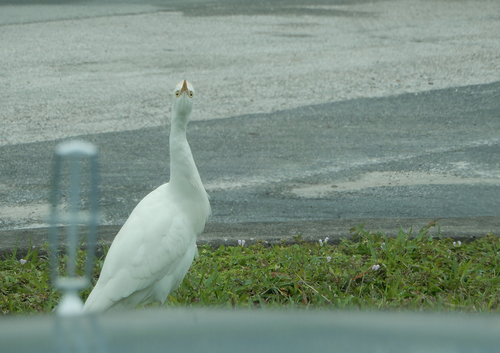
Bare-faced Ibis

Bare-faced Ibis

Phimosus infuscatus

Silhouette: Sheatherius · PhyloPic

LCLeast ConcernNTVUENCR
Daily sighting probability ~10% · With luck
at Sierra de la Macarena National Park

In 3 days ~40% in a week ~70%

140 Verified sightings at Sierra de la Macarena National Park From 2019 to 2026
2,583 In all 14 parks
January Best month
☀️ Diurnal When it's spotted

About the Bare-faced Ibis

The bare-faced ibis (Phimosus infuscatus), also known as the whispering ibis, is a species of bird in the family Threskiornithidae, in the monotypic genus Phimosus. It is found in Argentina, Bolivia, Brazil, Colombia, Ecuador, Guyana, Paraguay, Suriname, Uruguay, and Venezuela.

The bare-faced ibis is either dark brown or a blackish color. It is called the bare-faced ibis because it does not have any feathers on its face. It has a long decurved bill with a pinkish to reddish brown colour. The skin on its face is usually a reddish color, and it also has long orange colored beak with pink legs. The total length of the ibis ranges between 45 and 50 cm.

The bare-faced ibis forages in most soil and along the edges of standing water. Its diet consists of insects, worms, clams, and other small invertebrates. The bare-faced ibis occurs in open areas such as wet meadows, savannas, marshes, and rice fields. The ibis is usually near sea level but was recorded in Venezuela and Colombia.

Bare-faced ibises are usually seen in large flocks of their own species or with other species of ibis, sometimes even found with domestic... Wikipedia →

Sounds

Alarm call0:11

Brazil · 2022

© JAYRSON ARAUJO DE OLIVEIRA · XC745509 · CC BY-NC-SA 4.0

Call0:23

Colombia · 2023

© Sergio Chaparro-Herrera · XC952525 · CC BY-NC-SA 4.0

Song0:35

Colombia · 2023

© Dennis Castillo-Figueroa · XC857835 · CC BY-NC-SA 4.0

Global Distribution

Parks Where Found

# Park Country Daily sighting probability
1 Iberá National Park 🇦🇷 Argentina
~40%
2 Parque Estadual Encontro das Águas 🇧🇷 Brazil
~30%
3 Sierra de la Macarena National Park 🇨🇴 Colombia
~10%
4 Henri Pittier National Park 🇻🇪 Venezuela
~10%
5 Los Nevados National Natural Park 🇨🇴 Colombia
~10%
6 El Impenetrable National Park 🇦🇷 Argentina
~10%
7 Cuyabeno Wildlife Reserve 🇪🇨 Ecuador
~10%
8 El Palmar National Park 🇦🇷 Argentina
<5%
9 Farallones de Cali National Natural Park 🇨🇴 Colombia
<5%
10 Serra da Canastra National Park 🇧🇷 Brazil
<5%
11 Iguaçu National Park 🇧🇷 Brazil
<5%
12 Chingaza National Natural Park 🇨🇴 Colombia
<5%
13 Iguazú National Park 🇦🇷 Argentina
<5%
14 Yasuní National Park 🇪🇨 Ecuador
<5%

Cities Where Found

# City Country Daily sighting probability
1 Cali 🇨🇴 Colombia
~50%
2 Bogota 🇨🇴 Colombia
~50%
3 Medellín 🇨🇴 Colombia
~50%
4 Porto Alegre 🇧🇷 Brazil
~50%
5 Curitiba 🇧🇷 Brazil
~50%
6 Caracas 🇻🇪 Venezuela
~40%
7 Goiânia 🇧🇷 Brazil
~40%
8 Barranquilla 🇨🇴 Colombia
~30%
9 Valencia 🇻🇪 Venezuela
~30%
10 Santa Cruz de la Sierra 🇧🇴 Bolivia
~20%

Zoos & Centres Where Found

# Zoo / Centre Country
1 Prague Zoo 🇨🇿 Czechia In captivity
2 Temaikén 🇦🇷 Argentina In captivity
3 DierenPark Amersfoort 🇳🇱 Netherlands In captivity
4 ZooParc Overloon 🇳🇱 Netherlands In captivity
5 Rákosův pavilon 🇨🇿 Czechia In captivity
6 Velemlokárium 🇨🇿 Czechia In captivity
7 Cali Zoo 🇨🇴 Colombia In captivity

Before you go

What are the chances of seeing a Bare-faced Ibis in Sierra de la Macarena National Park?

With luck

About 10% of wildlife watchers report a Bare-faced Ibis sighting in Sierra de la Macarena National Park on a given day, based on 140 verified sightings from GBIF citizen-science data from 2019 to 2026. It is the 77th most-seen of the 418 birds we can rate there. Over three days the chance rises to about 40%, and over a week to about 70%, if each day is a fresh chance.

When is the best time to see a Bare-faced Ibis in Sierra de la Macarena National Park?

January

In that month about 40% of wildlife watchers report a Bare-faced Ibis in Sierra de la Macarena National Park on a given day, against under 5% in September and November, the lowest months. That is one of Sierra de la Macarena National Park's driest months, with about 95 mm of rain against 430 mm in May.

What time of day is best to see a Bare-faced Ibis?

Between 8 and 11 am

Across all the parks we cover, that three-hour window holds the most Bare-faced Ibis sightings with a recorded time, and about 9 in 10 of them come between 6 am and 6 pm: it is a daytime animal.

Is Sierra de la Macarena National Park the best place to see a Bare-faced Ibis?

3rd of 14

Of the 14 parks where we can rate Bare-faced Ibis sightings, Sierra de la Macarena National Park ranks 3rd at about 10%. The best odds are in Iberá National Park (Argentina, about 40%) and Parque Estadual Encontro das Águas (Brazil, about 30%).

Which relatives of the Bare-faced Ibis live in Sierra de la Macarena National Park?

Same family: Threskiornithidae

The closest relatives of the Bare-faced Ibis that you can see in Sierra de la Macarena National Park (family Threskiornithidae, Ibises and Spoonbills) are Green Ibis (about 10%) and Scarlet Ibis (about 10%), with each one's daily chance of a sighting.

Where does the Bare-faced Ibis sighting chance come from?

GBIF citizen-science records

It is estimated from how often the Bare-faced Ibis is recorded against all the birds logged in Sierra de la Macarena National Park (140 verified sightings from 2019 to 2026), calibrated against known sighting rates. Figures are rounded to the nearest 10% because citizen-science data supports honest approximations, not decimals, and months with records from fewer than five people show "—". How it works.

← Back to Sierra de la Macarena National Park