





Completed


Grey-hooded Gull
Chroicocephalus cirrocephalus
Silhouette: Michael Scroggie · PhyloPic
- KingdomAnimalia (Animals)
- PhylumChordata (Chordates)
- ClassAves (Birds)
- OrderCharadriiformes (Shorebirds and Allies)
- FamilyLaridae (Gulls, Terns, and Skimmers)
- GenusChroicocephalus (Masked Gulls and allies)
- SpeciesChroicocephalus cirrocephalus (Grey-hooded Gull)
In 3 days ~20% in a week ~40%
249 Verified sightings at Johannesburg
3,285 In all 26 parks From 2019 to 2026
October Best month
☀️ Diurnal When it's spotted
About the Grey-hooded Gull
The grey-headed gull (Chroicocephalus cirrocephalus), also known as the grey-hooded gull, is a small species of gull which breeds patchily in South America and Africa south of the Sahara. It is not truly migratory, but is dispersive, becoming more widespread in winter. This species has occurred as a rare vagrant to the United States, Italy, and Spain. As is the case with many gulls, it had traditionally been placed in the genus Larus. Recent evidence suggests the South American and African populations may represent two separate cryptic species.
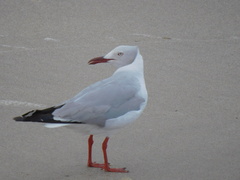
The grey-headed gull is slightly larger than the black-headed gull at 42 cm length. The summer adult has a pale grey head, a grey body, slightly darker in tone than in black-headed gull, and red bill and legs. The black tips to the primary wing feathers have conspicuous white "mirrors". The underwing is dark grey with black wingtips. The grey hood is lost in winter, leaving just two dark smudges around and behind the eye. The eye is dark in immatures, but has a white iris in adults. The sexes are similar. It takes two years to reach maturity; first year birds have a black terminal tail band, and more dark areas in the wings... Wikipedia →
Recent sightings of Grey-hooded Gull in Johannesburg
LIVEiNaturalistGlobal Distribution
Parks Where Found
Cities Where Found
| # | City | Country | Daily sighting probability |
|---|---|---|---|
| 1 | Maputo | 🇲🇿 Mozambique | |
| 2 | São Luís | 🇧🇷 Brazil | |
| 3 | Lima | 🇵🇪 Peru | |
| 4 | Serrekunda | 🇬🇲 Gambia | |
| 5 | Rosario | 🇦🇷 Argentina | |
| 6 | Vitória | 🇧🇷 Brazil | |
| 7 | Dakar | 🇸🇳 Senegal | |
| 8 | Cape Town | 🇿🇦 South Africa | |
| 9 | Durban | 🇿🇦 South Africa | |
| 10 | Johannesburg | 🇿🇦 South Africa |
Zoos & Centres Where Found
| # | Zoo / Centre | Country | |
|---|---|---|---|
| 1 | Tierpark Berlin | 🇩🇪 Germany | |
| 2 | Temaikén | 🇦🇷 Argentina | |
| 3 | Faunia | 🇪🇸 Spain |
Closest Relatives at Johannesburg


Before you go
What are the chances of seeing a Grey-hooded Gull in Johannesburg?
With luck
About 10% of wildlife watchers report a Grey-hooded Gull sighting in Johannesburg on a given day, based on 249 verified sightings from GBIF citizen-science data. It is the 76th most-seen of the 219 birds we can rate there. Over three days the chance rises to about 20%, and over a week to about 40%, if each day is a fresh chance.
When is the best time to see a Grey-hooded Gull in Johannesburg?
March and July–November
In those months about 10% of wildlife watchers report a Grey-hooded Gull in Johannesburg on a given day, against under 5% in April–June and December–February, the lowest months.
What time of day is best to see a Grey-hooded Gull?
Between 9 am and noon
Across all the parks we cover, that three-hour window holds the most Grey-hooded Gull sightings with a recorded time, and about 9 in 10 of them come between 6 am and 6 pm: it is a daytime animal.
Is Johannesburg the best place to see a Grey-hooded Gull?
10th of 17
Of the 17 cities where we can rate Grey-hooded Gull sightings, Johannesburg ranks 10th at about 10%. The best odds are in Maputo (Mozambique, about 40%), São Luís (Brazil, about 30%) and Lima (Peru, about 20%).
Where does the Grey-hooded Gull sighting chance come from?
GBIF citizen-science records
It is estimated from how often the Grey-hooded Gull is recorded against all the birds logged in Johannesburg (249 verified sightings), calibrated against known sighting rates. Figures are rounded to the nearest 10% because citizen-science data supports honest approximations, not decimals, and months with records from fewer than five people show "—". How it works.
