

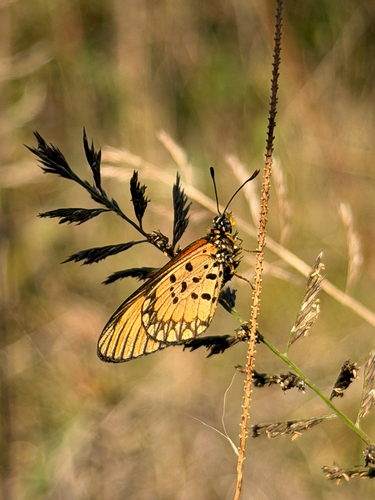
Dark Blue Pansy

Dark Blue Pansy

Junonia oenone

Daily sighting probability ~30% · Possible
at Lusaka

In 3 days ~60% in a week ~90%

22 Verified sightings at Lusaka
561 In all 28 parks From 2019 to 2026
May Best month
☀️ Diurnal When it's spotted

About the Dark Blue Pansy

Junonia oenone, the blue pansy or dark blue pansy, is a Nymphalid butterfly native to Africa. "Blue pansy" is also used in India to describe Junonia orithya. Junonia oenone oenone from continental Africa. Junonia oenone epiclelia Boisduval, 1833 from Madagascar, Aldabra, Astove, Assumption and Cosmoledo Island.

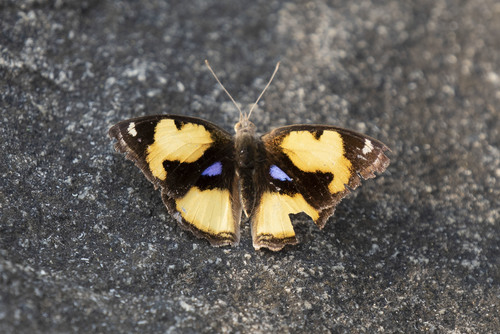
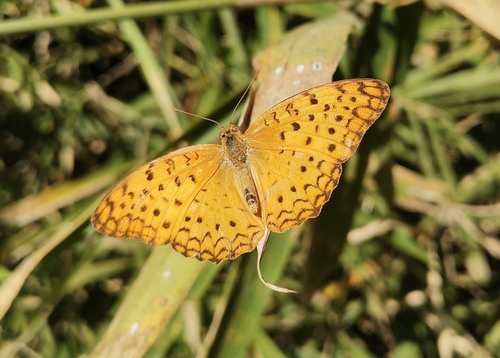
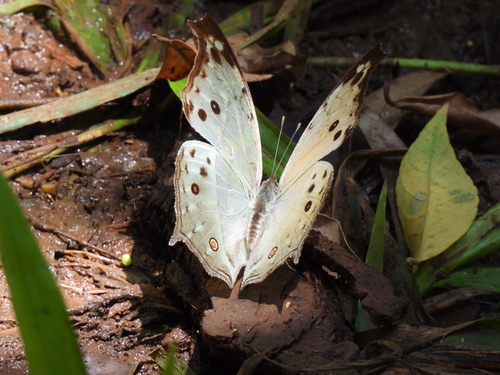
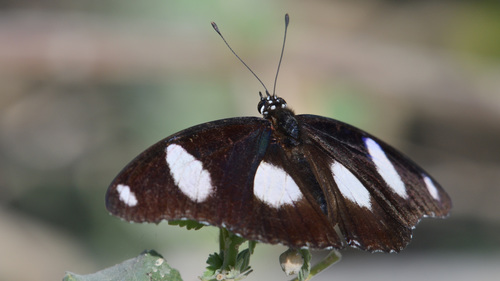
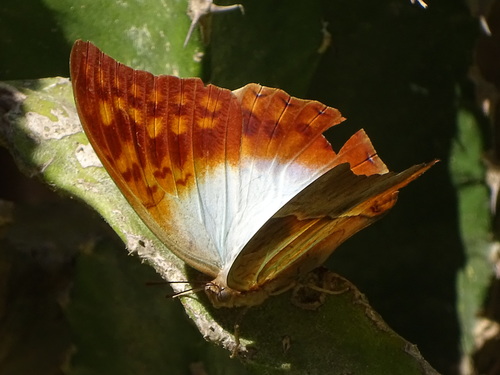
The wingspan is 40–52 mm. The upper surface of the forewings is black with white markings towards the apex. The upper surface of the hindwings is black with white markings on the outer edge, and a characteristic large metallic-blue spot. This blue spot is smaller and more a dull purple in females. The underside of the forewings is brown with white markings corresponding to those on the upper surface. The under surface of the hindwings is almost uniform brown.

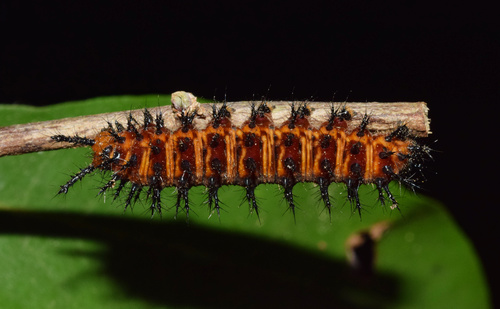
The larvae feed on Adhatoda densiflora, Mackaya bella, Justicia natalensis and Asystasia (A. gangetica), Isoglossa, Pualowilhelmia and Ruella species. Junonia oenone, UK Butterflies Wikipedia →

Global Distribution

Parks Where Found

# Park Country Daily sighting probability
1 Lake Mburo National Park 🇺🇬 Uganda
~30%
2 Ankarafantsika National Park 🇲🇬 Madagascar
~30%
3 Arusha National Park 🇹🇿 Tanzania
~30%
4 iSimangaliso Wetland Park 🇿🇦 South Africa
~30%
5 Gonarezhou National Park 🇿🇼 Zimbabwe
~30%
6 Kibale National Park 🇺🇬 Uganda
~30%
7 Ranomafana National Park 🇲🇬 Madagascar
~30%
8 Murchison Falls National Park 🇺🇬 Uganda
~30%
9 Akagera National Park 🇷🇼 Rwanda
~20%
10 Nairobi National Park 🇰🇪 Kenya
~20%
11 Lake Nakuru National Park 🇰🇪 Kenya
~20%
12 Tarangire National Park 🇹🇿 Tanzania
~20%
13 Queen Elizabeth National Park 🇺🇬 Uganda
~20%
14 Liwonde National Park 🇲🇼 Malawi
~20%
15 Tsavo West National Park 🇰🇪 Kenya
~20%
16 Gorongosa National Park 🇲🇿 Mozambique
~20%
17 uMkhuze Game Reserve 🇿🇦 South Africa
~20%
18 Kruger National Park 🇿🇦 South Africa
~20%
19 Ngorongoro Conservation Area 🇹🇿 Tanzania
~10%
20 Masai Mara National Reserve 🇰🇪 Kenya
~10%
21 Odzala-Kokoua National Park 🇨🇬 Republic of the Congo
~10%
22 Amboseli National Park 🇰🇪 Kenya
~10%
23 Serengeti National Park 🇹🇿 Tanzania
~10%
24 Hluhluwe-Imfolozi Park 🇿🇦 South Africa
~10%
25 Pilanesberg National Park 🇿🇦 South Africa
~10%
26 Garden Route National Park 🇿🇦 South Africa
~10%
27 Chobe National Park 🇧🇼 Botswana
~10%
28 Addo Elephant National Park 🇿🇦 South Africa
~10%

Cities Where Found

# City Country Daily sighting probability
1 Dar es-Salaam 🇹🇿 Tanzania
~40%
2 Cotonou 🇧🇯 Benin
~40%
3 Antananarivo 🇲🇬 Madagascar
~40%
4 Kigali 🇷🇼 Rwanda
~40%
5 Serrekunda 🇬🇲 Gambia
~40%
6 Maputo 🇲🇿 Mozambique
~30%
7 Kampala 🇺🇬 Uganda
~30%
8 Lusaka 🇿🇲 Zambia
~30%
9 Accra 🇬🇭 Ghana
~30%
10 Nairobi 🇰🇪 Kenya
~30%

Before you go

What are the chances of seeing a Dark Blue Pansy in Lusaka?

Possible

About 30% of wildlife watchers report a Dark Blue Pansy sighting in Lusaka on a given day, based on 22 verified sightings from GBIF citizen-science data. It is the 17th most-seen of the 72 insects we can rate there. Over three days the chance rises to about 60%, and over a week to about 90%, if each day is a fresh chance.

When is the best time to see a Dark Blue Pansy in Lusaka?

May

In that month about 50% of wildlife watchers report a Dark Blue Pansy in Lusaka on a given day, against under 5% in October and December, the lowest months. That is one of Lusaka's driest months, with almost no rain against 210 mm in January.

What time of day is best to see a Dark Blue Pansy?

Between 11 am and 2 pm

Across all the parks we cover, that three-hour window holds the most Dark Blue Pansy sightings with a recorded time, and about 9 in 10 of them come between 6 am and 6 pm: it is a daytime animal.

Is Lusaka the best place to see a Dark Blue Pansy?

8th of 14

Of the 14 cities where we can rate Dark Blue Pansy sightings, Lusaka ranks 8th at about 30%. The best odds are in Dar es-Salaam (Tanzania, about 40%), Cotonou (Benin, about 40%) and Antananarivo (Madagascar, about 40%).

Which relatives of the Dark Blue Pansy live in Lusaka?

Same genus: Junonia

The closest relatives of the Dark Blue Pansy that you can see in Lusaka (genus Junonia, Buckeyes & Pansies) are Spotted Brown Pansy (about 50%), Yellow Pansy (about 40%) and Soldier Commodore (about 20%), with each one's daily chance of a sighting.

Where does the Dark Blue Pansy sighting chance come from?

GBIF citizen-science records

It is estimated from how often the Dark Blue Pansy is recorded against all the insects logged in Lusaka (22 verified sightings), calibrated against known sighting rates. Figures are rounded to the nearest 10% because citizen-science data supports honest approximations, not decimals, and months with records from fewer than five people show "—". How it works.

← Back to Lusaka