Small Heath

Small Heath

Coenonympha pamphilus

Daily sighting probability ~10% · With luck
at Munich

In 3 days ~30% in a week ~50%

66 Verified sightings at Munich
1,384 In all 22 parks From 2019 to 2026
May Best month
☀️ Diurnal When it's spotted

About the Small Heath

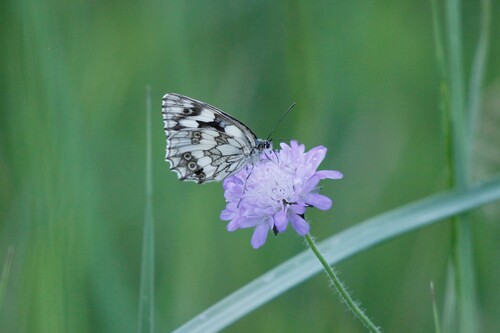
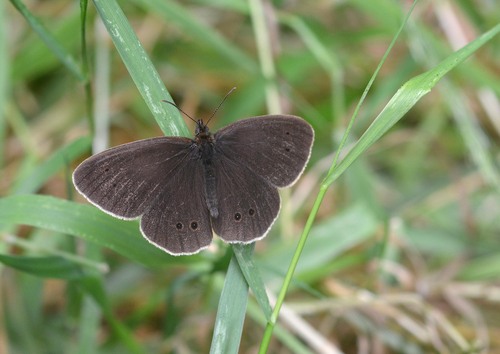
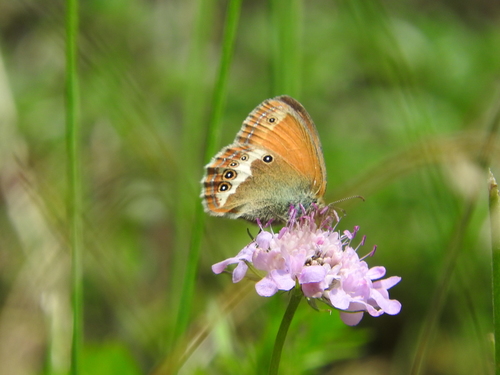
The small heath (Coenonympha pamphilus) is a butterfly species belonging to the family Nymphalidae, classified within the subfamily Satyrinae (commonly known as "the browns"). It is the smallest butterfly in this subfamily. The small heath is diurnal and flies with a noticeable fluttering flight pattern near the ground. It rests with closed wings when not in flight. It is widespread in colonies throughout the grasslands of Eurasia and north-western Africa, preferring drier habitats than other Coenonympha, such as salt marshes, alpine meadows, wetlands, and grasslands near water (i.e. streams). However, habitat loss caused by human activities has led to a decline in populations in some locations.

The larval host plants are grasses, found in various habitats, while adult butterflies feed on nectar from flowers. The males of this species are territorial, which plays a large role in obtaining a female mate. To establish dominance, they partake in lekking, a mating display in which males aggregate in a competitive display to attract passing females.

The small heath is one of 40 species classified within the genus Coenonympha and placed in the family Nymphalidae. It belongs... Wikipedia →

Global Distribution

Parks Where Found

# Park Country Daily sighting probability
1 Kiskunság National Park 🇭🇺 Hungary
~50%
2 Monfragüe National Park 🇪🇸 Spain
~30%
3 Aigüestortes National Park 🇪🇸 Spain
~30%
4 Biebrza National Park 🇵🇱 Poland
~30%
5 Cévennes National Park 🇫🇷 France
~30%
6 Pyrénées National Park 🇫🇷 France
~30%
7 Triglav National Park 🇸🇮 Slovenia
~30%
8 Fertő-Hanság National Park 🇭🇺 Hungary
~20%
9 Hortobágy National Park 🇭🇺 Hungary
~20%
10 Białowieża National Park 🇵🇱 Poland
~20%
11 Bavarian Forest National Park 🇩🇪 Germany
~20%
12 Vanoise National Park 🇫🇷 France
~20%
13 Mercantour National Park 🇫🇷 France
~20%
14 Snowdonia National Park 🇬🇧 United Kingdom
~20%
15 Picos de Europa National Park 🇪🇸 Spain
~20%
16 Cairngorms National Park 🇬🇧 United Kingdom
~20%
17 Ecrins National Park 🇫🇷 France
~20%
18 Plitvice Lakes National Park 🇭🇷 Croatia
~20%
19 Sierra de Guadarrama National Park 🇪🇸 Spain
~20%
20 Wadden Sea National Park 🇩🇪 Germany
~20%
21 Sierra Nevada National Park 🇪🇸 Spain
~20%
22 Camargue 🇫🇷 France
~10%

Cities Where Found

# City Country Daily sighting probability
1 Prague 🇨🇿 Czechia
~20%
2 Milan 🇮🇹 Italy
~20%
3 Warsaw 🇵🇱 Poland
~20%
4 London 🇬🇧 United Kingdom
~10%
5 Berlin 🇩🇪 Germany
~10%
6 Novosibirsk 🇷🇺 Russia
~10%
7 Vienna 🇦🇹 Austria
~10%
8 Kharkiv 🇺🇦 Ukraine
~10%
9 Birmingham 🇬🇧 United Kingdom
~10%
10 Budapest 🇭🇺 Hungary
~10%

Before you go

What are the chances of seeing a Small Heath in Munich?

With luck

About 10% of wildlife watchers report a Small Heath sighting in Munich on a given day, based on 66 verified sightings from GBIF citizen-science data. It is the 51st most-seen of the 521 insects we can rate there. Over three days the chance rises to about 30%, and over a week to about 50%, if each day is a fresh chance.

When is the best time to see a Small Heath in Munich?

May to October

In those months about 10% of wildlife watchers report a Small Heath in Munich on a given day, against under 5% in November to April, the lowest months.

What time of day is best to see a Small Heath?

Between 11 am and 2 pm

Across all the parks we cover, that three-hour window holds the most Small Heath sightings with a recorded time, and about 9 in 10 of them come between 6 am and 6 pm: it is a daytime animal.

Is Munich the best place to see a Small Heath?

11th of 30

Of the 30 cities where we can rate Small Heath sightings, Munich ranks 11th at about 10%. The best odds are in Prague (Czechia, about 20%), Milan (Italy, about 20%) and Warsaw (Poland, about 20%).

Where does the Small Heath sighting chance come from?

GBIF citizen-science records

It is estimated from how often the Small Heath is recorded against all the insects logged in Munich (66 verified sightings), calibrated against known sighting rates. Figures are rounded to the nearest 10% because citizen-science data supports honest approximations, not decimals, and months with records from fewer than five people show "—". How it works.

← Back to Munich