Holly Blue
Daily sighting probability ~10% · With luck
at Novosibirsk

In 3 days ~20% in a week ~40%

10 Verified sightings at Novosibirsk
603 In all 17 parks From 2019 to 2026
May Best month
☀️ Diurnal When it's spotted

About the Holly Blue

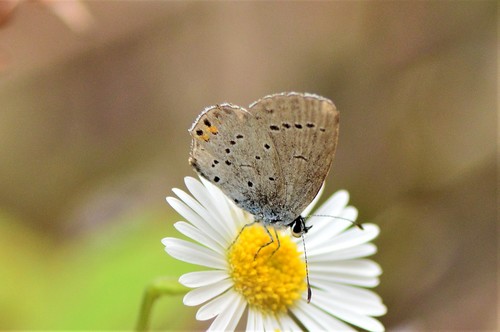
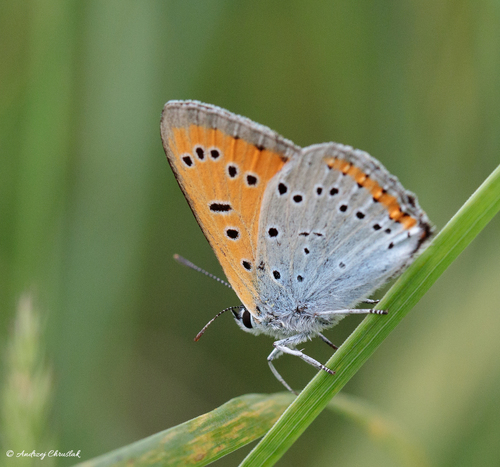
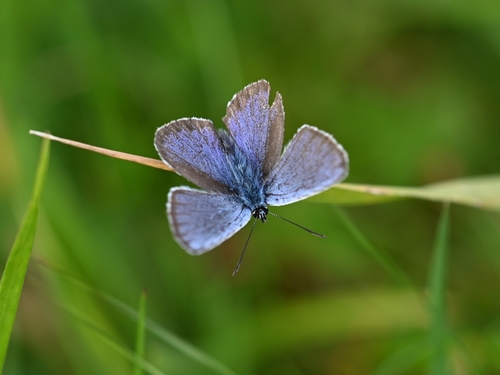
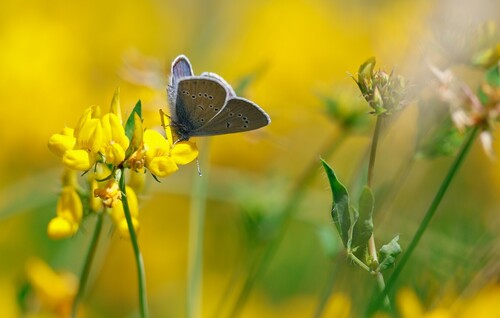
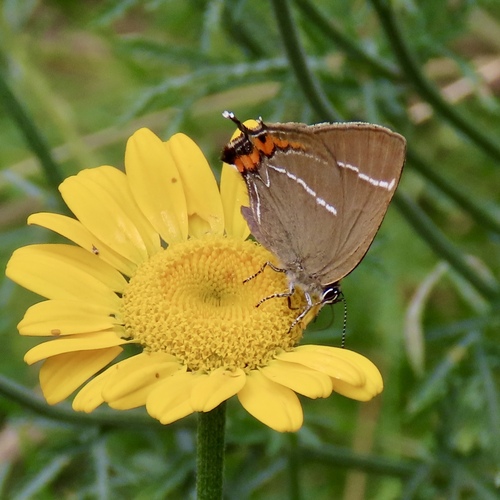
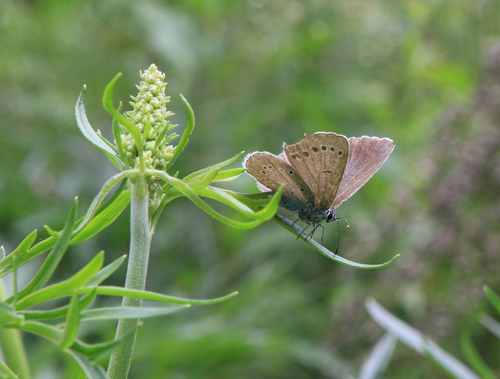
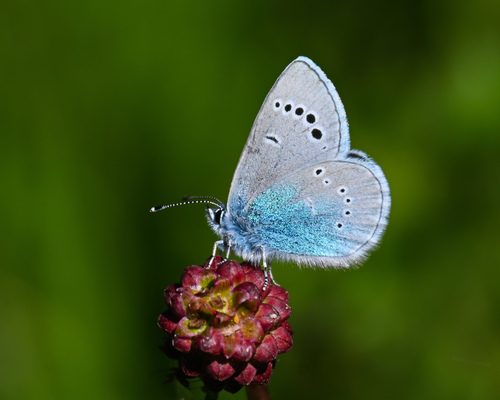
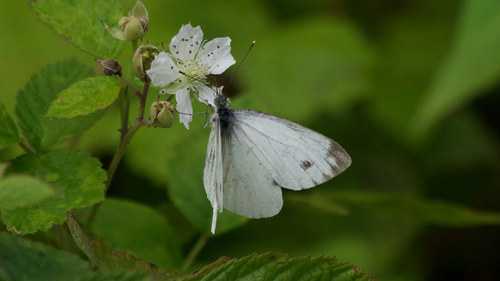
The Holly blue (Celastrina argiolus) is a butterfly that belongs to the lycaenids or blues family and is native to the Palearctic. The common name Holly blue is derived from the association of the larval stage with the Holly tree.

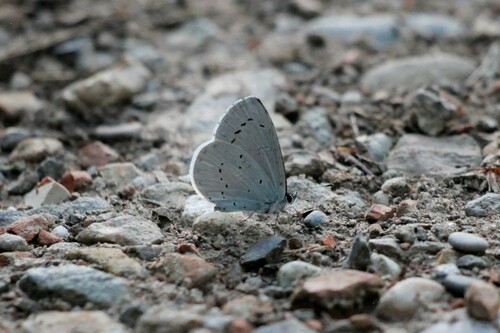
In India, C. argiolus is known as the hill hedge blue. The holly blue has violet-blue wings and pale silver-blue underwings with black dots. Seitz describes it: Male above shining violet blue, only the apical portion of the costal margin being minutely edged with white. The female has both wings broadly bordered with dark, the margin of the hindwing bearing vestiges of ocelli. Underside silver-white, in the disc a row of black dots, some of which are elongate, and before the margin blackish shadowy dots. Egg very flat, whitish. Larva green or brown, marked with yellowish white, bearing catenulate (chain-like) stripes on the back, on segment 7 a gland to attract ants; head brown. On Ivy, Ilex, Euonymus, Rhamnus, Robinia, Genista, Spartium, Astragalus, Rubus, Erica, Pyrus and many other plants; in Europe visited usually by ants of the genus Lasius; in June and the autumn. Pupa mostly fastened to the underside of a leaf... Wikipedia →

Global Distribution

Parks Where Found

# Park Country Daily sighting probability
1 Biebrza National Park 🇵🇱 Poland
~30%
2 Aigüestortes National Park 🇪🇸 Spain
~20%
3 Sierra Nevada National Park 🇪🇸 Spain
~20%
4 Monfragüe National Park 🇪🇸 Spain
~20%
5 Kiskunság National Park 🇭🇺 Hungary
~20%
6 Sierra de Guadarrama National Park 🇪🇸 Spain
~20%
7 Triglav National Park 🇸🇮 Slovenia
~20%
8 Cévennes National Park 🇫🇷 France
~20%
9 Bavarian Forest National Park 🇩🇪 Germany
~20%
10 Picos de Europa National Park 🇪🇸 Spain
~20%
11 Mercantour National Park 🇫🇷 France
~10%
12 Pyrénées National Park 🇫🇷 France
~10%
13 Snowdonia National Park 🇬🇧 United Kingdom
~10%
14 Fertő-Hanság National Park 🇭🇺 Hungary
~10%
15 Wadden Sea National Park 🇩🇪 Germany
~10%
16 Ecrins National Park 🇫🇷 France
~10%
17 Grand Canyon National Park 🇺🇸 United States
~10%

Cities Where Found

# City Country Daily sighting probability
1 Birmingham 🇬🇧 United Kingdom
~30%
2 London 🇬🇧 United Kingdom
~30%
3 Liverpool 🇬🇧 United Kingdom
~30%
4 Manchester 🇬🇧 United Kingdom
~20%
5 Dublin 🇮🇪 Ireland
~20%
6 Brussels 🇧🇪 Belgium
~20%
7 Budapest 🇭🇺 Hungary
~20%
8 Kharkiv 🇺🇦 Ukraine
~20%
9 Suzhou 🇨🇳 China
~20%
10 Copenhagen 🇩🇰 Denmark
~10%

Before you go

What are the chances of seeing a Holly Blue in Novosibirsk?

With luck

About 10% of wildlife watchers report a Holly Blue sighting in Novosibirsk on a given day, based on 10 verified sightings from GBIF citizen-science data. It is the 102nd most-seen of the 216 insects we can rate there. Over three days the chance rises to about 20%, and over a week to about 40%, if each day is a fresh chance.

When is the best time to see a Holly Blue in Novosibirsk?

May to July

In those months about 10% of wildlife watchers report a Holly Blue in Novosibirsk on a given day, against under 5% in August to April, the lowest months.

What time of day is best to see a Holly Blue?

Between 11 am and 2 pm

Across all the parks we cover, that three-hour window holds the most Holly Blue sightings with a recorded time, and about 9 in 10 of them come between 6 am and 6 pm: it is a daytime animal.

Is Novosibirsk the best place to see a Holly Blue?

40th of 48

Of the 48 cities where we can rate Holly Blue sightings, Novosibirsk ranks 40th at about 10%. The best odds are in Birmingham (United Kingdom, about 30%), London (United Kingdom, about 30%) and Liverpool (United Kingdom, about 30%).

Which relatives of the Holly Blue live in Novosibirsk?

Same family: Lycaenidae

The closest relatives of the Holly Blue that you can see in Novosibirsk (family Lycaenidae, Gossamer-winged Butterflies) are Common Blue (about 20%), Plebejus amanda (about 10%) and Short-Tailed Blue (about 10%), with each one's daily chance of a sighting.

Where does the Holly Blue sighting chance come from?

GBIF citizen-science records

It is estimated from how often the Holly Blue is recorded against all the insects logged in Novosibirsk (10 verified sightings), calibrated against known sighting rates. Figures are rounded to the nearest 10% because citizen-science data supports honest approximations, not decimals, and months with records from fewer than five people show "—". How it works.

← Back to Novosibirsk