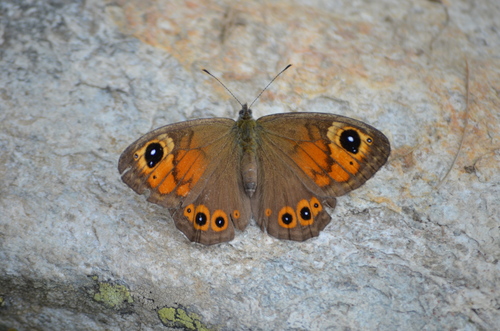
Poplar Hawkmoth

Poplar Hawkmoth

Laothoe populi

Daily sighting probability <5% · Rare
at Paris

In 3 days ~10% in a week ~20%

12 Verified sightings at Paris
231 In all 10 parks From 2019 to 2026
August Best month
☀️🌙 Day & Night When it's spotted

About the Poplar Hawkmoth

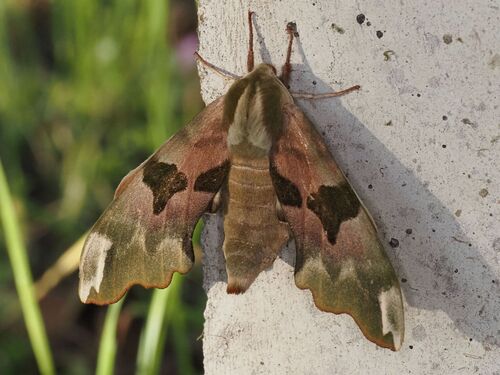
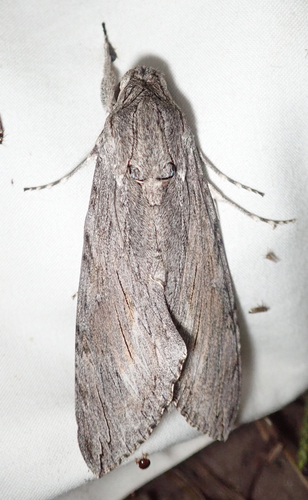
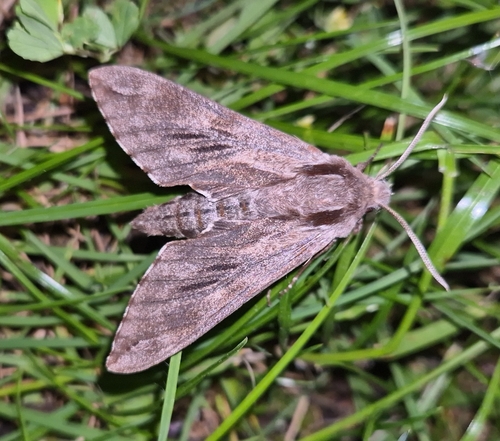
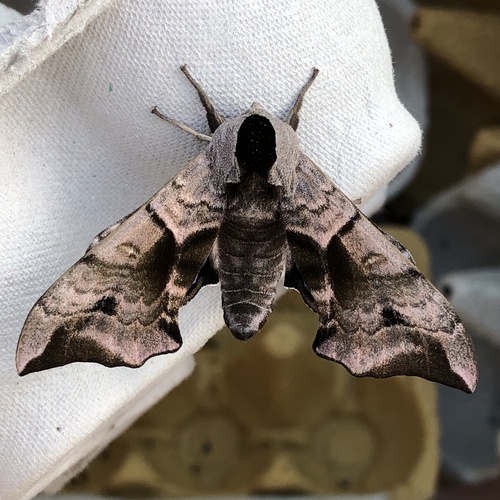
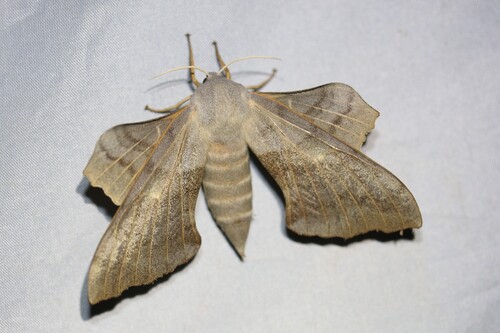
The poplar hawkmoth (Laothoe populi) is a moth of the family Sphingidae. The species was first described by Carl Linnaeus in his 1758 10th edition of Systema Naturae. It is found throughout the Palearctic region and the Near East and is one of the most common members of the family in the region. It is distinctive due to its habit of resting with its hindwings held further forward than (but still half hidden by) the forewings.

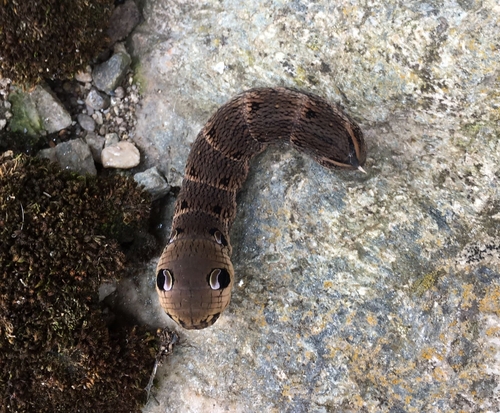
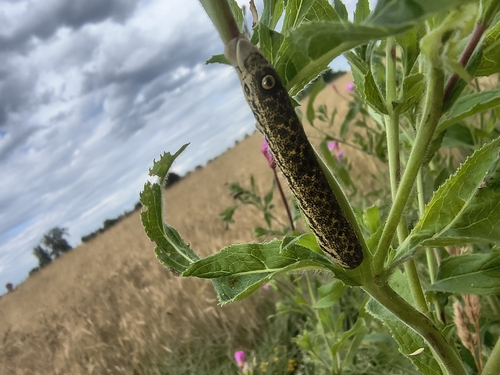
Adults may be seen from May to September, and do not feed, not having a functional proboscis, and can vary in colour from grey to yellow. The larva is green, feeds on poplar and some other tree species, and pupates below ground.

The poplar hawkmoth is a large (wingspan 70–100 mm (2.8–3.9 in)), odd-looking species of moth, due to its habit of resting with its hindwings held further forward than (but still half hidden by) the forewings. The species lacks a frenulum joining the wings together, and is said to look like a cluster of dead leaves of the main host, poplar.

When disturbed, the moth will suddenly reveal a bright orange-red basal patch on the hindwing, possibly as a distraction or startle display. The wings are grey marked with darker grey... Wikipedia →
Global Distribution

Parks Where Found

# Park Country Daily sighting probability
1 Snowdonia National Park 🇬🇧 United Kingdom
~20%
2 Sierra Nevada National Park 🇪🇸 Spain
~10%
3 Cairngorms National Park 🇬🇧 United Kingdom
~10%
4 Doñana National Park 🇪🇸 Spain
~10%
5 Wadden Sea National Park 🇩🇪 Germany
~10%
6 Mercantour National Park 🇫🇷 France
~10%
7 Bavarian Forest National Park 🇩🇪 Germany
~10%
8 Cévennes National Park 🇫🇷 France
~10%
9 Pyrénées National Park 🇫🇷 France
~10%
10 Sierra de Guadarrama National Park 🇪🇸 Spain
<5%

Cities Where Found

# City Country Daily sighting probability
1 Liverpool 🇬🇧 United Kingdom
~10%
2 Manchester 🇬🇧 United Kingdom
~10%
3 Birmingham 🇬🇧 United Kingdom
~10%
4 London 🇬🇧 United Kingdom
~10%
5 Istanbul 🇹🇷 Turkey
~10%
6 Budapest 🇭🇺 Hungary
~10%
7 Dublin 🇮🇪 Ireland
~10%
8 Warsaw 🇵🇱 Poland
~10%
9 Bucharest 🇷🇴 Romania
~10%
10 Berlin 🇩🇪 Germany
~10%

Before you go

What are the chances of seeing a Poplar Hawkmoth in Paris?

Rare

Under 5% of wildlife watchers report a Poplar Hawkmoth sighting in Paris on a given day, based on 12 verified sightings from GBIF citizen-science data. It is the 519th most-seen of the 916 insects we can rate there. Over three days the chance rises to about 10%, and over a week to about 20%, if each day is a fresh chance.

When is the best time to see a Poplar Hawkmoth in Paris?

August

In that month about 10% of wildlife watchers report a Poplar Hawkmoth in Paris on a given day, against under 5% in September to July, the lowest months.

What time of day is best to see a Poplar Hawkmoth?

Between 7 and 10 am

Across all the parks we cover, that three-hour window holds the most Poplar Hawkmoth sightings with a recorded time, and about 6 in 10 of them come between 6 am and 6 pm: it is seen both by day and at night.

Is Paris the best place to see a Poplar Hawkmoth?

26th of 30

Of the 30 cities where we can rate Poplar Hawkmoth sightings, Paris ranks 26th at under 5%. The best odds are in Liverpool (United Kingdom, about 10%), Manchester (United Kingdom, about 10%) and Birmingham (United Kingdom, about 10%).

Which relatives of the Poplar Hawkmoth live in Paris?

Same family: Sphingidae

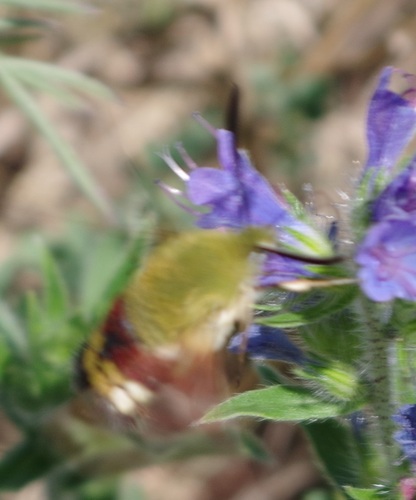
The closest relatives of the Poplar Hawkmoth that you can see in Paris (family Sphingidae, Sphinx Moths) are Lime Hawkmoth (about 10%) and Eurasian Hummingbird Hawkmoth (about 10%), with each one's daily chance of a sighting.

Where does the Poplar Hawkmoth sighting chance come from?

GBIF citizen-science records

It is estimated from how often the Poplar Hawkmoth is recorded against all the insects logged in Paris (12 verified sightings), calibrated against known sighting rates. Figures are rounded to the nearest 10% because citizen-science data supports honest approximations, not decimals, and months with records from fewer than five people show "—". How it works.

← Back to Paris