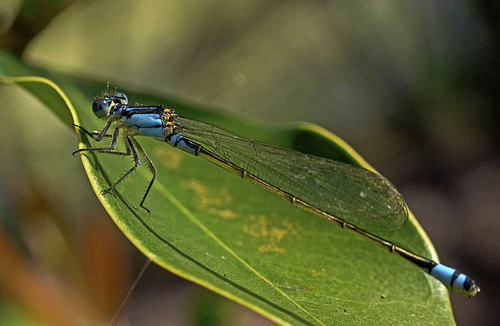
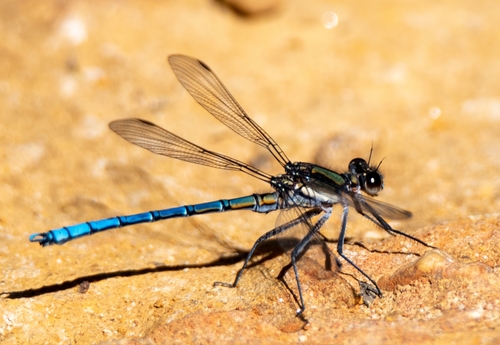
Scarlet Percher

Scarlet Percher

Diplacodes haematodes

Daily sighting probability ~10% · With luck
at Royal National Park

In 3 days ~40% in a week ~70%

31 Verified sightings at Royal National Park From 2019 to 2026
507 In all 10 parks
January Best month
☀️ Diurnal When it's spotted

About the Scarlet Percher

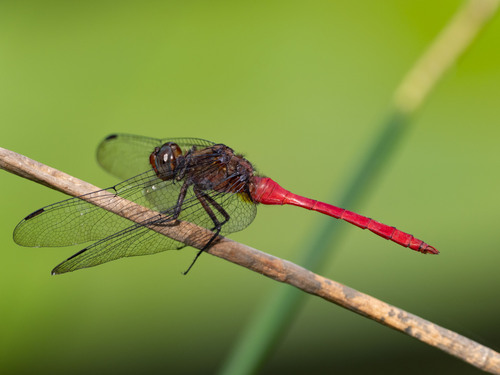
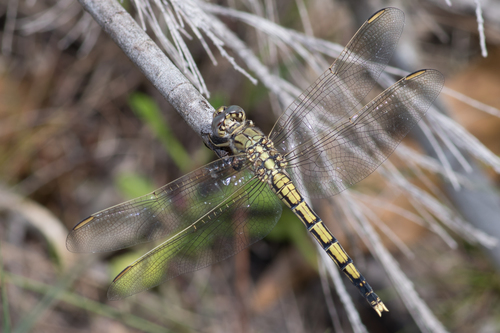
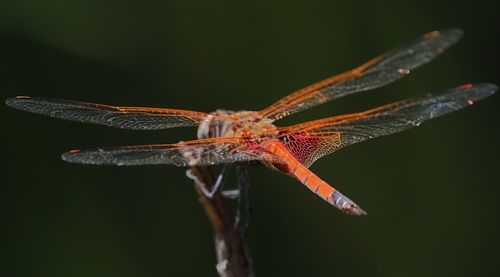
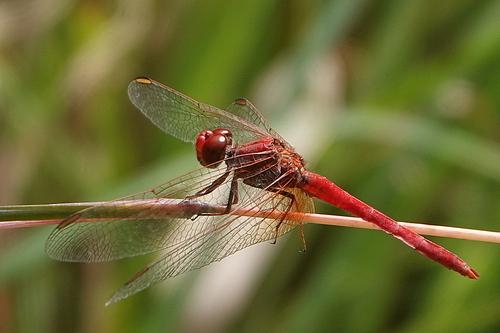
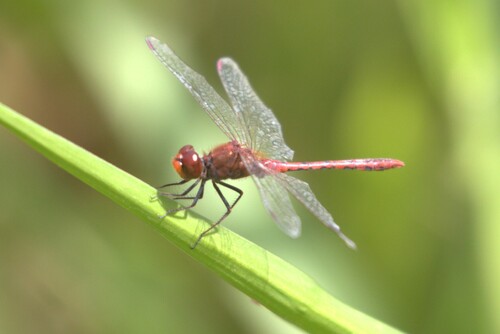
Diplacodes haematodes, the scarlet percher, is a species of dragonfly in the family Libellulidae. It occurs throughout Australia (except Tasmania), Timor, New Guinea, Vanuatu, and New Caledonia. It is locally common in habitats with hot sunny exposed sites at or near rivers, streams, ponds, and lakes. It often prefers to settle on hot rocks rather than twigs or leaves, and is quite wary. This is a spectacular species of dragonfly, although small in size (wingspan 60mm, length 35mm). The male is brilliant red, the female yellow-ochre. Females have yellow infuscation suffusing the outer wings, while the males have similar colour at the bases of the wings.

The genus name Diplacodes combines Diplax, a genus name derived from the Greek δίς (dis, "twice") and πλάξ (plax, "flat and broad"), with the Greek suffix –ώδης (-ōdēs, "resembling" or "having the nature of"). The name refers to the similarity of the genus to Diplax and Diplacina.

The species name haematodes is derived from the Greek αἱματώδης (haimatōdēs, "blood-like" or "looking like blood"), referring to the blood-red colour of the body and wing veins. Wikipedia →
Global Distribution

Parks Where Found

# Park Country Daily sighting probability
1 Nitmiluk National Park 🇦🇺 Australia
~70%
2 Lamington National Park 🇦🇺 Australia
~40%
3 Litchfield National Park 🇦🇺 Australia
~30%
4 Flinders Ranges National Park 🇦🇺 Australia
~30%
5 Uluru-Kata Tjuta National Park 🇦🇺 Australia
~20%
6 Springbrook National Park 🇦🇺 Australia
~20%
7 Kakadu National Park 🇦🇺 Australia
~20%
8 Royal National Park 🇦🇺 Australia
~10%
9 Blue Mountains National Park 🇦🇺 Australia
~10%
10 Daintree National Park 🇦🇺 Australia
~10%

Cities Where Found

# City Country Daily sighting probability
1 Brisbane 🇦🇺 Australia
~20%
2 Sydney 🇦🇺 Australia
~10%
3 Perth 🇦🇺 Australia
~10%
4 Melbourne 🇦🇺 Australia
<5%

Before you go

What are the chances of seeing a Scarlet Percher in Royal National Park?

With luck

About 10% of wildlife watchers report a Scarlet Percher sighting in Royal National Park on a given day, based on 31 verified sightings from GBIF citizen-science data from 2019 to 2026. It is the 36th most-seen of the 175 insects we can rate there. Over three days the chance rises to about 40%, and over a week to about 70%, if each day is a fresh chance.

When is the best time to see a Scarlet Percher in Royal National Park?

December to March

In those months about 20% of wildlife watchers report a Scarlet Percher in Royal National Park on a given day, against under 5% in June–September and November, the lowest months.

What time of day is best to see a Scarlet Percher?

Between 9 am and noon

Across all the parks we cover, that three-hour window holds the most Scarlet Percher sightings with a recorded time, and about 9 in 10 of them come between 6 am and 6 pm: it is a daytime animal.

Where does the Scarlet Percher sighting chance come from?

GBIF citizen-science records

It is estimated from how often the Scarlet Percher is recorded against all the insects logged in Royal National Park (31 verified sightings from 2019 to 2026), calibrated against known sighting rates. Figures are rounded to the nearest 10% because citizen-science data supports honest approximations, not decimals, and months with records from fewer than five people show "—". How it works.

← Back to Royal National Park