European Golden Plover

European Golden Plover

Pluvialis apricaria

Silhouette: Emily Willoughby · PhyloPic

LCLeast ConcernNTVUENCR
Daily sighting probability <5% · Rare
at Svalbard

In 3 days <5% in a week ~10%

19 Verified sightings at Svalbard From 2019 to 2026
3,151 In all 13 parks
May Best month
☀️ Diurnal When it's spotted

About the European Golden Plover

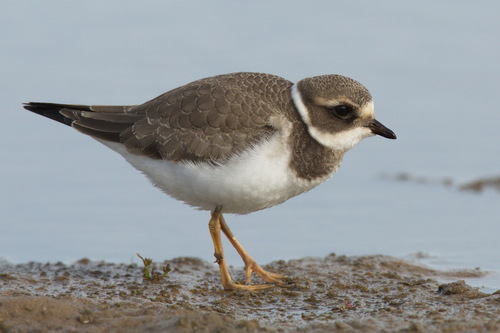
The European golden plover (Pluvialis apricaria), also known as the Eurasian golden plover, greater golden plover, or just the golden plover within Europe, is a relatively large species of plover. This species is similar to two other golden plovers, the American golden plover, Pluvialis dominica, and Pacific golden plover, Pluvialis fulva, which are both slightly smaller, slimmer and longer-legged than European golden plover, and both have grey rather than white axillary (armpit) feathers (visible in flight, and when the bird stretches its wings on the ground).

The European golden plover was formally described by the Swedish naturalist Carl Linnaeus in 1758 in the tenth edition of his Systema Naturae. He placed it with the other plovers in the genus Charadrius and coined the binomial name Charadrius apricarius. The species is now placed in the genus Pluvialis that was introduced in 1760 by the French zoologist Mathurin Jacques Brisson. The genus name is Latin and means "relating to rain", from pluvia, "rain". It was believed that golden plovers flocked when rain was imminent. The species name apricaria is Latin and means "to bask in the sun". The European golden plover... Wikipedia →

Sounds

Alarm call0:57

Norway · 2026

© Stephan Börnecke · XC1162666 · CC BY-NC-SA 4.0

Call1:07

Sweden · 2025

© Ulf Elman · XC1010741 · CC BY-NC-ND 4.0

Song0:35

Sweden · 2025

© Dag Österlund · XC1006087 · CC BY-NC-SA 4.0

Global Distribution

Parks Where Found

# Park Country Daily sighting probability
1 Wadden Sea National Park 🇩🇪 Germany
~30%
2 Vatnajokull National Park 🇮🇸 Iceland
~20%
3 Kiskunság National Park 🇭🇺 Hungary
~10%
4 Doñana National Park 🇪🇸 Spain
~10%
5 Hortobágy National Park 🇭🇺 Hungary
<5%
6 Biebrza National Park 🇵🇱 Poland
<5%
7 Camargue 🇫🇷 France
<5%
8 Snowdonia National Park 🇬🇧 United Kingdom
<5%
9 Cairngorms National Park 🇬🇧 United Kingdom
<5%
10 Fertő-Hanság National Park 🇭🇺 Hungary
<5%
11 Svalbard 🇳🇴 Norway
<5%
12 Monfragüe National Park 🇪🇸 Spain
<5%
13 Białowieża National Park 🇵🇱 Poland
<5%

Cities Where Found

# City Country Daily sighting probability
1 Novosibirsk 🇷🇺 Russia
~10%
2 Helsinki 🇫🇮 Finland
<5%
3 Dublin 🇮🇪 Ireland
<5%
4 Porto 🇵🇹 Portugal
<5%
5 Liverpool 🇬🇧 United Kingdom
<5%
6 Rotterdam [The Hague] 🇳🇱 Netherlands
<5%
7 Barcelona 🇪🇸 Spain
<5%
8 Manchester 🇬🇧 United Kingdom
<5%
9 London 🇬🇧 United Kingdom
<5%
10 Lisbon 🇵🇹 Portugal
<5%

Zoos & Centres Where Found

# Zoo / Centre Country
1 National Zoological Park 🇺🇸 United States In captivity
2 Warsaw Zoo 🇵🇱 Poland In captivity
3 herpetarium warszawskiego ZOO 🇵🇱 Poland In captivity
4 akwarium warszawskiego ZOO 🇵🇱 Poland In captivity

Before you go

What are the chances of seeing a European Golden Plover in Svalbard?

Rare

Under 5% of wildlife watchers report a European Golden Plover sighting in Svalbard on a given day, based on 19 verified sightings from GBIF citizen-science data from 2019 to 2026. It is the 39th most-seen of the 48 birds we can rate there. Over three days the chance rises to under 5%, and over a week to about 10%, if each day is a fresh chance.

When is the best time to see a European Golden Plover in Svalbard?

Any time of year

In every month with enough records, under 5% of wildlife watchers report a European Golden Plover in Svalbard on a given day, so our monthly data shows no clear season. November to January have too few records to rate.

What time of day is best to see a European Golden Plover?

Between 1 and 4 pm

Across all the parks we cover, that three-hour window holds the most European Golden Plover sightings with a recorded time, and about 8 in 10 of them come between 6 am and 6 pm: it is a daytime animal.

Where does the European Golden Plover sighting chance come from?

GBIF citizen-science records

It is estimated from how often the European Golden Plover is recorded against all the birds logged in Svalbard (19 verified sightings from 2019 to 2026), calibrated against known sighting rates. Figures are rounded to the nearest 10% because citizen-science data supports honest approximations, not decimals, and months with records from fewer than five people show "—". How it works.

← Back to Svalbard