Green-winged Teal

Green-winged Teal

Anas carolinensis

Silhouette: Sheatherius · PhyloPic

LCLeast ConcernNTVUENCR
Daily sighting probability ~10% · With luck
at Bahía de Loreto National Park

In 3 days ~20% in a week ~40%

56 Verified sightings at Bahía de Loreto National Park From 2019 to 2026
7,212 In all 41 parks
February Best month
☀️ Diurnal When it's spotted

About the Green-winged Teal

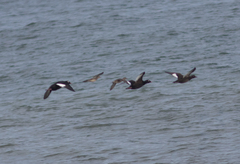
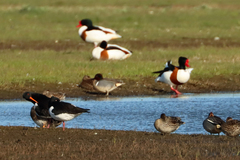
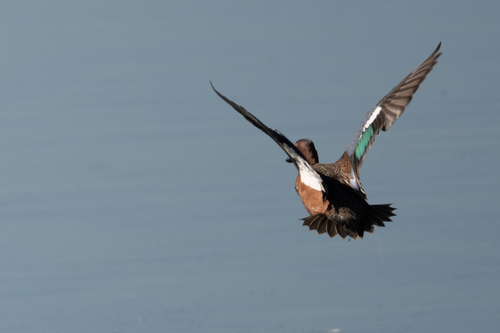
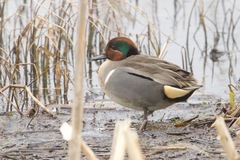
The green-winged teal (Anas carolinensis) or American teal is a common and widespread duck that breeds in the northern areas of North America except on the Aleutian Islands. It was considered conspecific with the Eurasian teal (A. crecca) for some time, but the two have since been split into separate species. The American Ornithological Society continues to debate this determination; however, nearly all other authorities consider it distinct based on behavioral, morphological, and molecular evidence. The scientific name is from Latin Anas, "duck" and carolinensis, "of Carolina".

This dabbling duck is strongly migratory and winters far south of its breeding range. It is highly gregarious outside of the breeding season and will form large flocks. In flight, the fast, twisting flocks resemble waders.

The green-winged teal was formally described in 1789 by the German naturalist Johann Friedrich Gmelin in his revised and expanded edition of Carl Linnaeus's Systema Naturae. He placed it with the other ducks, geese and swans in the genus Anas and coined the binomial name Anas carolinensis. Gmelin based his description on the "American teal" that had been described in 1785 by... Wikipedia →

Sounds

Call0:52

United States · 2013

© Paul Marvin · XC143632 · CC BY-NC-SA 3.0

Song0:37

United States · 2026

© Greg Irving · XC1073572 · CC BY-NC-SA 4.0

Alarm call0:13

Mexico · 2022

© Manuel Grosselet · XC698508 · CC BY-NC-SA 4.0

Global Distribution

Parks Where Found

# Park Country Daily sighting probability
1 Elk Island National Park 🇨🇦 Canada
~40%
2 Wrangell-St. Elias National Park 🇺🇸 United States
~30%
3 Katmai National Park 🇺🇸 United States
~20%
4 Wood Buffalo National Park 🇨🇦 Canada
~20%
5 Kluane National Park 🇨🇦 Canada
~20%
6 Banff National Park 🇨🇦 Canada
~20%
7 Yellowstone National Park 🇺🇸 United States
~10%
8 Great Bear Rainforest 🇨🇦 Canada
~10%
9 Merritt Island National Wildlife Refuge 🇺🇸 United States
~10%
10 Pacific Rim National Park Reserve 🇨🇦 Canada
~10%
11 Riding Mountain National Park 🇨🇦 Canada
~10%
12 Denali National Park 🇺🇸 United States
~10%
13 Snowdonia National Park 🇬🇧 United Kingdom
~10%
14 Death Valley National Park 🇺🇸 United States
~10%
15 Jasper National Park 🇨🇦 Canada
~10%
16 El Vizcaíno Biosphere Reserve 🇲🇽 Mexico
~10%
17 Bahía de Loreto National Park 🇲🇽 Mexico
~10%
18 Grand Teton National Park 🇺🇸 United States
~10%
19 Padre Island National Seashore 🇺🇸 United States
<5%
20 Olympic National Park 🇺🇸 United States
<5%
21 Gros Morne National Park 🇨🇦 Canada
<5%
22 Big Bend National Park 🇺🇸 United States
<5%
23 Point Pelee National Park 🇨🇦 Canada
<5%
24 Acadia National Park 🇺🇸 United States
<5%
25 Redwood National Park 🇺🇸 United States
<5%
26 Channel Islands National Park 🇺🇸 United States
<5%
27 Cape Breton Highlands National Park 🇨🇦 Canada
<5%
28 Badlands National Park 🇺🇸 United States
<5%
29 Grand Canyon National Park 🇺🇸 United States
<5%
30 Rocky Mountain National Park 🇺🇸 United States
<5%
31 Voyageurs National Park 🇺🇸 United States
<5%
32 Everglades National Park 🇺🇸 United States
<5%
33 Saguaro National Park 🇺🇸 United States
<5%
34 Kenai Fjords National Park 🇺🇸 United States
<5%
35 Zion National Park 🇺🇸 United States
<5%
36 Glacier National Park 🇺🇸 United States
<5%
37 Shenandoah National Park 🇺🇸 United States
<5%
38 Big Cypress National Preserve 🇺🇸 United States
<5%
39 Yosemite National Park 🇺🇸 United States
<5%
40 Palo Verde National Park 🇨🇷 Costa Rica
<5%
41 Great Smoky Mountains National Park 🇺🇸 United States
<5%

Cities Where Found

# City Country Daily sighting probability
1 Anchorage 🇺🇸 United States
~40%
2 Mesa 🇺🇸 United States
~40%
3 León 🇲🇽 México
~30%
4 Ciudad Juárez 🇲🇽 México
~30%
5 Vancouver 🇨🇦 Canada
~20%
6 Denver 🇺🇸 United States
~20%
7 Portland 🇺🇸 United States
~20%
8 San Luis Potosí 🇲🇽 México
~10%
9 Seattle 🇺🇸 United States
~10%
10 San Francisco 🇺🇸 United States
~10%

Before you go

What are the chances of seeing a Green-winged Teal in Bahía de Loreto National Park?

With luck

About 10% of wildlife watchers report a Green-winged Teal sighting in Bahía de Loreto National Park on a given day, based on 56 verified sightings from GBIF citizen-science data from 2019 to 2026. It is the 92nd most-seen of the 169 birds we can rate there. Over three days the chance rises to about 20%, and over a week to about 40%, if each day is a fresh chance.

When is the best time to see a Green-winged Teal in Bahía de Loreto National Park?

January–March and November

In those months about 10% of wildlife watchers report a Green-winged Teal in Bahía de Loreto National Park on a given day, against under 5% in April–October and December, the lowest months. Those are among Bahía de Loreto National Park's driest months, with about 5 mm of rain a month against 80 mm in September.

What time of day is best to see a Green-winged Teal?

Between 2 and 5 pm

Across all the parks we cover, that three-hour window holds the most Green-winged Teal sightings with a recorded time, and about 8 in 10 of them come between 6 am and 6 pm: it is a daytime animal.

Is Bahía de Loreto National Park the best place to see a Green-winged Teal?

17th of 41

Of the 41 parks where we can rate Green-winged Teal sightings, Bahía de Loreto National Park ranks 17th at about 10%. The best odds are in Elk Island National Park (Canada, about 40%), Wrangell-St. Elias National Park (United States, about 30%) and Katmai National Park (United States, about 20%).

Where does the Green-winged Teal sighting chance come from?

GBIF citizen-science records

It is estimated from how often the Green-winged Teal is recorded against all the birds logged in Bahía de Loreto National Park (56 verified sightings from 2019 to 2026), calibrated against known sighting rates. Figures are rounded to the nearest 10% because citizen-science data supports honest approximations, not decimals, and months with records from fewer than five people show "—". How it works.

← Back to Bahía de Loreto National Park