


Completed

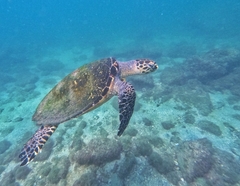
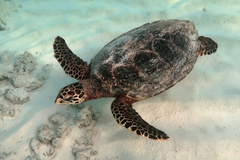

Hawksbill
Eretmochelys imbricata
Silhouette: James R. Spotila and Ray Chatterji · PhyloPic
- KingdomAnimalia (Animals)
- PhylumChordata (Chordates)
- ClassTestudines
- FamilyCheloniidae (Typical Sea Turtles)
- GenusEretmochelys (Hawksbill Sea Turtles)
- SpeciesEretmochelys imbricata (Hawksbill)
In 3 days ~80% in a week >90%
35 Verified sightings at Bali Barat National Park From 2019 to 2026
845 In all 15 parks
June Best month
☀️ Diurnal When it's spotted


About the Hawksbill
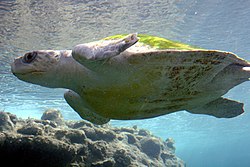
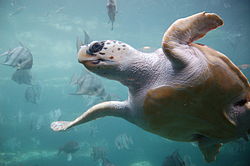
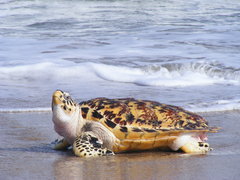
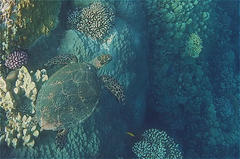
The hawksbill sea turtle (Eretmochelys imbricata) is a critically endangered sea turtle belonging to the family Cheloniidae. It is the only extant species in the genus Eretmochelys. The species has a global distribution that is largely limited to tropical and subtropical marine and estuary ecosystems.
The appearance of the hawksbill is similar to that of other sea turtles. In general, it has a flattened body shape, a protective carapace, and flipper-like limbs, adapted for swimming in the open ocean. E. imbricata is easily distinguished from other sea turtles by its sharp, curving beak with prominent tomium, and the saw-like appearance of its shell margins. Hawksbill shells slightly change colors, depending on water temperature. While this turtle lives part of its life in the open ocean, it spends more time in shallow lagoons and coral reefs.
The World Conservation Union classifies E. imbricata as critically endangered, primarily as a result of human fishing practices. Hawksbill shells were the primary source of tortoiseshell material used for decorative purposes. The Convention on International Trade in Endangered Species regulates the international trade of hawksbill sea turtles and products derived from them. Wikipedia →
Recent sightings of Hawksbill in Bali Barat National Park
LIVEiNaturalistGlobal Distribution
Parks Where Found
| # | Park | Country | Daily sighting probability |
|---|---|---|---|
| 1 | Coiba National Park | 🇵🇦 Panama | |
| 2 | Komodo National Park | 🇮🇩 Indonesia | |
| 3 | Raja Ampat | 🇮🇩 Indonesia | |
| 4 | Bali Barat National Park | 🇮🇩 Indonesia | |
| 5 | Arrecifes de Cozumel National Park | 🇲🇽 Mexico | |
| 6 | Ningaloo Marine Park | 🇦🇺 Australia | |
| 7 | Corcovado National Park | 🇨🇷 Costa Rica | |
| 8 | Cape Range | 🇦🇺 Australia | |
| 9 | Santa Rosa National Park | 🇨🇷 Costa Rica | |
| 10 | Galápagos Islands | 🇪🇨 Ecuador | |
| 11 | Celestún Biosphere Reserve | 🇲🇽 Mexico | |
| 12 | Ría Lagartos Biosphere Reserve | 🇲🇽 Mexico | |
| 13 | Bahía de Loreto National Park | 🇲🇽 Mexico | |
| 14 | iSimangaliso Wetland Park | 🇿🇦 South Africa | |
| 15 | Everglades National Park | 🇺🇸 United States |
Cities Where Found
| # | City | Country | Daily sighting probability |
|---|---|---|---|
| 1 | Sydney | 🇦🇺 Australia |
Zoos & Centres Where Found
Closest Relatives at Bali Barat National Park




Before you go
What are the chances of seeing a Hawksbill in Bali Barat National Park?
Likely
About 40% of wildlife watchers report a Hawksbill sighting in Bali Barat National Park on a given day, based on 35 verified sightings from GBIF citizen-science data from 2019 to 2026. It is the 3rd most-seen of the 10 reptiles we can rate there. Over three days the chance rises to about 80%, and over a week to over 90%, if each day is a fresh chance.
When is the best time to see a Hawksbill in Bali Barat National Park?
June
In that month about 60% of wildlife watchers report a Hawksbill in Bali Barat National Park on a given day, against about 10% in February, the lowest month. That is one of Bali Barat National Park's driest months, with about 40 mm of rain against 280 mm in February.
What time of day is best to see a Hawksbill?
Between 9 am and noon
Across all the parks we cover, that three-hour window holds the most Hawksbill sightings with a recorded time, and about 8 in 10 of them come between 6 am and 6 pm: it is a daytime animal.
Is Bali Barat National Park the best place to see a Hawksbill?
4th of 15
Of the 15 parks where we can rate Hawksbill sightings, Bali Barat National Park ranks 4th at about 40%. The best odds are in Coiba National Park (Panama, about 90%), Komodo National Park (Indonesia, about 70%) and Raja Ampat (Indonesia, about 70%). All parks ranked.
Where does the Hawksbill sighting chance come from?
GBIF citizen-science records
It is estimated from how often the Hawksbill is recorded against all the reptiles logged in Bali Barat National Park (35 verified sightings from 2019 to 2026), calibrated against known sighting rates. Figures are rounded to the nearest 10% because citizen-science data supports honest approximations, not decimals, and months with records from fewer than five people show "—". How it works.
