


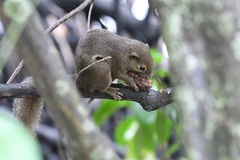
Completed


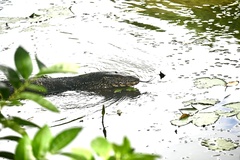


Common Water Monitor
Varanus salvator
Silhouette: Steven Traver · PhyloPic
- KingdomAnimalia (Animals)
- PhylumChordata (Chordates)
- ClassSquamata
- FamilyVaranidae (Monitor Lizards)
- GenusVaranus (Monitor Lizards)
- SpeciesVaranus salvator (Common Water Monitor)
In 3 days ~80% in a week >90%
21 Verified sightings at Bali Barat National Park From 2019 to 2026
1,075 In all 21 parks
September Best month
🌅 Crepuscular When it's spotted
About the Common Water Monitor
The Asian water monitor (Varanus salvator) is a large varanid lizard native to South and Southeast Asia. It is widely considered to be the second-largest lizard species, after the Komodo dragon. It is distributed from eastern and northeastern India and Bangladesh, the Andaman and Nicobar Islands, Sri Lanka, through southern China and Hainan Island in the east to Mainland Southeast Asia and the islands of Sumatra, Borneo, Java, Lombok, the Riau Archipelago, and Sulawesi. It is one of the most widespread monitor lizards.
The Asian water monitor has a natural affinity towards water, inhabiting the surroundings of lakes, rivers, ponds, swamps, and various riparian habitats, including sewers, city parks, and urban waterways. It is an excellent swimmer and hunts fish, frogs, invertebrates, water birds, and other aquatic and amphibious prey.
Due to its apparently large, stable population, it is currently listed as Least Concern on to the IUCN Red List. The generic name Varanus is derived from the Arabic waral (ورل), which translates as "monitor". The specific name is the Latin word for "saviour", denoting a possible religious connotation. Stellio salvator was... Wikipedia →
Sounds
Recording0:24
Thailand · 2025
© nitayk · iNaturalist · CC BY-NC 4.0
Recent sightings of Common Water Monitor in Bali Barat National Park
LIVEiNaturalistGlobal Distribution
Parks Where Found
| # | Park | Country | Daily sighting probability |
|---|---|---|---|
| 1 | Sundarbans National Park | 🇮🇳 India | |
| 2 | Kinabatangan Wildlife Sanctuary | 🇲🇾 Malaysia | |
| 3 | Bako National Park | 🇲🇾 Malaysia | |
| 4 | Kaziranga National Park | 🇮🇳 India | |
| 5 | Khao Yai National Park | 🇹🇭 Thailand | |
| 6 | Danum Valley Conservation Area | 🇲🇾 Malaysia | |
| 7 | Sinharaja Forest Reserve | 🇱🇰 Sri Lanka | |
| 8 | Khao Sok National Park | 🇹🇭 Thailand | |
| 9 | Way Kambas National Park | 🇮🇩 Indonesia | |
| 10 | Gunung Leuser National Park | 🇮🇩 Indonesia | |
| 11 | Sepilok | 🇲🇾 Malaysia | |
| 12 | Tangkoko Nature Reserve | 🇮🇩 Indonesia | |
| 13 | Tanjung Puting National Park | 🇮🇩 Indonesia | |
| 14 | Minneriya National Park | 🇱🇰 Sri Lanka | |
| 15 | Bali Barat National Park | 🇮🇩 Indonesia | |
| 16 | Khao Luang National Park | 🇹🇭 Thailand | |
| 17 | Taman Negara National Park | 🇲🇾 Malaysia | |
| 18 | Kaeng Krachan National Park | 🇹🇭 Thailand | |
| 19 | Udawalawe National Park | 🇱🇰 Sri Lanka | |
| 20 | Cat Tien National Park | 🇻🇳 Vietnam | |
| 21 | Kinabalu Park | 🇲🇾 Malaysia |
Cities Where Found
| # | City | Country | Daily sighting probability |
|---|---|---|---|
| 1 | Johor Bahru | 🇲🇾 Malaysia | |
| 2 | Bangkok | 🇹🇭 Thailand | |
| 3 | Padang | 🇮🇩 Indonesia | |
| 4 | Colombo [Sri Jayawardenepura Kotte] | 🇱🇰 Sri Lanka | |
| 5 | Jakarta | 🇮🇩 Indonesia | |
| 6 | Denpasar | 🇮🇩 Indonesia | |
| 7 | Kuching | 🇲🇾 Malaysia | |
| 8 | Kuala Lumpur | 🇲🇾 Malaysia | |
| 9 | Surabaya | 🇮🇩 Indonesia | |
| 10 | Singapore | 🇸🇬 Singapore |
Zoos & Centres Where Found
| # | Zoo / Centre | Country | |
|---|---|---|---|
| 1 | San Diego Zoo | 🇺🇸 United States | |
| 2 | ZooParc de Beauval | 🇫🇷 France | |
| 3 | Karagandy Zoo | 🇰🇿 Kazakhstan | |
| 4 | Vinpearl Safari | 🇻🇳 Vietnam | |
| 5 | Nandankanan Zoological Park | 🇮🇳 India | |
| 6 | Minnesota Zoo | 🇺🇸 United States | |
| 7 | Nehru Zoological Park | 🇮🇳 India | |
| 8 | Columbus Zoo and Aquarium | 🇺🇸 United States | |
| 9 | Bronx Zoo | 🇺🇸 United States | |
| 10 | Kadoorie Farm and Botanic Garden | 🇭🇰 Hong Kong SAR China | |
| 11 | Parc zoologique de Montpellier | 🇫🇷 France | |
| 12 | 西霞口神雕山野生動物世界 | 🇨🇳 China | |
| 13 | Shanghai Zoo | 🇨🇳 China | |
| 14 | Parque Zoológico de León - Zooleón | 🇲🇽 Mexico | |
| 15 | Detroit Zoo | 🇺🇸 United States | |
| 16 | Guangzhou CrocoPark | 🇨🇳 China | |
| 17 | Yaroslavl Zoo | 🇷🇺 Russia | |
| 18 | Guadalajara Zoo | 🇲🇽 Mexico | |
| 19 | Audubon Zoo | 🇺🇸 United States | |
| 20 | Colchester Zoo | 🇬🇧 United Kingdom | |
| 21 | Burgers' Ocean | 🇳🇱 Netherlands | |
| 22 | Royal Burgers' Zoo | 🇳🇱 Netherlands | |
| 23 | Terra Natura Benidorm | 🇪🇸 Spain | |
| 24 | Night Safari | 🇸🇬 Singapore | |
| 25 | National Zoo of Malaysia | 🇲🇾 Malaysia | |
| 26 | Gatorland | 🇺🇸 United States | |
| 27 | Zoológico Benito Juárez | 🇲🇽 Mexico | |
| 28 | Singapore Zoo | 🇸🇬 Singapore | |
| 29 | ABQ BioPark Zoo | 🇺🇸 United States | |
| 30 | Alipore Zoological Gardens | 🇮🇳 India | |
| 31 | Gembira Loka Zoo | 🇮🇩 Indonesia | |
| 32 | Saigon Zoo and Botanical Gardens | 🇻🇳 Vietnam | |
| 33 | Chapultepec Zoo | 🇲🇽 Mexico | |
| 34 | Auckland Zoo | 🇳🇿 New Zealand | |
| 35 | Bandung Zoo | 🇮🇩 Indonesia | |
| 36 | African Village | 🇦🇪 United Arab Emirates | |
| 37 | Noichi Zoological Park of the Kochi Prefecture | 🇯🇵 Japan | |
| 38 | Tennōji Zoo | 🇯🇵 Japan | |
| 39 | Paphos Zoo | 🇨🇾 Cyprus | |
| 40 | Monterey Zoo | 🇺🇸 United States | |
| 41 | River Wonders | 🇸🇬 Singapore | |
| 42 | Leningrad Zoo | 🇷🇺 Russia | |
| 43 | Safari Masai Mara | 🇲🇽 Mexico | |
| 44 | Alligator Adventure | 🇺🇸 United States | |
| 45 | Reptile Gardens | 🇺🇸 United States | |
| 46 | Belgrade Zoo | 🇷🇸 Serbia | |
| 47 | Cherkasy Zoo | 🇺🇦 Ukraine | |
| 48 | Crocodile Bank | 🇮🇳 India | |
| 49 | VigoNature | 🇪🇸 Spain | |
| 50 | Capron Park Zoo | 🇺🇸 United States |
Closest Relatives at Bali Barat National Park
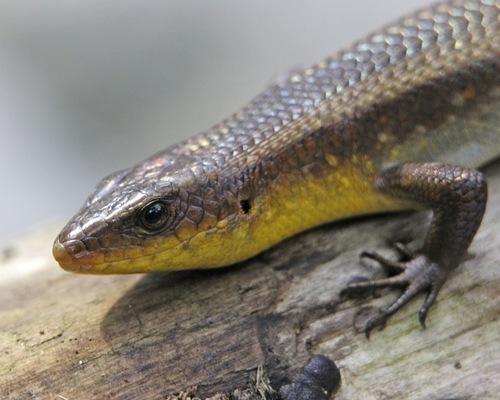
No species of the same family or order lives in Bali Barat National Park, so these are its closest relatives here: other reptiles.


Before you go
What are the chances of seeing a Common Water Monitor in Bali Barat National Park?
Likely
About 40% of wildlife watchers report a Common Water Monitor sighting in Bali Barat National Park on a given day, based on 21 verified sightings from GBIF citizen-science data from 2019 to 2026. It is the 4th most-seen of the 10 reptiles we can rate there. Over three days the chance rises to about 80%, and over a week to over 90%, if each day is a fresh chance.
When is the best time to see a Common Water Monitor in Bali Barat National Park?
March–April, September–October and December
In those months about 50% of wildlife watchers report a Common Water Monitor in Bali Barat National Park on a given day, against under 5% in June and August, the lowest months.
What time of day is best to see a Common Water Monitor?
Between 4 and 7 am
Across all the parks we cover, that three-hour window holds the most Common Water Monitor sightings with a recorded time, and about 6 in 10 of them come between 6 am and 6 pm: it is most active around dawn and dusk.
Is Bali Barat National Park the best place to see a Common Water Monitor?
15th of 21
Of the 21 parks where we can rate Common Water Monitor sightings, Bali Barat National Park ranks 15th at about 40%. The best odds are in Sundarbans National Park (India, about 80%), Kinabatangan Wildlife Sanctuary (Malaysia, about 70%) and Bako National Park (Malaysia, about 70%). All parks ranked.
Where does the Common Water Monitor sighting chance come from?
GBIF citizen-science records
It is estimated from how often the Common Water Monitor is recorded against all the reptiles logged in Bali Barat National Park (21 verified sightings from 2019 to 2026), calibrated against known sighting rates. Figures are rounded to the nearest 10% because citizen-science data supports honest approximations, not decimals, and months with records from fewer than five people show "—". How it works.
