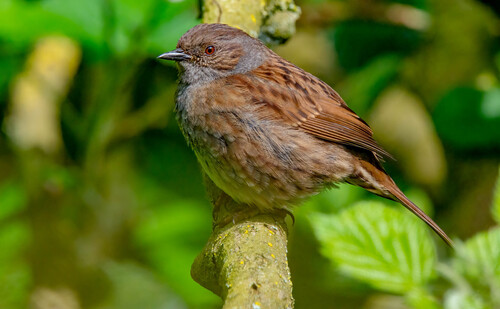
Coal Tit

Coal Tit

Periparus ater

Silhouette: Sheatherius · PhyloPic

LCLeast ConcernNTVUENCR
Daily sighting probability ~20% · Possible
at Liverpool

In 3 days ~50% in a week ~80%

790 Verified sightings at Liverpool
12,765 In all 29 parks From 2019 to 2026
February Best month
☀️ Diurnal When it's spotted

About the Coal Tit

The coal tit (Periparus ater) is a passerine bird in the tit family, Paridae. It is a widespread and common resident breeder in forests throughout the temperate to subtropical Palearctic, including North Africa. The black-crested tit is now included in this species.

This species was first described by Carl Linnaeus in his landmark 1758 10th edition of Systema Naturae. Linnaeus' primary reference was his earlier Fauna Svecica, whose pre-binomial name Parus capite nigro: vertice albo, dorso cinereo, pectore albo ("black-headed tit with white nape, ash-grey back, white breast") became Parus ater. This name – meaning "dusky-black tit" – was simply adopted from older ornithological textbooks, ultimately going back to Conrad Gessner's 1555 Historia animalium. He gave no type locality except "Europe", but his original description refers to the population inhabiting Sweden (which is consequently included in the nominate subspecies today). The current genus name, is Ancient Greek peri plus the pre-existing genus Parus. The specific ater is Latin for "dull black".

The coal tit is placed in the genus Periparus, which was formerly widely considered a subgenus of Parus... Wikipedia →

Sounds

Song1:22

Netherlands · 2026

© Joost van Bruggen · XC1136240 · CC BY-NC-ND 4.0

Call0:54

Spain · 2026

© Jacobo Ramil Millarengo · XC1087602 · CC BY-NC-SA 4.0

Duet0:18

Italy · 2025

© Gianluca Congi · XC1005219 · CC BY-NC-SA 4.0

Global Distribution

Parks Where Found

# Park Country Daily sighting probability
1 Tatra National Park 🇸🇰 Slovakia
~70%
2 Hohe Tauern National Park 🇦🇹 Austria
~70%
3 Cairngorms National Park 🇬🇧 United Kingdom
~70%
4 Aigüestortes National Park 🇪🇸 Spain
~70%
5 Nikko National Park 🇯🇵 Japan
~60%
6 Mercantour National Park 🇫🇷 France
~60%
7 Ecrins National Park 🇫🇷 France
~60%
8 Vanoise National Park 🇫🇷 France
~50%
9 Triglav National Park 🇸🇮 Slovenia
~50%
10 Pyrénées National Park 🇫🇷 France
~50%
11 Ordesa y Monte Perdido National Park 🇪🇸 Spain
~50%
12 Sierra de Guadarrama National Park 🇪🇸 Spain
~40%
13 Plitvice Lakes National Park 🇭🇷 Croatia
~40%
14 Taroko National Park 🇹🇼 Taiwan
~40%
15 Białowieża National Park 🇵🇱 Poland
~40%
16 Picos de Europa National Park 🇪🇸 Spain
~30%
17 Jiuzhaigou National Park 🇨🇳 China
~30%
18 Bavarian Forest National Park 🇩🇪 Germany
~30%
19 Cévennes National Park 🇫🇷 France
~30%
20 Sierra Nevada National Park 🇪🇸 Spain
~30%
21 Langtang National Park 🇳🇵 Nepal
~30%
22 Snowdonia National Park 🇬🇧 United Kingdom
~20%
23 Biebrza National Park 🇵🇱 Poland
~20%
24 Gauja National Park 🇱🇻 Latvia
<5%
25 Kiskunság National Park 🇭🇺 Hungary
<5%
26 Wadden Sea National Park 🇩🇪 Germany
<5%
27 Hortobágy National Park 🇭🇺 Hungary
<5%
28 Fertő-Hanság National Park 🇭🇺 Hungary
<5%
29 Monfragüe National Park 🇪🇸 Spain
<5%

Cities Where Found

# City Country Daily sighting probability
1 Sapporo 🇯🇵 Japan
~50%
2 Madrid 🇪🇸 Spain
~50%
3 Manchester 🇬🇧 United Kingdom
~40%
4 Ankara 🇹🇷 Turkey
~40%
5 Porto 🇵🇹 Portugal
~40%
6 Lisbon 🇵🇹 Portugal
~30%
7 Dublin 🇮🇪 Ireland
~30%
8 Busan 🇰🇷 South Korea
~30%
9 Birmingham 🇬🇧 United Kingdom
~20%
10 Seoul 🇰🇷 South Korea
~20%

Zoos & Centres Where Found

# Zoo / Centre Country
1 Beijing Wildlife Park 🇨🇳 China In captivity
2 Ueno Zoo 🇯🇵 Japan In captivity

Before you go

What are the chances of seeing a Coal Tit in Liverpool?

Possible

About 20% of wildlife watchers report a Coal Tit sighting in Liverpool on a given day, based on 790 verified sightings from GBIF citizen-science data. It is the 61st most-seen of the 168 birds we can rate there. Over three days the chance rises to about 50%, and over a week to about 80%, if each day is a fresh chance.

When is the best time to see a Coal Tit in Liverpool?

February and March

In those months about 30% of wildlife watchers report a Coal Tit in Liverpool on a given day, against about 10% in April, July and November, the lowest months.

What time of day is best to see a Coal Tit?

Between 9 am and noon

Across all the parks we cover, that three-hour window holds the most Coal Tit sightings with a recorded time, and about 9 in 10 of them come between 6 am and 6 pm: it is a daytime animal.

Is Liverpool the best place to see a Coal Tit?

12th of 66

Of the 66 cities where we can rate Coal Tit sightings, Liverpool ranks 12th at about 20%. The best odds are in Sapporo (Japan, about 50%), Madrid (Spain, about 50%) and Manchester (United Kingdom, about 40%).

Which relatives of the Coal Tit live in Liverpool?

Same family: Paridae

The closest relatives of the Coal Tit that you can see in Liverpool (family Paridae, Tits, Chickadees, and Titmice) are Blue Tit (about 60%) and Great Tit (about 50%), with each one's daily chance of a sighting.

Where does the Coal Tit sighting chance come from?

GBIF citizen-science records

It is estimated from how often the Coal Tit is recorded against all the birds logged in Liverpool (790 verified sightings), calibrated against known sighting rates. Figures are rounded to the nearest 10% because citizen-science data supports honest approximations, not decimals, and months with records from fewer than five people show "—". How it works.

← Back to Liverpool