About the Poplar Hawkmoth
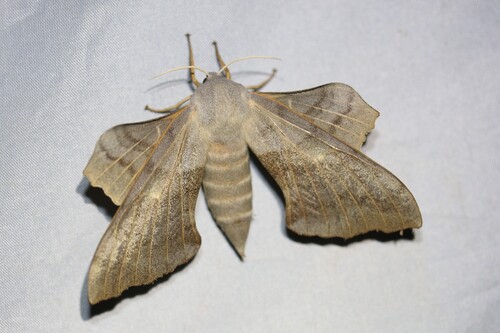
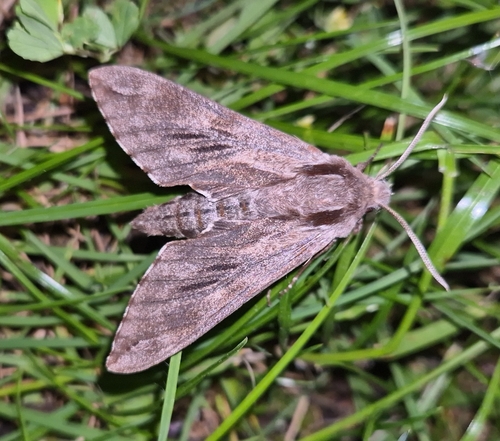
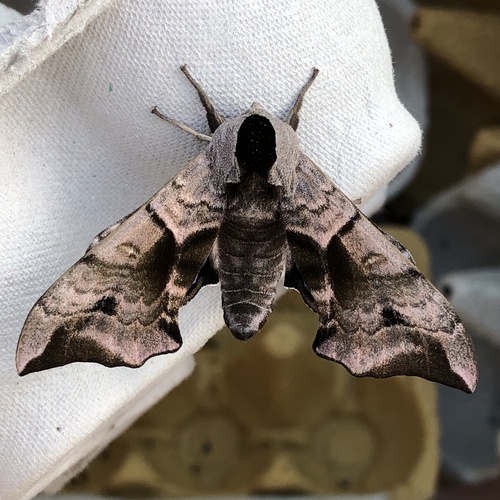
The poplar hawkmoth (Laothoe populi) is a moth of the family Sphingidae. The species was first described by Carl Linnaeus in his 1758 10th edition of Systema Naturae. It is found throughout the Palearctic region and the Near East and is one of the most common members of the family in the region. It is distinctive due to its habit of resting with its hindwings held further forward than (but still half hidden by) the forewings.
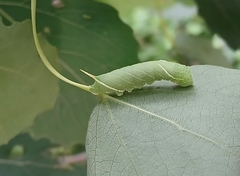
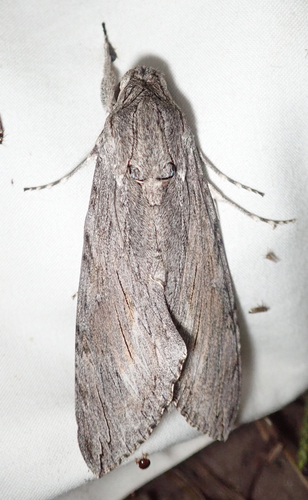
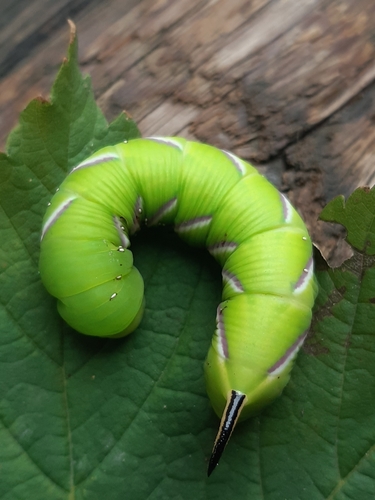
Adults may be seen from May to September, and do not feed, not having a functional proboscis, and can vary in colour from grey to yellow. The larva is green, feeds on poplar and some other tree species, and pupates below ground.
The poplar hawkmoth is a large (wingspan 70–100 mm (2.8–3.9 in)), odd-looking species of moth, due to its habit of resting with its hindwings held further forward than (but still half hidden by) the forewings. The species lacks a frenulum joining the wings together, and is said to look like a cluster of dead leaves of the main host, poplar.
When disturbed, the moth will suddenly reveal a bright orange-red basal patch on the hindwing, possibly as a distraction or startle display. The wings are grey marked with darker grey... Wikipedia →